




360 review questions are one of the best ways to ensure your performance appraisals include multiple perspectives, offering a complete, well-rounded view of an employee’s performance. By gathering feedback from managers, peers, direct reports, and even the employees themselves, 360 assessments deliver a more holistic, accurate evaluation than traditional reviews ever could.
In this blog, we’ve included 70+ powerful 360-degree feedback questions you can use across leadership, communication, motivation, problem-solving, decision-making, and more.
Better feedback = Better teams = Better business
What Are 360-Degree Feedback Questions?
360-degree feedback questions are prompts used to gather performance insights from multiple sources, including managers, peers, direct reports, and, sometimes, customers. These questions help organizations collect a well-rounded view of an employee’s strengths, behavior, communication style, leadership potential, and areas for improvement. Unlike traditional reviews, 360-degree feedback focuses on how an employee works with others, not just what they achieve.
If you’re also designing surveys for customers or teams, explore our guide on online client satisfaction surveys to improve response quality and insights.
What Makes a Good 360 Feedback Question in Performance Reviews?
Good 360 feedback questions are clear, unbiased, and focused on observable, behavior-based actions rather than personal traits. The goal is to collect accurate, multi-rater feedback that reflects how an employee collaborates, communicates, leads, and contributes to team success.
Effective 360 review questions are those that:
- Align with competency-based evaluation criteria such as leadership, teamwork, problem-solving, and communication skills.
- Use simple, unambiguous language so every reviewer interprets the question the same way.
- Encourage specific, actionable insights that help employees understand their strengths and development areas.
- Support both quantitative ratings and qualitative comments, creating a balanced employee performance review.
- Avoid assumptions, judgmental wording, or vague prompts that reduce feedback accuracy.
The strongest 360-degree feedback surveys combine behavior-focused, role-relevant, and performance-driven questions. This ensures the feedback collected is meaningful, consistent, and valuable for growth, coaching, and leadership development.
Difference Between Closed-Ended vs. Open-Ended Feedback Questions
feedback survey, and using both is essential for gathering complete, reliable performance insights. Each type generates a different kind of data, one numerical and easy to compare, the other detailed and context-rich.
Closed-ended survey questions are like "Yes/No," rating scales from 1 to 5, or agreement levels from "Strongly Disagree" to "Strongly Agree." These questions are quick to answer and easy to analyze because they provide quantitative data.
However, open-ended questions allow respondents to answer in their own words, offering a detailed context and nuance. These questions take time to respond to and analyze, but uncover detailed, rich insights that closed-ended questions might miss.
The most effective 360-degree feedback surveys use a combination of both structured ratings to identify trends and open comments to understand the "why" behind the numbers.
Why You Need Both in a 360 Review
Closed-ended questions give you structured, measurable performance data, while open-ended questions provide behavioral detail and nuance. Using both helps create a balanced, accurate, and actionable 360 feedback report, one that supports better decision-making, coaching, and employee development.
To learn more about when to use different survey formats, check out our guide on essential question types for effective surveys.
Closed-Ended 360-Degree Feedback Questions
- The employee exhibits strong leadership skills.
- The employee is open to receiving constructive feedback.
- This employee handles conflict effectively within the team.
- The person maintains a positive attitude under pressure.
- The team member finds creative solutions for the complex problems.
- The employee actively seeks opportunities for self-improvement.
- This team member demonstrates leadership skills in group projects.
Open-Ended 360-Degree Feedback Questions
- What’s the greatest strength of this employee in their current role?
- Share an example when this person goes above and beyond expectations.
- How well this employee handles challenges or setbacks.
- How would you describe this employee as a coworker?
- Describe a situation when this employee showed excellent leadership skills.
- How well does the employee manage the workload?
- What additional skills or behaviors make this employee more effective?
Related Read: Essential Question Types for Effective Surveys

Types of 360 Feedback Questions (With Examples & Use Cases)
These categories of 360 feedback questions help you collect well-rounded, behavior-based insights from managers, peers, and team members. Use them to create a balanced 360-degree feedback questionnaire that evaluates every key competency an employee needs to succeed.
360-Degree Feedback Question Examples for Managers
These 360 feedback questions for managers help assess leadership effectiveness, decision-making, communication style, and the ability to support team members. Manager-focused 360-degree review questions should target leadership competencies, behavior-based performance, and team collaboration skills.
- Is the manager able to handle the pressure effectively?
- Does the manager value the team member’s opinions while making any decision?
- Does the manager inspire you to work more effectively?
- Does the manager encourage professional development opportunities for the team?
- How effectively do managers resolve the conflict within the team?
- Give suggestions on how managers can enhance their leadership effectiveness.
360 Feedback Questions to ask Peers
These peer review questions for 360-degree feedback reveal how well an employee collaborates, communicates, and contributes to team culture. Peer insights often provide more accurate behavior-based feedback since colleagues observe day-to-day interactions. Use these sample 360 review questions to identify strengths and blind spots.
- How well does the employee collaborate with team members?
- Does the individual value the opinion of other teammates?
- How well does the employee balance his own tasks while supporting others?
- What are some unique traits the employee brings to the team?
- How well does the employee handle uncertain situations?
- How effectively does the employee handle the feedback from coworkers?
Also read: 360 Degree Survey Guide: How to Use Feedback for Growth
360 Feedback Questions for Core Competencies
These competency-based 360 feedback questions measure essential skills like communication, problem-solving, teamwork, and leadership. They help ensure your 360 feedback survey is aligned with role-specific expectations. Use them to benchmark performance and set targeted development goals.
- How effectively does this employee approach and solve problems?
- How well does this employee prioritize tasks and manage their workload?
- How strong are this employee’s technical abilities in their role?
- How confident and capable is this employee when making decisions?
- How successfully does this employee plan and manage projects?
- How much does this employee contribute to new ideas and improvements?
360 Feedback Questions for Effective Communication
These communication feedback questions assess clarity, active listening, written communication, and cross-team collaboration. They’re essential for any performance review questionnaire where communication impacts results. Use them to pinpoint strengths and improvement areas.
- How effectively does the employee communicate his ideas in meetings?
- Does the employee actively listen to other teammates’ suggestions?
- How clear and concise is this employee when communicating complex ideas?
- How effectively does this employee communicate in writing (e.g., emails, reports)?
- Does the employee ask questions during meetings if something is not clear?
- What suggestion do you have for this employee regarding his communication style?
If you’re interested in how feedback tools improve engagement, explore how online polling enhances participation.
360 Feedback Questions for Leadership
These leadership feedback questions evaluate decision-making, influence, accountability, and the ability to inspire others. They’re perfect for leadership evaluation surveys and succession planning. Use these behavior-based questions to measure true leadership potential.
- Does the employee have leadership qualities?
- Does the employee demonstrate accountability and responsibility in their role?
- Do other team members look to the employee to help them with their work?
- How well does the employee motivate others to achieve goals?
- Can this employee be trusted with a complex project?
- In what ways can this employee improve as a leader?
Related read: 60 Leadership Feedback Survey Questions
360 Feedback Questions for Employee Motivation
Use these motivation-related 360-degree feedback questions to understand how well an employee energizes the team, recognizes achievements, and fosters a positive work environment. These prompts support employee engagement feedback and help identify emotional intelligence strengths.
- Does the employee facilitate continuous learning among the team?
- How well does this person recognize and celebrate the contributions and achievements of team members?
Does this person allow team members to own their work and projects? - How would you rate this person’s ability to inspire a sense of purpose and passion in the team?
- How well does this employee create a positive, supportive, and motivating work environment?
- How effectively does this employee help team members overcome challenges in their work?
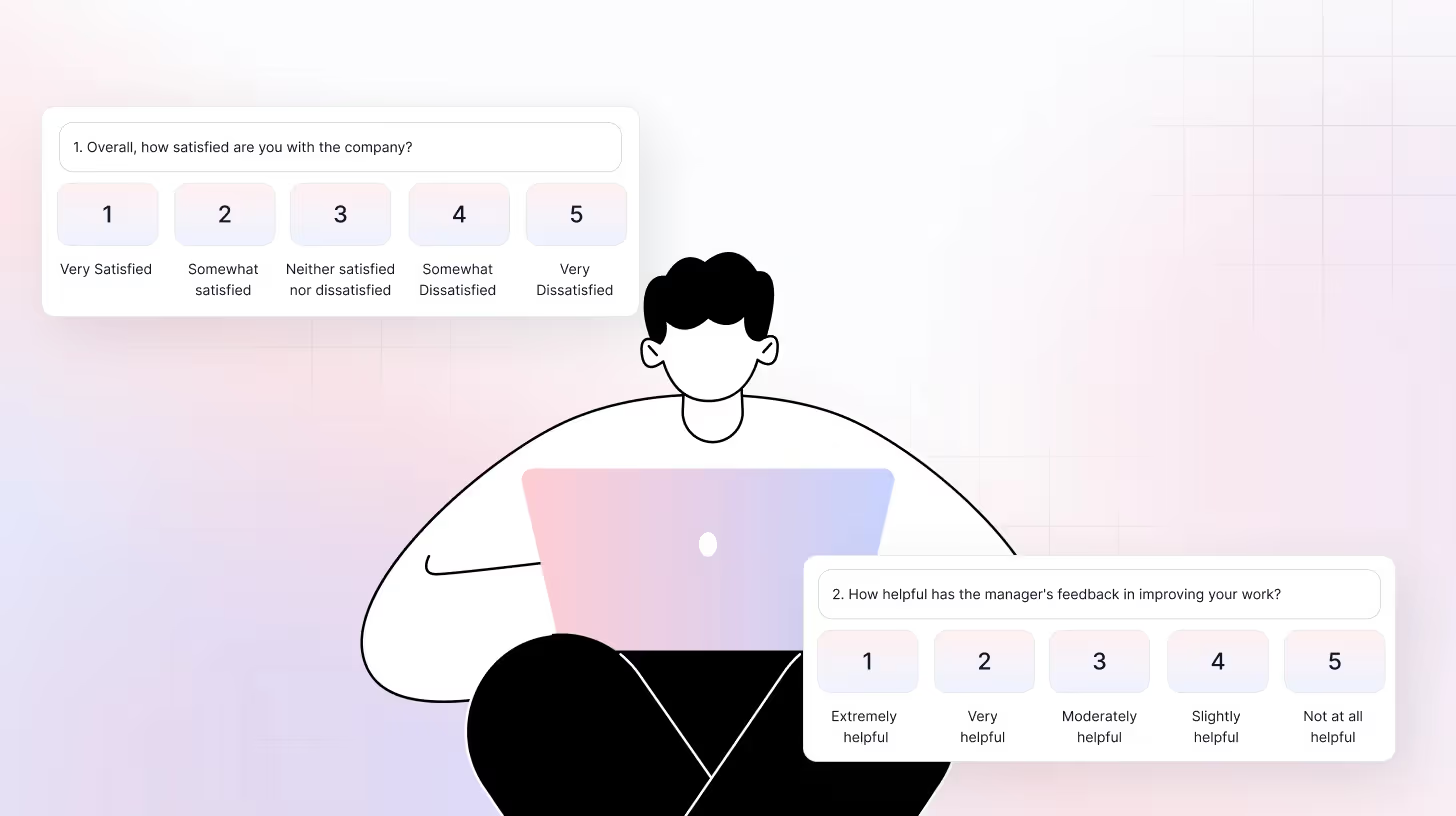
These decision-making feedback questions assess analytical thinking, judgment, accountability, and adaptability. Add them to your 360-degree review questionnaire to evaluate how well employees make informed, responsible choices that support organizational goals.
- Does this employee involve the right people when making decisions?
- How well does this employee own the results of their choices, whether good or bad?
- How effectively does this employee adjust their decisions when new information comes up?
- In what ways could this employee strengthen their decision-making skills?
- Does this employee think through how their decisions will affect others?
- How often do this employee’s decisions lead to good outcomes for the team?
Recommended read: 50+ Best Employee Onboarding Survey Questions to Ask New Hires
360 Feedback Questions for Problem-Solving Skills
These problem-solving feedback questions uncover how effectively an employee identifies issues, analyzes root causes, and develops solutions. Use them in your 360 review process to evaluate critical thinking, creativity, and collaborative problem-solving behavior.
- How well does this employee approach complex problems?
- How often does this employee develop creative solutions to overcome challenges?
- Does this employee involve others when solving problems or making decisions?
- How effectively does this employee prioritize tasks when dealing with a problem?
- How well does this employee analyze data to understand the root cause of a problem?
- Does this employee consider all possible solutions before acting?
360 Degree Feedback Questions for Interpersonal Skills
These questions evaluate interpersonal competencies like empathy, teamwork, professionalism, and relationship-building. They’re ideal for multi-rater feedback surveys where understanding workplace behavior is essential to team success.
- How well does this employee show professionalism when working with others?
- How much does this employee help create a positive and supportive team environment?
- In what ways does this employee show empathy and understanding toward colleagues?
- Does this employee communicate respectfully with people at all levels of the organization?
- What specific things does this employee do to build strong relationships with others?
- Where could this employee improve when it comes to connecting and working with others?
360 Degree Feedback Questions for Efficiency
Use these efficiency-related performance review questions to assess time management, prioritization, productivity, and adaptability. These insights help identify workflow improvements and support continuous performance development.
- How well does this employee manage their time and workload to hit deadlines and goals consistently?
- Is this employee good at prioritizing tasks to focus on what matters most?
- Does this person use technology and tools smartly to work faster and more efficiently?
- How clearly does this person set expectations and standards around efficiency for the team?
- How would you rate this employee’s ability to stay flexible and adjust when workloads or priorities change?
- How well does this person track performance metrics to find areas for better efficiency?
Also read: 15 top 360-degree feedback software
360 Feedback Survey Template
Employee Name: ________________________
Evaluator Name: _________________________
Relationship to Employee: Manager / Peer / Direct Report / Self
Date: ___________________________________
Rating Scale:
1 = Never
2 = Rarely
3 = Sometimes
4 = Often
5 = Always
N/A = No opportunity to observe
SECTION 1 — COMMUNICATION
Please rate (SUBJECT NAME) compared to peers:
Behavior 1 2 3 4 5 N/A
Communicates clearly and professionally
Adjusts communication style to suit the audience
Confirms understanding and provides clarity when needed
What are 1–2 ways (SUBJECT) can improve communication?
_________________________________________________________________
_________________________________________________________________
What are 1–2 communication strengths (SUBJECT) demonstrates?
_________________________________________________________________
_________________________________________________________________
SECTION 2 — STRATEGIC THINKING
Please rate (SUBJECT NAME) compared to peers:
Behavior 1 2 3 4 5 N/A
Establishes clear direction for goals and priorities
Anticipates challenges and adapts proactively
What are 1–2 ways (SUBJECT) can improve strategic thinking?
_________________________________________________________________
_________________________________________________________________
What strategic strengths does (SUBJECT) demonstrate?
_________________________________________________________________
_________________________________________________________________
SECTION 3 — DECISION-MAKING
Please rate (SUBJECT NAME) compared to peers:
Behavior 1 2 3 4 5 N/A
Considers impact before making decisions
Involves appropriate stakeholders
Takes initiative to resolve issues
Encourages others and supports goal achievement
What are 1–2 ways (SUBJECT) can improve decision-making?
_________________________________________________________________
_________________________________________________________________
What decision-making strengths does (SUBJECT) show?
_________________________________________________________________
_________________________________________________________________
SECTION 4 — LEADING OTHERS
Please rate (SUBJECT NAME) compared to peers:
Behavior 1 2 3 4 5 N/A
Creates a positive, supportive work environment
Recognizes and elevates team contributions
What are 1–2 ways (SUBJECT) can improve as a leader?
_________________________________________________________________
_________________________________________________________________
What leadership strengths does (SUBJECT) consistently demonstrate?
SECTION 5 — OVERALL FEEDBACK
What is (SUBJECT)’s greatest strength?
_________________________________________________________________
_________________________________________________________________
_________________________________________________________________
What is one area (SUBJECT) should focus on improving?
_________________________________________________________________
_________________________________________________________________
_________________________________________________________________
Additional comments or observations:
_________________________________________________________________
_________________________________________________________________
_________________________________________________________________
360 Feedback Questions For Self-evaluation
These self-evaluation feedback questions encourage employees to reflect on strengths, weaknesses, and workplace behaviors. They’re an important part of any 360 feedback questionnaire, helping compare self-perception with peer, manager, and team feedback for deeper self-awareness.
- How well does this person recognize their own strengths and areas for improvement as a leader?
- Does this individual regularly seek feedback and look for ways to grow?
- How effectively does this person set personal development goals and track their progress?
- To what extent does this individual adjust their behavior based on feedback and self-reflection?
- How aware is this person of how their actions and decisions affect those around them?
- When mistakes happen, does this person take ownership and use them as learning opportunities?
Old-School Feedback Is Dead (Here’s How AI Is Taking Over)
Let’s be honest: traditional 360 feedback surveys were kind of a drag. Slow, clunky, and filled with awkward questions nobody wanted to answer.
AI changed all that.
Dynamic Conversations: Instead of filling out boring forms, employees talk with AI, leading to richer, more authentic insights.
Instant Pattern Detection: AI identifies common strengths, blind spots, and trends without you manually reading hundreds of responses.
Real-Time Action Items: Forget waiting weeks for a report. AI flags urgent follow-ups and coaching opportunities immediately.
Scalable Feedback: Whether you're a startup or a Fortune 500 company, AI can handle feedback at any size, and no army of HR staff is needed.
Related read: The Role of AI in Enhancing Survey Experiences
How to Create a 360 Degree Feedback Survey with TheySaid (In Seconds)
Tell TheySaid What You Need
Share a few details about your team, goals, or leadership competencies. You can even paste a URL, upload previous surveys, or “teach” TheySaid how your organization speaks. The AI instantly adapts to your tone, culture, and review style.
Choose a Template or Let AI Build From Scratch
TheySaid includes ready-made 360 feedback templates, or you can let the AI generate a fresh set of smart, behavior-based review questions. No blank screens, just a complete survey tailored to your exact use case.
Enjoy an Interactive, AI-Driven Conversation Flow
Instead of rigid forms, TheySaid turns your survey into a dynamic conversation. Reviewers engage naturally, and the AI digs deeper to understand the “why” behind every answer, producing richer and more meaningful feedback.
Customize Anything You Want
Easily add, edit, or remove questions with one click. You can modify tone, adjust complexity, or create role-specific feedback paths. The flexibility makes scaling 360 reviews simple for any team size.
Send It Out Anywhere
Share your survey through email, Slack, QR codes, or directly inside your existing tools. TheySaid ensures fast, high-response 360 feedback collection.
Get Instant Insights With Smart Dashboards
TheySaid automatically analyzes responses, highlights patterns, and suggests dashboard items so you instantly know what actions to take. It uncovers themes, strengths, blind spots, and growth opportunities without manual sorting or spreadsheets.
Create a 360-degree feedback survey with TheySaid today and get the insights you need to build a stronger, more collaborative team!
Key Takeaways
- Use a healthy balance of closed-ended and open-ended 360-degree feedback survey questions for richer insights.
- Tailor questions based on the roles of employees, managers, peers, and leadership.
- Cover competencies like communication, leadership, problem-solving, and motivation for a complete feedback view.
- Use AI-powered survey tools (like TheySaid) to create smarter surveys, spot trends instantly, and take quick action.
- Feedback = Growth: 360-degree feedback is not just evaluation, it’s your team's blueprint for real, lasting improvement.
FAQs
How do I choose the best 360-degree feedback survey questions?
The best 360-degree feedback survey questions focus on key areas like leadership, communication, teamwork, decision-making, and problem-solving. Use a mix of closed-ended and open-ended questions for deeper insights.
How often should we run 360-degree feedback surveys?
Most companies run them once or twice a year. However, with AI-powered surveys like TheySaid, you can run lightweight feedback sessions more frequently without overwhelming your team.
Can managers also receive 360-degree feedback?
Absolutely! In fact, 360-degree feedback is especially valuable for managers. It helps them uncover blind spots, build trust, and improve leadership skills based on team input.


.svg)