



.avif)
Different types of questionnaires help you gather various kinds of insights, depending on what you want to know.
Maybe you’re trying to make a strategic business decision, and you need reliable data to back it up. Perhaps you want to understand how customers feel about a new product, or how employees perceive your workplace culture. Or maybe you’re just curious about how your target audience thinks or behaves.
You can’t just guess the answers, but you can design the right questionnaire to get the information you need.
This article explores different types of questionnaires and how to pick the right type for your research.
Let’s begin!
30 Sec Summary
This blog explains the different types of questionnaires: structured, semi-structured, and unstructured, and how each one is used to collect meaningful insights. You’ll learn when to use each type, see real examples, and understand how questionnaires guide better business and research decisions. The article also shows how tools like TheySaid make creating, analyzing, and improving questionnaires fast, interactive, and actionable.
What is a Questionnaire?
A questionnaire is a research tool that consists of a list of questions to get qualitative and quantitative feedback from the target audience.
Now, you might be wondering, “Isn’t that just a survey?”
Well, not quite.
While surveys and questionnaires are often mentioned together, they’re not exactly the same. A questionnaire is the actual set of questions you ask, while a survey is the broader process of collecting, analyzing, and interpreting those responses.
Questionnaires are commonly used in research, surveys, academic studies, market research, and for collecting customer or employee feedback.
Today, with modern AI tools like TheySaid, you can create fun, conversational questionnaires that not only capture meaningful responses but also help you analyze them and act on insights all in one place.
Give it a try for free and see how it works!
Recommended Read: Surveys vs Questionnaires: Difference, Use Cases & Benefits Explained
Why Are Questionnaires Important for Businesses and Research?
Questionnaires help you understand your target audience's behaviors, preferences, and opinions in a structured way, turning raw responses into actionable insights.
By analyzing this data, businesses can spot emerging trends, refine products or services, and make smarter strategic decisions.
Offering a quick, cost-effective, and scalable approach, questionnaires help organizations to gather meaningful quantitative and qualitative feedback that drives real improvements.
What are the Main Types of Questionnaires?
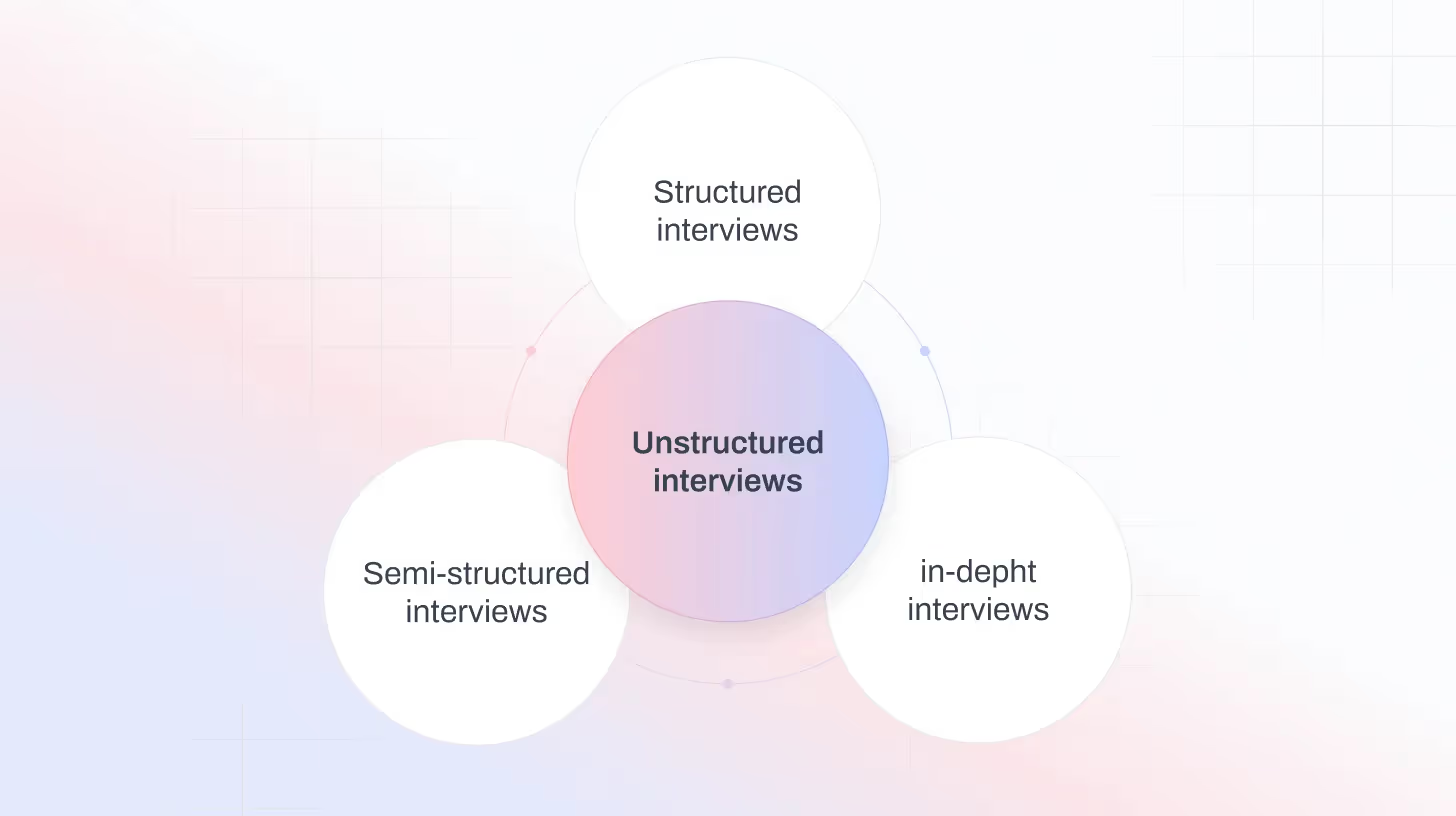
There are three main types of questionnaires( structured, unstructured, and semi-structured) designed to fit different goals, audiences, and types of feedback.
Let’s explore them.
Structured Questionnaires (Closed-ended Questions)
The Structured Questionnaire is designed to collect quantitative data that is easy to measure, analyze, and compare. It consists of a set of predefined questions with fixed answer options, so every respondent chooses from the same type of responses.
Businesses often use structured questionnaires to systematically gather feedback, such as measuring customer satisfaction, employee engagement, or product preferences. Semi-structured Questionnaires
Multiple Choice Questions
These questions give respondents a set of options to choose from. Primarily, they have single-select or multiple-select answer options, making them quick and easy to answer and even easier to analyze. This often leads to higher completion rates.
Example: “How do you know about our website?”
- Newspaper
- Socialmedia
- Word of mouth
- Radio
- Others ( please specify)
Read: What are Multiple Choice Questions in Surveys?
Dichotomous Questions
Dichotomous questions are a type of closed-ended question that present only two possible answers, like yes/no, true/false, or agree/disagree. They’re straightforward, but don’t capture opinions in the middle. For Example: “Did you find our tutorial helpful? Yes / No”
Rating Scale Questions
Here, respondents rate satisfaction, agreement, or other metrics on a scale, usually numeric (1–5, 1–10) or descriptive (Poor → Excellent). These questions make it easy to compare responses and extract actionable insights.
For Example: “On a scale of 0–10, how likely are you to recommend our product?”
Likert Scale Questions
Likert questions measure agreement or disagreement with a statement, making them ideal for tracking sentiment or customer satisfaction over time.
For Example: “I find this product easy to use: Strongly Agree, Agree, Neutral, Disagree, Strongly Disagree.”
Bipolar Questions
Bipolar questions ask respondents to position themselves along a spectrum between two opposite extremes, providing more nuance than a simple yes/no answer.
Example: “How would you rate our interface: Very Difficult ⬅️ ➡️ Very Easy”
Importance Questions
These questions measure how important a feature, task, or topic is to respondents, helping teams focus on what truly matters.
Example: “How important is fast customer support to you? 1 = Not Important, 5 = Very Important”
Buying Propensity Questions
These gauge a customer's likelihood of purchasing a product or service in the future. Example: “How likely are you to buy our software in the next 6 months? Very Likely, Likely, Unlikely, Very Unlikely”
Read: Post-Purchase Surveys: Case Studies, Questions, And Best Practices
Semi-Structured Questions
Semi-structured questionnaires are like a best-of-both-worlds approach. They mix structured questions (like ratings or multiple-choice) with open-ended prompts, giving you both numbers to analyze and stories to understand.
Think of it this way: you get the consistency of structured questions to compare responses easily, but also the freedom of unstructured questions to dig deeper into opinions, feelings, and experiences.
Where it works well:
- Product feedback surveys where you want to measure satisfaction and understand why people feel that way.
- Employee surveys that track engagement scores and let staff share ideas for improvement.
- Market research where you need trends and detailed customer stories.
Examples
- “On a scale of 1–5, how satisfied are you with our new software? Please explain your rating.”
- “Which feature do you use most often? Can you tell us why?”
These types of questions give you a clear snapshot of trends while still uncovering valuable context behind each response.
Why semi-structured works so well:
- You can balance depth with analysis: quantitative answers help you spot patterns, qualitative ones explain the patterns.
- Guided yet flexible: You have a framework, but respondents can elaborate.
- Actionable insights: You not only know what people think but also why.
Read: Open-Ended vs Closed-Ended Questions: Strategies and Examples
Unstructured Questionnaires
Think of unstructured questionnaires as giving your respondents a blank canvas. There’s no rigid structure, no strict boxes to tick, just space for them to share their thoughts, feelings, and experiences. The main goal? To collect rich, qualitative insights that tell you more than numbers ever could.
That doesn’t mean there’s no direction at all. A good unstructured questionnaire still flows naturally, guiding respondents through key topics while letting them speak freely. This is especially useful when you’re trying to understand the “why” behind someone’s experience.
Real-world example:
- A customer feedback form with a section for suggestions and comments.
- An employee evaluation form where team members can write about challenges, successes, and improvements.
The magic happens when these forms are anonymous, people open up, giving honest, detailed feedback that helps you see strengths, weaknesses, and opportunities you might otherwise miss.
Sample questions you could ask:
- “Tell us about a recent experience with our support team. What worked well and what could be better?”
- “What features would make this product more useful for you?”
- “Are there any challenges you face while using our service?”
Unstructured questionnaires are perfect when you want context, stories, and insights that numbers can’t capture. They let people speak freely and often, that’s where the most valuable feedback comes from.
Types of Questionnaires by Administration Mode
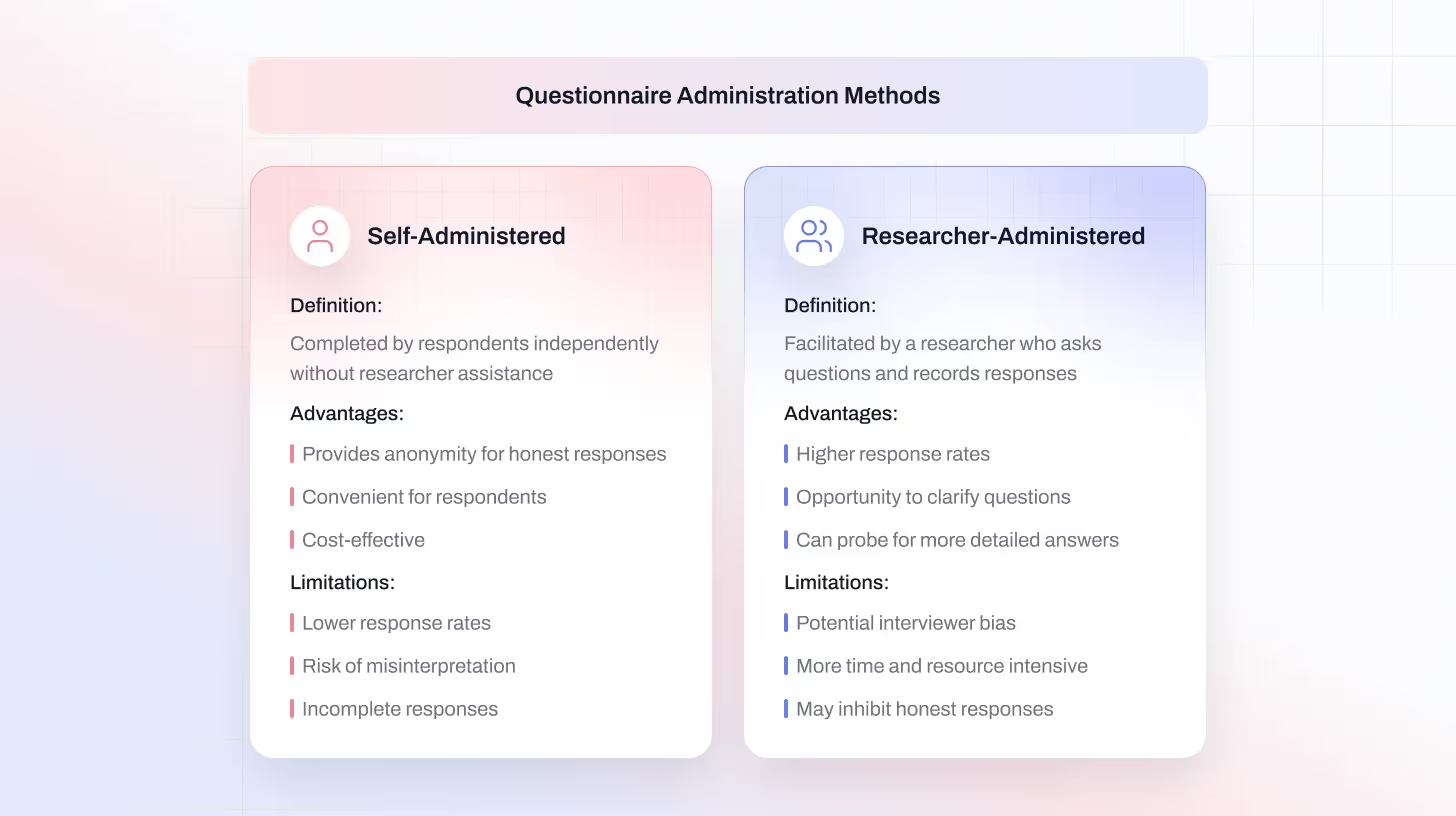
Questionnaires can also be grouped by how they are delivered and completed, which can affect response rates and the types of data you collect.
Self-Administered Questionnaires
In this type, respondents complete the questionnaire on their own, either on paper, by mail, or online. This approach is convenient and cost-effective, allowing you to reach large audiences quickly. It works well when questions are clear and don’t need additional explanation.
Researcher-Administered Questionnaires
Here, a researcher or interviewer asks the questions directly in person, over the phone, or via video calls and records the responses. This method allows for clarification, follow-up questions, and deeper probing, making it ideal when you want more detailed or nuanced information.
Both methods have their advantages, and choosing the right mode depends on your research goals, audience, and resources.
Tips for Choosing a Questionnaire Type
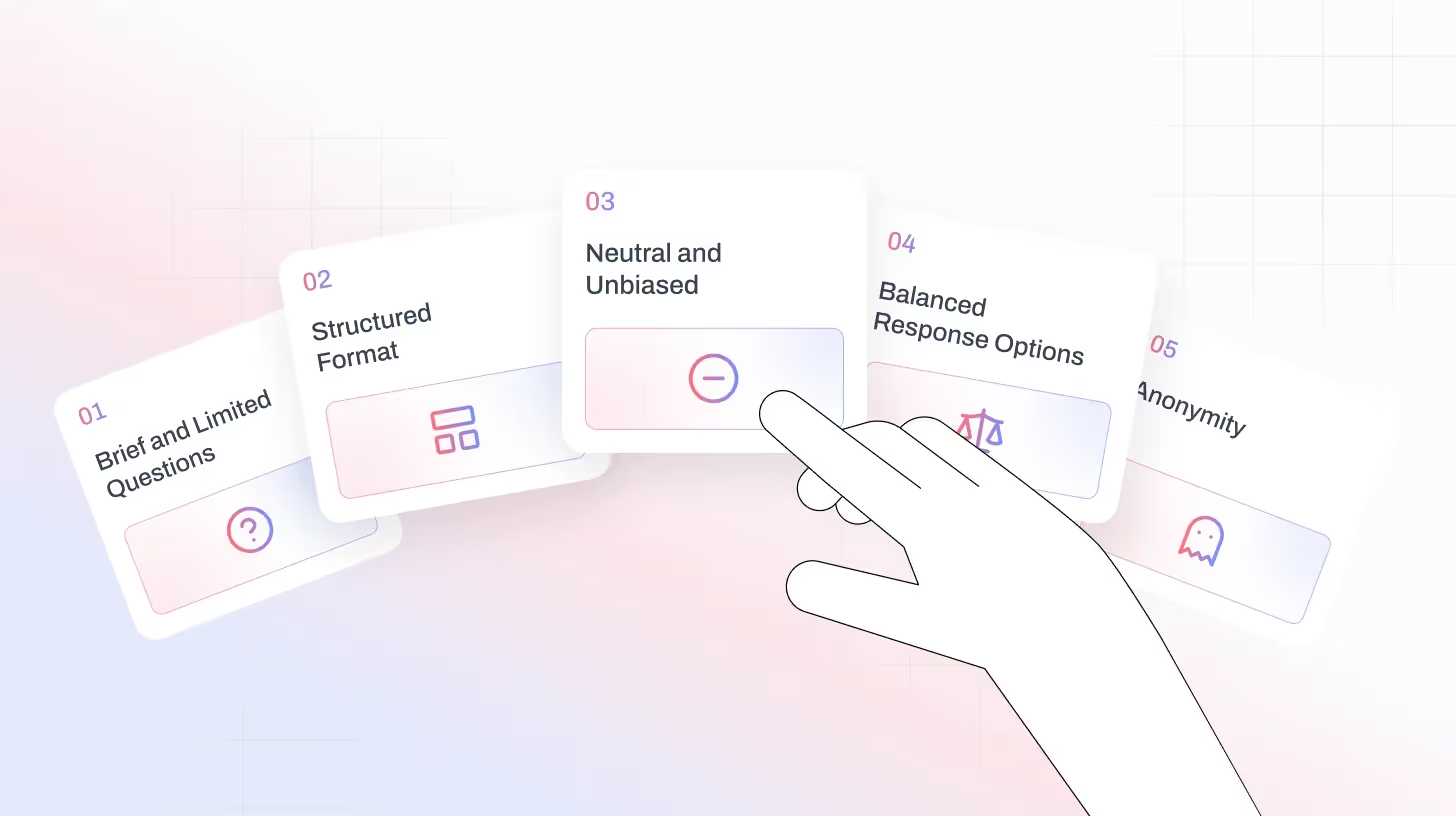
Picking the right questionnaire isn’t just about the format; it’s about matching your questions to your goals, your audience, and the resources you have on hand. Here are the key points to think about:
Your Goal
Start with the purpose: Are you exploring ideas or testing assumptions?For early-stage research where you’re still learning, open-ended questions are ideal, as they let people explain their thoughts freely.
If you’re trying to measure something specific or compare results across many respondents, structured, closed-ended questions make the data easier to analyze.
Example: If you’re thinking of adding a new product, ask customers about past products they’ve bought or liked. If the product is already launched, focus on feedback about the experience with it.
Know Your Audience
Who will answer your questionnaire? How familiar are they with your topic? Sometimes it helps to split your audience into segments. Different groups may need different question types.
Example: For pricing feedback, you could ask premium users different questions than entry-level users. Open-ended questions let you capture their detailed thoughts about value and features.
Resources & Reach
Consider how many people you need to survey and how you’ll reach them. Do you have a large email list? Are you trying to reach a brand-new audience? If so, how will you get their attention? Will you need incentives or ads to get people to respond?
Your resources affect not only how many responses you can collect but also the length and depth of your questionnaire.
Tools & Templates
Creating a questionnaire is easier than ever with online tools. You can build surveys from scratch or use prebuilt templates and adapt them to your needs. Features like drag-and-drop builders and ready-made question formats save time and make the survey experience smoother for respondents.
Similar topic: Different Types of Surveys and How to Use Them for Better Insights
Create Smart, Fun Questionnaires With TheySaid
One of the best parts about using TheySaid is that you don’t need to build everything from scratch; you can actually teach the AI what you want, import your existing surveys, or simply describe your goal, and it generates a complete questionnaire in seconds. You can switch question types, reorder sections, edit wording, or let AI suggest smarter alternatives based on your audience.
And once responses start coming in, TheySaid automatically summarizes the main themes, sentiment, and insights for you—so you instantly understand what people are saying and what actions matter most. Plus, it feels more like a chat than a form, which makes answering fun and interactive, and naturally boosts response rates.
If you want to try it yourself, just sign up for free and start creating smarter questionnaires with TheySaid in minutes.
FAQs
1. What are the different types of questionnaires in research?
The main types of questionnaires used in research are structured, semi-structured, and unstructured. Each type collects different kinds of data—from measurable responses to detailed explanations and opinions.
2. What is the difference between structured and unstructured questionnaires?
A structured questionnaire uses predefined answer options, while an unstructured questionnaire contains open-ended questions that allow respondents to reply freely. Structured formats collect quantitative data, while unstructured ones collect qualitative insights.
3. Which type of questionnaire is most commonly used?
Structured questionnaires are the most commonly used because they generate measurable results, are easier to analyze, and work well for large sample sizes, customer feedback, and business-related research.
4. What type of questionnaire is best for qualitative research?
Unstructured and semi-structured questionnaires are best for qualitative research because they allow open responses and deeper explanations. They help uncover opinions, motivations, and personal experiences.
5. How do I choose the right type of questionnaire for my research?
Choosing the right questionnaire depends on your goals, audience, and the type of data you need. Use structured questions for measurable insights, unstructured questions for deeper context, and semi-structured questions when you need both.





.svg)


