




According to the Pew Research Center's report, 95% of U.S. teens aged 13 to 17 have access to a smartphone, with ownership slightly higher among older teens (98%) compared to younger teens (90%).
For some, phones are a digital lifeline, tools for learning, safety, and staying connected. For others, they’re distractions that disrupt focus, invite cheating, and heighten anxiety.
So where’s the balance? And more importantly, what do students really think?
This guide provides 50+ cell phone use in school survey questions for students to help educators understand how phones affect focus, academic performance, classroom behavior, safety, and digital well-being.
Designed for teachers, administrators, and education researchers, these questions uncover real student perspectives making it easier to create balanced, evidence-based school phone policies.
TL;DR
- Student cell phone use in schools affects focus, learning, safety, and classroom behavior.
- Well-designed cell phone use in school survey questions help schools understand real student usage patterns.
- Survey insights support balanced, evidence-based phone policies instead of one-size-fits-all rules.
- Schools can turn these questions into live surveys and analyze results faster using AI-powered tools like TheySaid. Try it for free!
Should Phones Be Allowed in School? The Global Debate
The question of whether cell phones are allowed in schools is one of the hotly debated questions in education. Some countries, like France and parts of the U.S., have implemented strict bans that prohibit mobile phone usage in schools, while others have adopted more flexible “phone-free zones” or limited use during breaks.
This is why schools increasingly rely on student surveys to understand how phones are actually used in classrooms before deciding what rules are effective or enforceable.
The Case for Allowing Phones in School
Proponents argue that smartphones are a valuable learning tool that enhances education through educational apps, digital textbooks, research resources, and communication platforms.
The Argument Against Phones in Classrooms
On the flip side, opponents highlight several challenges such as academic dishonesty, major distractions, cyberbullying, and privacy breaches.
On February 6, 2025, Common Sense Media emphasized the importance of phone-free classrooms and digital literacy education in improving student well-being.
Key findings include:
- 72% of high school teachers see cell phone distraction as a major classroom issue.
- 97% of students aged 11-17 use smartphones during school hours.
- 77% of U.S. schools have phone-use policies, but enforcing them is challenging.
Common Sense Media advocates for balanced policies that combine phone restrictions with digital literacy education, aiming to help students develop healthy tech habits and foster supportive learning environments.
Pros of Cell Phone Use in the Classroom
When used intentionally, cell phones can support learning, communication, and student safety in school environments. These benefits are most relevant when evaluating how mobile phone use impacts academic performance, classroom engagement, and student well-being.
Digital Learning Opportunities in the Classroom
Mobile phones can be used to enhance learning by providing instant access to different educational apps, interactive tools, and games. For example, apps like Kahoot! or Quizlet help students master concepts at any time and from anywhere, and conduct quizzes to encourage creative thinking, engagement, and independent learning.
Improved Communication Between Students and Teachers
Mobile phones provide a fast and efficient way to share important information with students. Whether it's an assignment update, a class cancellation, or a schedule change, teachers can quickly communicate through school portals, learning management systems, or direct email.
Student Health Tracking and Safety in Schools
Some students need mobile phones to track their health, such as keeping a record of their medicine schedule. Phones also enhance student safety by allowing quick communication with parents or emergency services when needed.
These benefits show that, under clear school phone rules, mobile devices can positively support learning outcomes and classroom communication.
Cons of Cell Phone Use in the Classroom
While mobile phones offer benefits, uncontrolled cell phone use in classrooms can negatively affect student focus, academic performance, and digital well-being. These challenges are often the reason schools introduce phone restrictions or updated classroom policies.
Classroom Distractions and Reduced Student Focus
Social media, games, and texting all distract students from class lessons. Frequent phone interruptions lead to reduced focus, resulting in poor academic performance and increased stress.
Student Privacy and Cyberbullying Risks in Schools
Bullying carried out by social media is referred to as cyberbullying. With phones, students may face increased risks of cyberbullying, unauthorized recordings, and privacy breaches, all of which can negatively impact their mental health and emotional well-being.
Academic Integrity and Classroom Cheating Concerns
Phones can facilitate cheating during tests or the sharing of answers through messaging apps, thereby undermining the fairness of assessments.
Student Health and Mental Well-Being Issues
Excessive mobile phone usage can lead to various health issues, including eye strain, poor posture, and disrupted sleep patterns. Constant exposure to screen light can increase anxiety and reduce attention spans, affecting both physical and mental well-being.
These risks highlight why schools rely on student surveys to measure classroom phone distractions and design balanced, enforceable phone policies.

Recommended read: Online Surveys for Students: Effective Tools and Tips
What Students Think: Real Opinions & Survey Data
Students aren’t shy about sharing their thoughts on school phone policies, and the numbers back it up:
- 97% of teens aged 11–17 use their phones during the school day, mostly for social media, gaming, or video content. Source
- Students spend an average of 92 minutes on their phones during school hours, making up 27% of their total daily phone use. Source
- 38% of high school students say phones should not be allowed in class, even for their own use. Source
Student Voices
Here are a few real opinions from student feedback surveys:
"I use my phone to check my planner app. It helps me keep track of my homework." – 10th-grade student
"Phones are too tempting. I end up checking social media even when I know I shouldn't." – 8th-grade student
"During emergencies or when I feel anxious, having my phone makes me feel safe." – 12th-grade student
Read: How to Conduct a Students Perception Survey for Better Learning Outcomes
Key Areas to Measure in a Student Cell Phone Use Survey
When designing a cell phone use in school survey, schools should focus on a few core areas that directly affect learning and student experience:
- Usage behavior and screen time during school hours
- Academic impact, including focus and multitasking in class
- Classroom communication with teachers and peers
- Safety and emergency access for students
- Privacy, security, and cyberbullying risks
- Social interaction and peer relationships
- Student attitudes toward school phone rules
50+ Cell Phone Use in School Survey Questions
These cell phone use in school survey questions help schools understand how students use phones in classrooms and how it affects focus, learning, and behavior. The questions are grouped by key areas so educators can easily identify patterns and inform school phone policies.
Mobile Usage Behavior and Patterns
These questions help schools understand student phone usage patterns, screen time during school hours, and how often phones are used in classrooms.
- How often do you check your phone during school hours?
- What’s your primary activity on the phone during school time?
- Do you bring your phone to school every day?
- How many apps do you use daily?
- Do you use a typical keyboard or touchscreen to type on your phone?
- How often do you use your phone between classes or during breaks?
- Do you track your screen time?
- Are there specific apps and websites you mainly visited during school time?
- Do you use your phone differently on weekends as compared to school days?
- Have you ever used your phone to access study materials or complete assignments?
- How often do you use educational apps on your phone during school?
Connectivity and Phone Access Habits
This section explores student access to mobile phones, connectivity at school, and how communication habits affect the school day.
- How many messages do you send on an average day?
- Are there areas in your school where phone use or connectivity is limited?
- Do you use school Wi-Fi or your own mobile data to connect your phone at school?
- How fast do you typically respond to emails on your phone?
- How often do you switch between multiple messaging apps during the day?
- Are video calls a regular part of your daily communication?
- How important is instant messaging to your daily routine?
- Do you share your phone with anyone else, such as siblings or friends?
Privacy and Security Considerations
These questions examine student privacy, data security, and cyberbullying risks associated with phone use in school environments.
- Do you use a password, fingerprint, or face ID to lock your phone?
- Are you aware of your school’s policies regarding phone privacy and security?
- Have you ever experienced unauthorized access to your phone while at school?
- Have you ever had your phone hacked, stolen, or experienced a data breach?
- Do you feel your personal data is at risk while using school Wi-Fi?
- Do you back up your phone data regularly (e.g., to the cloud)?
- Have you ever been a victim of cyberbullying or inappropriate messaging through your phone at school?
- Do you regularly update your phone's software to keep it secure?
Mobile Communication Experience
This section focuses on how students use phones to communicate with teachers, peers, and family during school hours.
- How often do you use your phone to communicate with teachers during school hours?
- How satisfied are you with the quality of your phone calls?
- Do teachers or staff communicate with you through mobile apps?
- Do important calls often get interrupted or dropped?
- Do you feel that phone communication helps improve your academic performance?
- How important is mobile communication for your overall school experience?
- Have you ever missed important information because of phone communication issues?
Recommended read: 50 Survey Questions Examples for Students
Impact on Academic Performance
These questions help measure how cell phone use affects student focus, learning outcomes, and academic performance in the classroom.
- Do you feel phone use during class affects your ability to concentrate?
- Have you ever missed important information in class because of using your phone?
- Have your teachers ever commented on your phone usage affecting your grades or participation?
- Do you multitask between schoolwork and phone use during study periods?
- How often do you use your phone to complete homework or class projects?
Parental and Teacher Perspectives
This section captures how parents and teachers view student phone use and classroom phone rules.
- Do your parents support you bringing a phone to school?
- Have your parents ever restricted or monitored your phone usage during school days?
- Have your parents talked to you about responsible phone use in school?
- Have teachers ever warned you about excessive phone use in class?
- Do your teachers allow limited phone use for academic activities?
Social Interaction and Peer Relationships
- Do you feel phones help you stay connected with friends during school?
- Have you ever had a conflict with a classmate due to something posted or messaged on your phone?
- Do you spend more time texting than talking to friends face-to-face during breaks?
- Have phones helped you make new friends or connect with classmates you normally wouldn’t?
- Do you feel left out if you’re not included in group chats or online discussions?
Recommended Read: 13 Must-Ask Survey Questions for Students: Survey Hacks for Educators
Cell Phone Use in School – Free Template
We want to hear your honest thoughts! This short survey takes just 2–3 minutes and helps us understand how phones fit into your school life.
Basic Info (Optional)
- Grade:
☐ 6th–8th
☐ 9th–10th
☐ 11th–12th - Gender:
☐ Male
☐ Female
☐ Prefer not to say
1. How often do you use your phone during school hours?
Type: Multiple choice
- Never
- Rarely
- Sometimes
- Often
- Always
2. What is the main reason you use your phone at school?
Type: Dropdown
- Messaging friends/family
- Social media
- Schoolwork/homework
- Games/entertainment
- Other (please specify)
3. Do you feel your phone helps or hurts your learning during class?
Type: Linear scale (1–5)
- 1 = Hurts a lot
- 5 = Helps a lot
4. Have you ever been distracted by your phone during a lesson?
Type: Yes/No
5. Which apps do you use most often during school?
Type: Checkboxes (Select all that apply)
- TikTok
- YouTube
- Google Classroom
- Other
6. If phones were banned in your classroom, how would you feel?
Type: Multiple choice grid
| Statement | Strongly Agree | Agree | Neutral | Disagree | Strongly Disagree |
7. How do your teachers handle phone use in class?
Type: Short answer
8. Have you ever used your phone to help a classmate (e.g., share notes or homework)?
Type: Yes/No + Optional comment
9. On a typical school day, how many hours do you spend on your phone (total)?
Type: Multiple choice
- Less than 1 hour
- 1–2 hours
- 3–4 hours
- 5+ hours
10. Any comments or suggestions about phone policies at your school?
Type: Paragraph (long answer)
Read: How Online Polling Enhances Classroom Participation
How Schools Should Interpret Survey Results
Interpreting student phone survey results requires looking beyond individual responses to identify broader trends. Schools should compare usage patterns, distraction levels, and academic impact across grade levels, classrooms, and school policies.
Survey results are most valuable when used to guide practical decisions such as adjusting classroom phone rules, introducing digital well-being education, or clarifying when phone access supports learning and safety.
Turning Survey Data into Actionable School Policies
Once survey results are analyzed, schools should translate insights into clear, practical phone policies. Patterns in distraction, learning impact, and student behavior can help determine when phones should be restricted, allowed for learning, or permitted for safety and emergencies.
Schools may use survey findings to update classroom rules, introduce digital literacy programs, or communicate expectations more clearly with students and parents. Policies grounded in student feedback are more realistic, enforceable, and widely accepted.
Create Cell Phone Usage Surveys with TheySaid
Schools can quickly turn these cell phone use in school survey questions into live student surveys using TheySaid. The platform makes it easy to launch surveys, collect honest student feedback, and understand how phone use affects learning, focus, and classroom behavior.
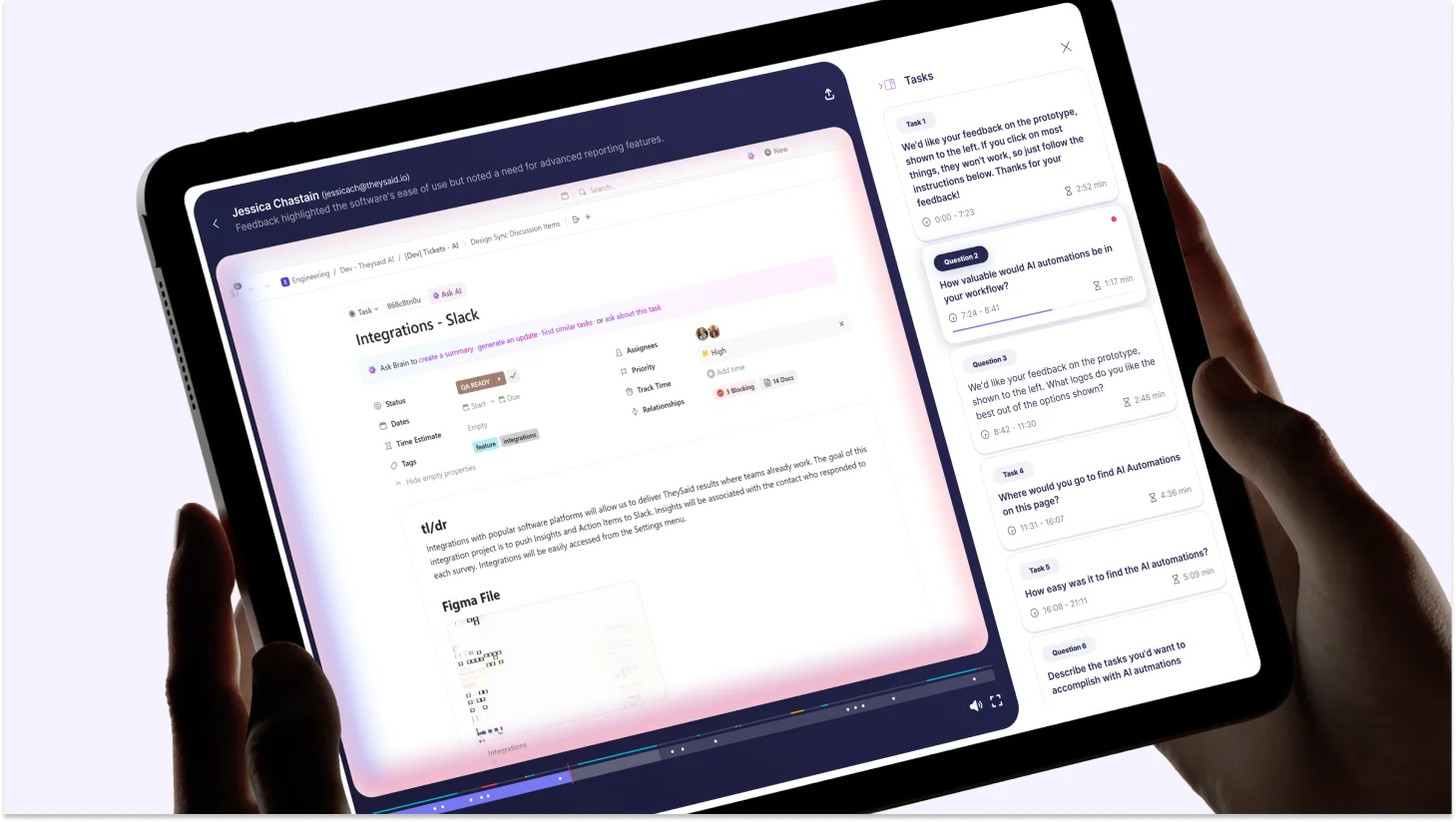
In addition to multiple-choice questions, schools can use AI-powered follow-ups to capture deeper student context. Automatic summaries highlight key themes such as distraction levels, learning benefits, and policy gaps helping educators move from raw responses to clear, actionable insights.
Whether evaluating existing phone rules or designing new ones, TheySaid helps schools create student-informed, evidence-based phone policies with less manual effort. Create a free survey with TheySaid!
FAQs
Are cell phones allowed in schools in the U.S.?
Cell phone rules vary by school district and state. Some schools allow limited phone use for learning or emergencies, while others restrict phones during class time. Many schools review student survey data before updating their phone policies.
How does cell phone use affect students in the classroom?
Cell phone use can both help and hurt students. While phones may support learning and communication, excessive use is often linked to classroom distractions, reduced focus, and lower academic engagement.
Should schools ban cell phones completely?
Most educators agree that complete bans are not always effective. Survey data shows that balanced policies restricting phones during instruction but allowing access for safety or learning are often more realistic and enforceable.
Why should schools survey students about phone use?
Student surveys provide direct insight into how phones are actually used during the school day. This helps schools move beyond assumptions and design phone policies based on real student behavior and needs.
What questions should a student cell phone survey include?
A strong survey includes questions about usage frequency, classroom distraction, academic impact, communication, privacy, safety, and student opinions on school phone rules.
Should student phone use surveys be anonymous?
Yes. Anonymous surveys encourage honest responses, especially when asking about distractions, rule-breaking, mental well-being, or cyberbullying related to phone use.
How can schools use survey results to improve phone policies?
Schools can use survey insights to adjust classroom rules, introduce digital literacy programs, clarify expectations for students and parents, and create phone policies that are easier to enforce and widely accepted.



.svg)


