




If you’ve ever filled out a quick form after buying something online, visited a clinic, or attended an event, you’ve already used a questionnaire, even if you didn’t think of it that way.
Questionnaires quietly power most kinds of research. They show up in academic studies, product testing, employee feedback, healthcare evaluations, classroom activities, you name it. They’re popular because they make it much easier to gather structured information from many people without having to interview each person separately.
This guide explains what a questionnaire is in practical terms and walks you through its purpose, structure, standard types, and the kinds of questions you can include.
By the end, you’ll understand how questionnaires work and how to use them effectively in your own projects.
What Is a Questionnaire?
A questionnaire is a structured set of questions used to collect information from a group of people. It can gather numbers, written opinions, or both, depending on its design. The goal is to collect data consistently so responses can be compared, analyzed, and used to answer a research question.
Purpose of a Questionnaire
The primary purpose of a questionnaire is simple: to collect information reliably. Anyone who has tried interviewing people manually knows how slow the process is. A questionnaire removes most of that friction.
Researchers use questionnaires to understand how people think, feel, or behave. Businesses use them to test ideas or check how customers feel about a product. Schools use them to see what students need. The method stays the same: ask clear questions, get honest answers, and use that data to make a better decision.
What’s the Difference Between Questionnaires and Surveys?
Questionnaires and surveys seem alike, right?
Sort of, but there are key differences.
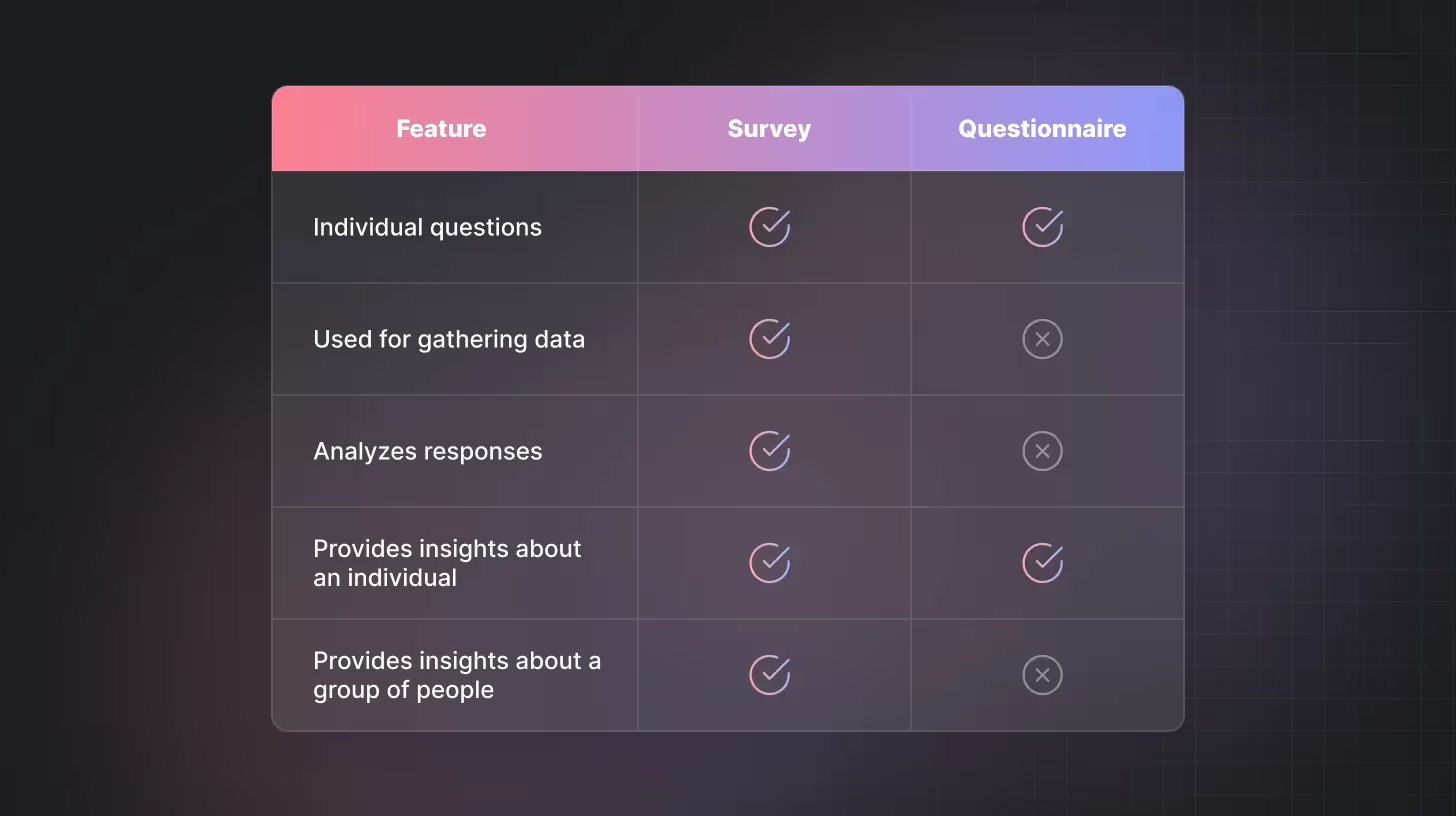
Both are tools for gathering information, yet they serve slightly different purposes and work in different ways. Here’s a closer look:
Questionnaires are a specific set of questions with predefined questions and response options, usually used to collect specific, standardized data from a larger group.
In contrast, a survey is a broader approach that can include various data collection methods, such as questionnaires, interviews, focus groups, or observational studies. It involves planning, data collection, analysis, and reporting.
Surveys can serve multiple purposes, from gathering opinions and feedback to conducting market research, and often allow more flexibility in question types and methods.
While questionnaires are typically fixed in format and aimed at obtaining comparable data, surveys can target different sample sizes and populations depending on the research objective.
If you want an easier way to build either one, you can sign up for TheySaid and create an AI questionnaire or survey in minutes. You can import old surveys, use ready templates, or ask the AI to generate the whole thing for you.
Comparison Table: Questionnaire vs Survey
Recommended Read: Surveys vs Questionnaires: Difference, Use Cases & Benefits Explained
In a recent study we conducted, we looked at how the length of a questionnaire affected response rates. We found that surveys with around 30 questions had a completion rate about 12% lower than shorter surveys with 10–15 questions. Interestingly, respondents were also more likely to skip open-ended questions when the survey was longer, and the average completion time increased by nearly 5 minutes.
This shows how even a moderate increase in questionnaire length can influence both response rates and the quality of data collected.
When to Use a Questionnaire vs. a Survey
A questionnaire is ideal when the goal is to collect specific, structured information from a large group. Common use cases include customer satisfaction feedback, employee engagement, product evaluations, event feedback, and demographic or market research.
Use surveys when conducting market analysis, studying customer behavior patterns, testing new ideas, measuring brand perception, or gathering qualitative insights from targeted groups. Surveys are also useful when research objectives require different question types or when deeper follow-up is needed beyond fixed responses.
What Are the Characteristics of a Good Questionnaire?
The way you design a questionnaire totally depends on what you want to learn. For example, some questionnaires aim to explore ideas and opinions (qualitative questionnaires), while others focus on measurable results (quantitative questionnaires).
No matter the type, every effective questionnaire shares a few important traits. Let’s take a closer look.
Consistency: Each respondent should see the same set of questions. This makes it easier to collect and compare data. Keeping the questions uniform ensures reliable standardized data for analysis.
Exploratory Nature: A good questionnaire leaves room for open-ended questions, allowing respondents to share their experiences in their own words. Open questions provide insights that numbers alone cannot, while structured questions still capture measurable data.
Logical flow: Questions should follow a clear order. Start with simple screening questions, move to general experience questions, then use probing questions to go deeper. A clear sequence keeps respondents engaged and automatically improves response quality.
Accessibility and Flexibility: Most questionnaires today are digital and often delivered online. They need to be mobile-friendly and compatible with different devices so respondents can complete them anytime, anywhere. Flexible design helps reach a wider audience effectively.
Read: Open-Ended vs Closed-Ended Questions

What are the Types of Questionnaires?
Questionnaires don’t all work the same way. The type you choose depends on the kind of information you want to collect and how much freedom you want to give respondents. Most questionnaires fall into one of three groups: structured, unstructured, and semi-structured.
Structured Questionnaires
Structured questionnaires focus on collecting information that can be measured, compared, and analyzed without much interpretation. They rely on predefined questions and fixed response options, which means every person answers the same items in the same way.
Common traits of structured questionnaires include:
Fixed questions: The questions are set in advance. Everyone receives the same wording and order.
Quantifiable answers: Responses usually take the form of numbers, choices, or ratings, making analysis straightforward.
Closed-ended format: Most questions ask respondents to pick from provided options, multiple choice, checkboxes, Likert scales, and so on.
Uniform layout: Because the format is consistent, comparing answers across many respondents becomes much easier.
Unstructured Questionnaires
Unstructured questionnaires are designed to collect open-ended, descriptive answers rather than numerical responses. There are no multiple-choice sets or rating scales; instead, people explain their thoughts in their own words.
Key characteristics of unstructured questionnaires include:
Open-ended questions: Respondents can answer freely without being limited to preset options.
Detailed feedback: Answers tend to be richer and offer context behind people’s choices or behaviors.
Flexible format: Since there’s no rigid structure, the layout and question style can vary depending on the topic.
More complex analysis: Because the responses are longer and more varied, reviewing and interpreting them takes more effort.
Semi-Structured Questionnaires
Semi-structured questionnaires sit between the two extremes. They follow a general structure, but they also allow open-ended responses when you want more detail. This format works well for exploratory studies where you want both numbers you can compare and written insights that add context.
Typical features of semi-structured questionnaires include:
Mixed data: They collect both quantitative data from fixed questions and qualitative insights from open prompts.
Balance of consistency and depth: You get standardized results while still giving respondents space to elaborate when needed.
Guided structure: A predefined set of questions keeps the focus on key topics, making sure important themes are covered across responses.
.avif)
Examples of Questionnaire Uses (With Sample Questions)
Here are a few common types of questionnaires and some sample questions that show how they work in real-world situations.
Customer Experience Questionnaire
Businesses often send these after a customer interacts with their product or service. The goal is to understand satisfaction, ease of use, and any issues that need attention.
Sample Questions:
- How would you rate your overall experience today?
- Was the process easy to complete?
- What did you like most about your visit or purchase?
- Did anything feel confusing or frustrating?
- How likely are you to return or recommend us to someone else?
This type of questionnaire helps teams improve service quality and identify what customers value most.
Product Feedback and Usage Questionnaire
These questionnaires help product teams understand how people use the product, what works well, and what needs improvement.
Sample Questions:
- Which feature do you use most often?
- How helpful do you find the product in your daily routine?
- Did you experience any issues while using it?
- What’s one improvement that would make the product better for you?
- How likely are you to continue using this product?
Responses here guide updates, feature changes, and long-term product decisions.
Event or Training Feedback Questionnaire
These questionnaires are sent after workshops, webinars, or training sessions to understand how useful the session was, whether the content met expectations, and what participants want improved for future events.
Sample Questions:
- How useful was the session for you?
- Was the content easy to understand?
- What part of the event did you find most helpful?
- What would you like to see added next time?
- Would you attend another session like this?
User Experience (UX) Questionnaire
Great for understanding how people interact with digital products like websites, apps, or dashboards.
Sample Questions:
- Was it easy to find what you were looking for?
- Did you run into any points where you got stuck?
- How would you rate the overall usability?
- What improvements would help you complete tasks faster?
- Did the design feel intuitive?
Benefits of Using Questionnaires
Now that you've seen how questionnaires are used, here are some key advantages that show why they remain a trusted research method.
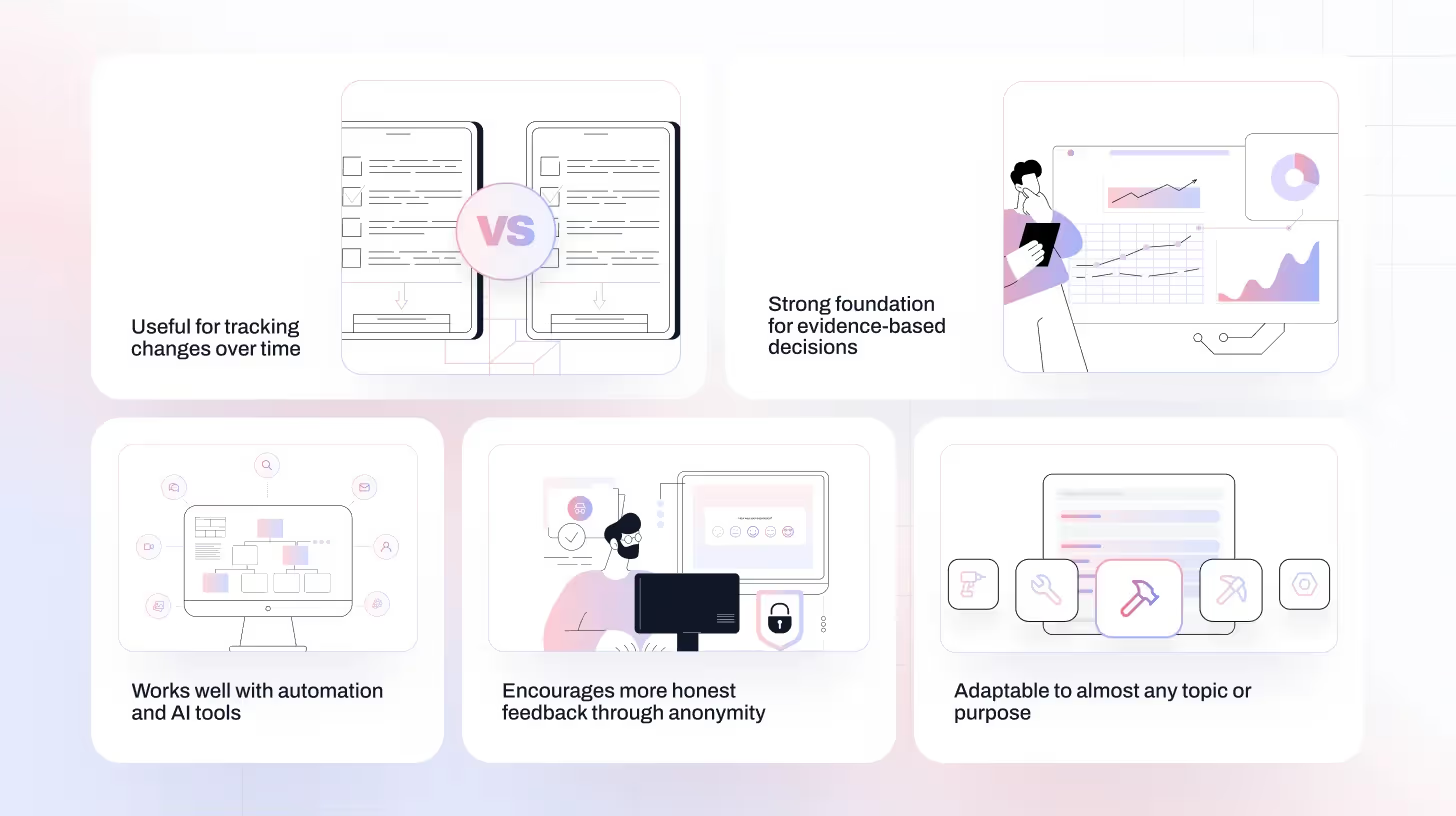
Useful for Tracking Changes Over Time
A consistent set of questions makes it easy to compare results across months or even years. Patterns become visible quickly, what’s improving, what’s declining, and where attention is needed.
Strong Foundation for Evidence-Based Decisions
Instead of guessing, teams can lean on actual data. Whether you’re choosing which feature to prioritize or evaluating the success of an initiative, the responses offer concrete proof to guide decisions.
Works Well With Automation and AI Tools
Modern platforms can clean, organize, and analyze questionnaire data almost instantly. Insights that once required hours of manual work, such as sentiment trends or recurring themes, now appear automatically through tools like TheySaid.
Encourages More Honest Feedback Through Anonymity
When respondents know their identity isn’t attached to their answers, they tend to be more direct and comfortable sharing real opinions, especially in sensitive topics or workplace evaluations.
Adaptable to Almost Any Topic or Purpose
Whether the goal is to evaluate a service, understand user behavior, test a new idea, or check the mood of a team, questionnaires easily adjust to the task. The format suits everything from quick rating scales to deeper written responses.
Quick Checklist: Best Practices for Creating an Effective Questionnaire
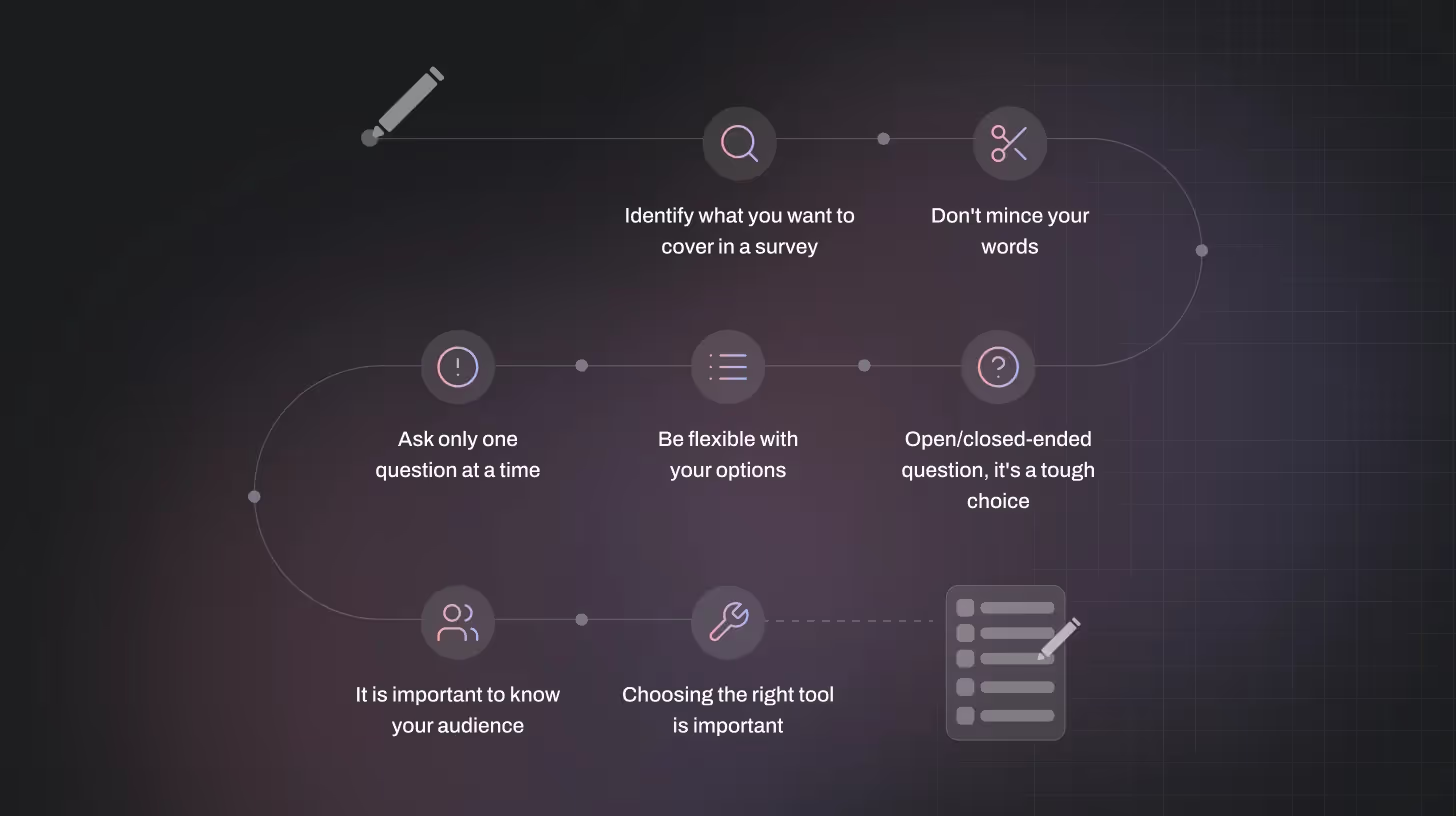
- Know exactly what you want to learn before you start writing questions.
- Keep the wording short, clear, and free of jargon.
- Ask one thing at a time so people don’t get confused.
- Begin with easy, non-personal questions to help people ease in.
- Use a mix of question types only when it actually adds value.
- Remove any question that doesn’t directly serve your goal.
- Arrange questions in a natural order, moving from general to specific.
- Make sure answer options don’t overlap and are easy to understand.
- Keep your phrasing neutral so you don’t influence the response.
- Check that the questionnaire works well on mobile—most people answer there.
- Test it with a few people to catch confusing or unnecessary questions.
- If anonymity matters, make that clear so respondents feel safe being honest.
Recommended Read: Leading and Loaded Questions: The Survey Killers (And How to Fix Them)
Create and Launch Questionnaires in Minutes with TheySaid
With TheySaid, building a questionnaire feels easy instead of overwhelming. You can create one from scratch, import an existing survey, or let the AI help you shape your questions in just a few minutes. If you already know what you want to learn, the platform turns your ideas into clear, focused questions. If you’re not sure yet, you can choose from ready-made templates and adjust them however you like.
One thing that sets TheySaid apart is how engaging the experience is for respondents. People aren’t just clicking through another boring form; the platform uses interactive, conversational elements that feel more natural. There’s even a voice response option, so participants can talk through their answers instead of typing everything out. This often leads to richer, more honest feedback.
Whether you’re running a quick pulse check, a detailed research study, or a product survey, TheySaid helps you launch it fast and collect insights without the usual friction.
You can sign up for free and see how simple it is to create questionnaires and surveys that people actually want to complete.
Recommended Read: Launch Your First AI Survey with TheySaid
Key Takeaways
Now that you’ve seen how questionnaires work from end to end, here are the core points to keep in mind.
Questionnaires offer a simple, structured way to gather reliable information from groups of any size. Their strength comes from clear questions, a logical flow, and formats that fit different research needs, whether you want quick ratings or detailed opinions. They’re affordable, easy to distribute, and even easier to analyze, which is why they’re used everywhere from product feedback to academic research. With modern tools like TheySaid, creating questionnaires is faster, more interactive, and far more engaging for respondents, helping you collect better insights with less effort.
FAQs
Are questionnaires quantitative or qualitative?
They can be either. Structured questionnaires generate measurable numbers, while unstructured ones capture descriptive, open-ended feedback. Semi-structured versions combine both.
When should I use a questionnaire instead of a survey?
Use a questionnaire when you want direct responses to specific questions. Choose a broader survey when your research also requires interviews, observations, or detailed follow-up questions.
How do I improve response rates for my questionnaire?
Keep questions short, remove jargon, offer anonymity when possible, ensure the form works well on mobile, and explain why the feedback matters. These small tweaks significantly increase participation.
Can questionnaires collect sensitive information?
Yes, if designed carefully. Questions should feel respectful, optional, and clearly explain why the information is being asked. Offering confidentiality or anonymity increases honesty.
What tools can I use to create a questionnaire easily?
Tools like TheySaid help you create questionnaires quickly using AI, ready-made templates, or voice-based responses. You can build, customize, and launch them in minutes without needing research experience.






.svg)


