




Surveys are a powerful tool for getting feedback, but if your questions are too vague, generic, or leading, you will end up getting answers that are useless. Let’s say you ask your employees Are you happy at work? Sound good! Right? Wrong
What does happy mean here? Maybe they are happy about the work environment or company policies, but their manager undervalues them. You should have asked if you felt recognized for your contributions. Does your manager provide constructive feedback on your work? These questions will lead you to meaningful insights and eliminate all the guesswork for you.
This guide gives you everything you need to run employee engagement surveys that drive real change: a clear definition, key benchmarks, the 10 C's of engagement, 50+ survey questions by category, 6 ready-to-use templates, and a step-by-step process for designing and acting on results.
What is an employee engagement survey?
The employee engagement survey is a structured questionnaire that measures deeper factors such as leadership effectiveness, Workplace culture, recognition, and career growth of employees. These factors determine how committed and motivated employees are with their workplace. Highly engaged employees increase productivity and morale and lower turnover rates.
The Must-Know Employee Engagement Stats (Some May Surprise You!)
Employee engagement is about how employees behave in a company and how management and employers influence that. It goes beyond job satisfaction as employees use additional efforts, often referred to as going the extra mile. A Highly engaged team means higher profitability, lower attrition, and a more motivated team.
The below-mentioned Numbers say it all!
- Disengagement costs companies up to $8.8 trillion annually, which is 9%of the global GDP.
- Engaged employees are 87% less likely to leave their company.
- Only 32% of employees in the U.S. report being engaged at work.
- Companies with high employee engagement experience 59% less turnover.
- Companies with highly engaged employees are 23% more profitable.
.avif)
Read - Top Employee Engagement Survey Topics
Employee Satisfaction vs. Employee Engagement: What's the Difference?
These two terms are often used interchangeably, but they are not the same
Employee Engagement Survey Benchmarks
Benchmarks are standardized metrics that help organizations measure engagement against industry standards, historical data, or peer organizations. There are three types:
Internal Benchmarks
Internal benchmarks compare your current survey results with your organization's own historical data. They help you track whether engagement is increasing, decreasing, or stagnating over time, and identify specific departments where engagement has dipped.
Example: If your organization found a 70% engagement rate last year and it's now 75%, that's a signal your reward and recognition initiatives are working.
External Benchmarks
External benchmarks compare your results against data from third-party research institutions. They show how your organization performs relative to a broader pool.
Example: If the average engagement rate is 70% and your company scores 65%, it's time to review strategies around leadership, workload balance, and growth opportunities.
Industry Benchmarks
Industry benchmarks offer a more targeted comparison of organizations with a similar business model, market conditions, and operational activities.
Example: If retail companies average 75% engagement and yours is 60%, that gap signals a need to review your policies or initiatives against sector norms.
The 10 C's of Employee Engagement
The 10 C's provide a framework for building and sustaining a productive, engaged workforce. Use them to audit your current engagement strategy and identify gaps.
1. Connect
Creating strong interpersonal relationships between employees and the organization so they feel connected to their managers, management, and teammates. Monthly team-building events or informal coffee chats help strengthen these bonds.
2. Career
Growth and development opportunities keep employees loyal. Companies should provide mentorship programs, training, and annual meetings to discuss development plans.
3. Clarity
Defining company goals and expectations so employees can align their work strategies and deliver their best. Regular one-on-ones help ensure everyone stays on the same page.
4. Convey
Effectively sharing the mission, vision, goals, and values with employees. Transparent communication helps employees feel valued. Microsoft's quarterly town halls — where executives share achievements and future plans — are a strong example.
5. Congratulate
Recognizing and appreciating employees' contributions, both big and small. Recognition could be employee-of-the-month awards, peer-to-peer programs, or verbal appreciation in meetings.
6. Contribute
Ensuring employees know the tangible impact of their work on the organization. Share success stories and communicate how individual contributions connect to overall productivity.
7. Control
Empowering employees to make decisions, manage tasks, and influence outcomes. This builds trust, encourages creativity, and lets employees take charge of their work.
8. Collaborate
Building a culture where teams and cross-departments work together toward a common objective — sharing ideas, brainstorming, solving problems, and innovating.
9. Credibility
Building a relationship of trust and reliability between the organization and its employees. When employees believe in leadership's decisions and actions, they stay more engaged.
10. Confidence
Instilling self-assurance in employees. When they feel confident in their skills and supported by the company, they take new initiatives and tackle challenges head-on.
Top 50+ Employee Engagement Survey Questions for 2026
Employee eNPS (Employee net promotor score)
The eNPS survey measures employee loyalty to the company and the willingness to recommend their workplace to others. It helps track engagement over time and identifies areas of improvement.
- On a scale of 0-10, how likely are you to recommend our company to your friends and family as a good workplace?
The eNPS answers are divided into three categories:
0-6 Detractors: Employees who are totally dissatisfied and spread negative word of mouth.
7-8 Passives: Employees who are engaged but are not emotionally invested in company.
9-10 Promoters: Extremely loyal employees who spread positive word of mouth.
Follow-Up Questions for Deeper Insights:
- What is the purpose of your rating?
- What can we improve to make your experience better here?
- What motivates you to keep working here?
- Do you see yourself working with us for the next 3 years?
DEIB survey (Diversity, Equity, Inclusion and Belonging)
A DEIB survey gathers feedback related to diversity, equity, inclusion, and background. It helps the company assess how fair, diverse, and welcoming they are for employees. It aims to treat everyone fairly regardless of their backgrounds and ensure all employee voices are heard equally.
You can create an equitable and inclusive work environment by asking the right questions.
Diversity survey questions
- On a scale of 1 -10, how would you rate the company’s representation of diverse identities?
This question helps assess whether the companies reflect diversity at various levels, such as leadership, hiring, and promotion. A low score indicated key areas that require improvement.
- Do you think the company values diverse perspectives while decision-making?
Diversity is not just hiring different people but also listening to other voices, encouraging them, and making them a part of the decision-making process.
- Have you ever experienced bias or discrimination on diversity in the company?
This question asks for firsthand experience with bias or discrimination and identifies patterns that need immediate attention to make a workplace a safe place.
More Diversity-related Questions:
- What do you think the company hires a diverse workforce?
- What are your thoughts on the fairness of growth opportunities within the company?
- Do you see yourself in leadership roles in the next few years?
Equity survey questions
- Would you recommend us as an equitable place for work?
This question will help you assess what employees think of your workplace and would recommend it as an equitable place for work.
- Give your suggestions to improve equity efforts.
This question helps you gain suggestions into what needs to be done to ensure equity.
- Have you ever experienced any inequities related to access to resources, training, or growth opportunities in the company?
This question directly asks employees to share any bad experiences regarding equity and the accessibility of resources and opportunities.
More Equity -Related Questions:
- How well do the management promote fairness and equity?
- Do you think the company takes active actions to reduce bias in hiring and promotion?
- Do you agree that the performance evaluation in the company is conducted relatively?
Inclusion
- On a scale of 1 to 10, how inclusive is our company?
This question measures how much the company encourages employees’ opinions and perspectives.
- Are you comfortable sharing your opinions with fellows even if they differ?
An inclusive environment provides psychological safety for employees and allows them to express themselves without fear.
- Have you ever felt that a company does not consider your voice?
Being not heard ultimately leads to disengagement. This question measures how receptive management is to feedback.
More Inclusion -Related Questions:
- Does your management involve you in the decision-making process?
- What are your suggestions for improving inclusion at all levels of the company?
- How inclusive do you find team-building activities?
Belonging
- Do you feel the organization recognizes and appreciates your contributions?
Recognition is a key driver of belonging. When employees' efforts go unnoticed, they are more likely to be demotivated and disengaged.
- Have you ever felt isolated or disconnected from your team?
This question uncovers barriers that make employees feel disconnected from the company.
- Do you get support from colleagues and managers when you have personal issues?
Employees who feel supported during difficult times are more likely to stay engaged and committed to their workplace.
More Belonging - Related Questions:
- Do you feel a connection to the company’s mission?
- Have you ever felt excluded from important decisions?
- Give suggestions to strengthen employee’s sense of belonging.
Employee satisfaction-related questions
- On a scale of 1-10, how satisfied are you with your overall job?
- What aspects of work motivate you most?
- Do you think the company values employee’s well-being?
- What’s one thing a company can do to enhance your satisfaction?
- Are you satisfied with the company's level of transparency?
Workplace culture-related questions
- How would you describe your work environment in one word?
- Do you have all the necessary tools you need to perform tasks?
- How are your personal goals aligned with the company’s goals?
- How would you rate overall collaboration in your team?
- Do you believe that the company encourages open communication?
Employee experience-related questions
- In what ways does your job support or limit your skill development?
- I feel supported in my job role on a daily basis.
- How would you rate your overall experience of working here?
- What can a company do to improve your work experience?
- Have you faced any challenges here that have directly affected your work?
Work-Life Balance related questions
- What is your stress level on a typical working day?
- How often do you feel overworked or burned out?
- Does the company provide flexible working options?
- How realistic are your project deadlines?
- Do you feel comfortable discussing workload issues with your manager?
Leadership & Management related questions
- How much do you trust your leadership team to make decisions for the company?
- How well do leaders communicate decisions with employees?
- Do you feel comfortable discussing your issue with management?
- What’s one thing management should do for employees?
Salary and compensation-related questions
- Are you satisfied with the benefits and perks offered by the company?
- On a scale of 1-5, how financially secure are you with your current package?
- Do you think your salary reflects your role and responsibilities?
- If offered high compensation elsewhere, would you stay or leave?
- How comfortably can you discuss your salary concerns with the manager?

6 Free Employee Engagement Survey Templates
Use these ready-to-adapt templates to measure motivation, culture, compensation, environment, wellness, and empowerment. Mix rating scales with open-ended questions for richer insights.
Template 1: Employee Motivation Survey
Understand what truly drives and inspires your employees.
- What motivates you to complete challenging tasks? (Personal growth / Final reward / Team collaboration / Thrill of completing tasks)
- How do you feel about your work? [Open text]
- Choose two factors most important to you at work: (Being paid well / Job security / Feeling stable / Learning new things / Growth opportunities / Overcoming challenges / Other)
- What type of reward makes you feel most motivated? (Public recognition / Surprise card / Extra vacation / Team lunch)
- On a scale of 1–5, how motivated do you feel at work?
Template 2: Organizational Culture Survey
Understanding workplace culture helps with engagement, innovation, and retention.
- Do you agree that the company supports a healthy work-life balance? (Strongly agree → Strongly disagree)
- Do you feel comfortable sharing your ideas at work? (Always / Sometimes / Rarely / Never)
- How would you best describe company culture? (Collaborative / Traditional / Innovative / Competitive / Other)
- Our business goals are primarily driven by: (Data and analytics / Revenue / Employees' best interest / Personal experience)
- How would you rate our company culture? (1–5 stars)
Template 3: Salary and Compensation Survey
Better understand how to improve salary and benefits to support your employees.
- What is your current annual salary? (pre-tax) [Open text]
- Rank the following compensation factors in order of importance: (Retirement plans / Medical benefits / Paid vacation / Performance bonus / Stock options)
- Is your performance recognized and rewarded accordingly? (Yes / Somewhat / Not really / No)
- Do you consider your salary equal to or better than typical market value? (Yes / No)
Template 4: Work Environment Survey
Identify areas for improvement to create a better workplace for everyone.
- Do you have everything you need to carry out your work properly? (Yes / No)
- How well does the company promote teamwork and collaboration? (Very well / Somewhat / Not much / Not at all)
- To what extent do you agree that the company cares about diversity and inclusion? (Strongly agree → Strongly disagree)
- How would you rate the company on its CSR initiatives? (Excellent / Good / Neutral / Needs improvement)
- What would you like to change in your work environment? [Open text]
Template 5: Employee Wellness Survey
Understand stress levels, wellness program participation, and improvements needed to create a healthier workplace.
- How do you feel coming to the office? (Very stressed → Very relaxed and happy)
- How often do you participate in wellness programs offered by the company? (Regularly / Occasionally / Rarely / Never)
- How active are you outside of work? (Very active / Somewhat active / Occasionally active / Not active at all)
- What type of wellness activities do you find most useful? (Physical fitness / Flexible work hours / Healthy food / Mental health support / Other)
- What improvements would you suggest to enhance employee wellness? [Open text]
Template 6: Employee Empowerment Survey
Assess decision-making ability, feedback frequency, and overall trust in the workplace.
- Which statement do you agree with most? (A: I am encouraged to share new ideas / B: I feel hesitant to suggest new ideas / C: I'm not sure if my ideas are valued)
- How empowered do you feel in your current role? (Very empowered → Not empowered at all)
- Do you think you have the ability to make important decisions? (Yes, all the time / Yes, sometimes / I don't know / Never)
- How often do you receive feedback on your performance? (Frequently / Occasionally / Rarely / Never)
- To what extent do you feel trusted by your manager? (Fully trusted → No trust)
How to Design an Effective Employee Engagement Survey
1. Define Clear Objectives and Identify Your Target Group
Clear objectives explain what you're hoping to achieve. Are you measuring employee motivation levels? Testing the outcomes of a new policy? Your survey goals guide the design and determine who you survey — your entire organization or a specific subgroup.
Include criteria like tenure, employment type, and seniority level, as each group needs tailored questions. New hires need onboarding questions; long-term employees benefit from questions about motivation, compensation, and leadership.
2. Choose the Right Survey Format for Your Goal
Not all engagement surveys serve the same purpose. Match your format to your goal:
• Pulse surveys (5–10 questions): Best for frequent check-ins and tracking trends over time.
• Annual engagement surveys (20–40 questions): Best for a full audit of culture, leadership, and satisfaction.
• AI-moderated interviews: Best when you need the 'why' behind ratings — follow-up questions surface context that static surveys miss.
3. Pilot Test the Survey
Ask a small group of employees to complete the survey before the full rollout. This helps identify issues with length, question clarity, or technical glitches. Ensure the platform is integrated with communication channels like email, Slack, and in-app notifications.
4. Communicate the Purpose Upfront
Inform employees why the survey is being conducted and what changes their feedback can make. Send an email before the survey that defines the objectives, or hold a brief meeting to explain the purpose and address questions. Transparent communication drives higher response rates.
5. Analyze and Act on the Results — Fast
The real value lies in acting on what you find. Identify trends, prioritize areas of improvement, and implement action plans quickly. Research shows that organizations that communicate changes within 30 days of a survey see significantly higher participation in future surveys.
Example: If 60% of employees feel there are no growth opportunities, respond by introducing a mentorship program and training sessions — then communicate those changes back to employees so they know their feedback drove real action.
Create Employee Engagement Surveys with TheySaid
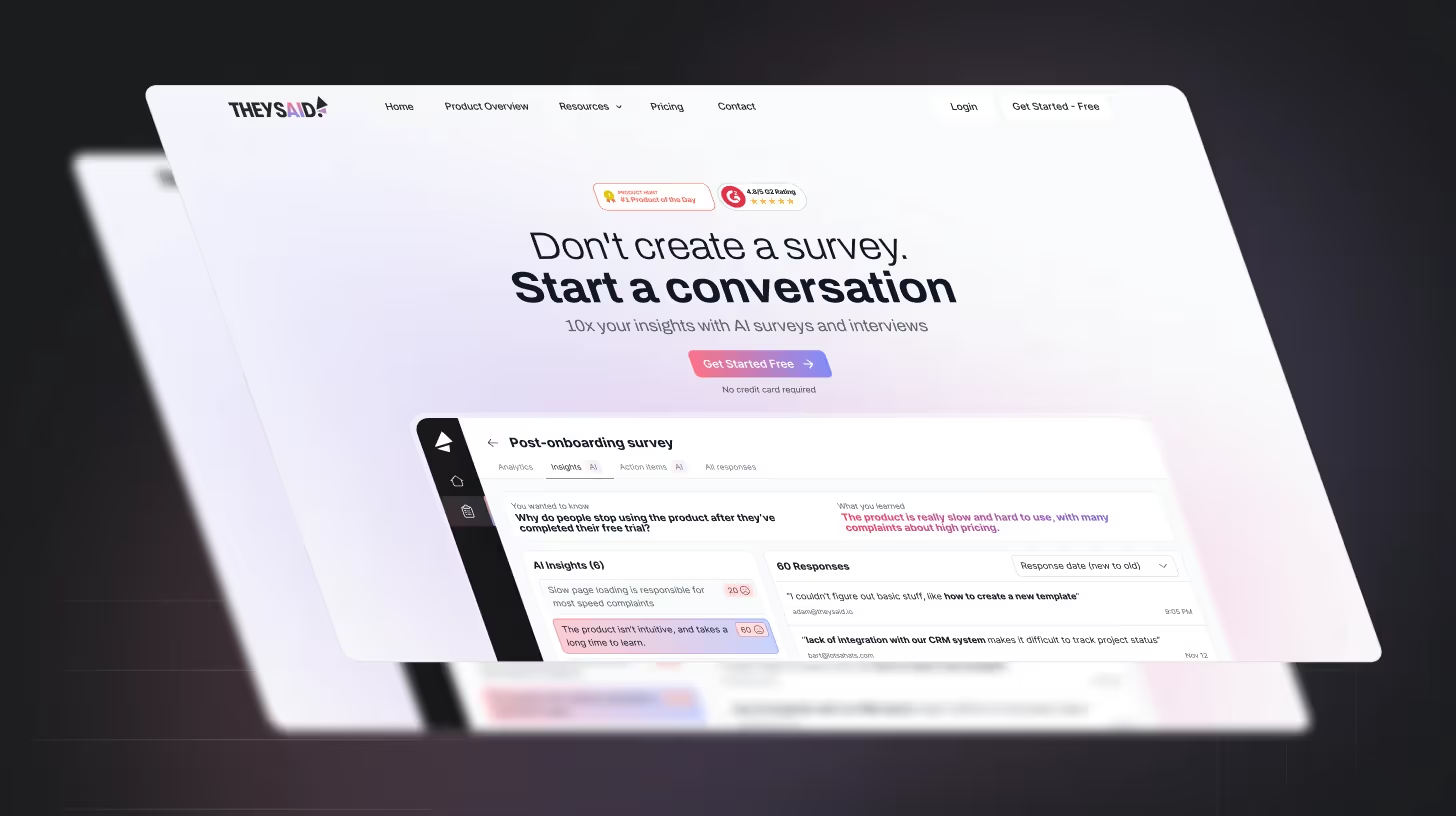
Traditional surveys are static, generic, and often ignored. TheySaid's AI-powered platform transforms employee feedback into real conversations — asking follow-up questions, surfacing the reasoning behind responses, and delivering actionable insights without hours of manual analysis.
Step-by-Step: Running a Survey with TheySaid
- Go to TheySaid.io. Sign up or log in. Paste your website URL the AI automatically learns about your business and tailors questions to your context.
- Choose your survey type: AI Survey (structured + conversational), Pulse Survey (great for eNPS, CSAT, or quick check-ins), or AI Interview (in-depth feedback with AI as moderator).
- AI generates customized questions based on your goals in minutes. Tweak them or let the AI handle it.
- Distribute via email, Slack, QR code, or in-app chat wherever your employees actually are.
- TheySaid analyzes responses in real time: summarizing trends, detecting action items, and flagging concerns before they escalate.
- Close the loop. Share results with employees and communicate the changes you're making. This is what turns a survey into a culture shift.
What sets TheySaid apart:
- Conversational AI asks follow-up questions to get the 'why' behind ratings
- AI-moderated interviews at scale — qualitative insights without manual analysis
- Auto-generated questions customized to your organization's goals and context
- Real-time trend detection and action item summaries
- Integrates with email, Slack, and in-app channels for high response rates
Start your first employee engagement survey free at TheySaid.io.
FAQs
What is an employee engagement survey?
An employee engagement survey is a structured questionnaire that measures how emotionally committed and motivated employees are toward their organization. It collects data on factors like leadership effectiveness, workplace culture, recognition, career growth, and work-life balance — going deeper than basic job satisfaction to understand what drives or drains your workforce.
What is the purpose of employee engagement surveys?
The main purpose is to give employees a voice and give leadership the data to act. A well-run engagement survey identifies what's working and what isn't, helps reduce turnover, improves productivity, and builds a culture where employees feel heard and valued.
What's the ideal length for an employee engagement survey?
Keep it between 10–20 questions to maximize participation and response quality. Shorter pulse surveys (5–10 questions) work well for frequent check-ins, while annual surveys can go up to 30–40 questions if structured well. A mix of rating scales and open-ended questions gives you both measurable data and qualitative depth.
How often should you run employee engagement surveys?
Most organizations run a full engagement survey annually or biannually, supplemented by shorter pulse surveys quarterly or monthly. The right frequency depends on your team size, pace of change, and how quickly you can act on results. Running surveys without acting on them damages trust and response rates over time.
How quickly should you act on survey results?
Within 30 days of closing the survey, at a minimum. Share a summary of findings with employees, acknowledge key themes, and communicate what actions you're taking. Even a short update ('We heard you on workload — here's what we're doing') goes a long way toward building trust and driving participation in future surveys.
What benchmarks are used in employee engagement surveys?
There are three types: internal benchmarks (comparing your own results over time), external benchmarks (comparing against third-party research data), and industry benchmarks (comparing against organizations with a similar business model). Using all three gives you the most complete picture of where you stand.
How can AI improve employee engagement survey results?
AI-powered tools like TheySaid go beyond static surveys by turning questions into real-time conversations. The AI asks intelligent follow-up questions, uncovers the reasoning behind ratings, reduces survey fatigue through adaptive questioning, and automatically summarizes trends and action items. This leads to higher response rates, richer data, and faster time to insight.
What's the difference between employee satisfaction and employee engagement?
Employee satisfaction measures how happy or content employees are with their job conditions — salary, benefits, environment. Employee engagement goes deeper: it measures emotional investment, motivation, and connection to the company's mission. A satisfied employee might show up without being truly invested; an engaged employee actively contributes to the company's success.




.svg)


