



Are your employee benefits helping your team thrive or just filling a checklist? From flexible work hours to health coverage and retirement plans, perks can make a huge difference in job satisfaction and employee retention.
Conducting an employee benefits survey gives you a clear picture of what your staff really values, so you can shape a benefits program that keeps people happy, motivated, and loyal.
TL;DR
An employee benefits survey helps HR understand how employees value workplace perks, including health insurance, retirement plans, flexible work arrangements, and wellness programs. By collecting feedback, companies can improve engagement, boost staff satisfaction, reduce turnover, and tailor benefits programs to meet diverse employee needs. Key steps include clear benefit descriptions, satisfaction ratings, open-ended questions, and demographic insights. Acting on survey results and repeating surveys regularly ensures your compensation package stays competitive and relevant.
What Is an Employee Benefit Survey?
An employee benefit survey is a structured way to ask your workforce how they feel about the benefits your company provides. The goal is to give HR and leadership clear insight into:
- How employees perceive the current benefits program
- Which employee perks feel useful, and which ones fall short
- What improvements or new benefits offerings would employees actually value
- How well does your compensation package and perks support overall employee engagement and job satisfaction?
These surveys also highlight how different groups within your organization value benefits differently. For instance, health coverage, retirement plans, mental-health resources, and flexibility often resonate differently depending on someone’s age, life stage, or personal priorities.
Many younger employees lean toward flexible work arrangements and well-being perks, while older employees may place more weight on financial security and healthcare support.
By collecting accurate data straight from your team, you gain a clearer picture of what truly matters to them, allowing you to shape a benefits package that feels relevant, balanced, and aligned with the needs of a diverse workforce. Try TheySaid free and see what your team really values in benefits.
How Employee Benefit Surveys Help Your Business?
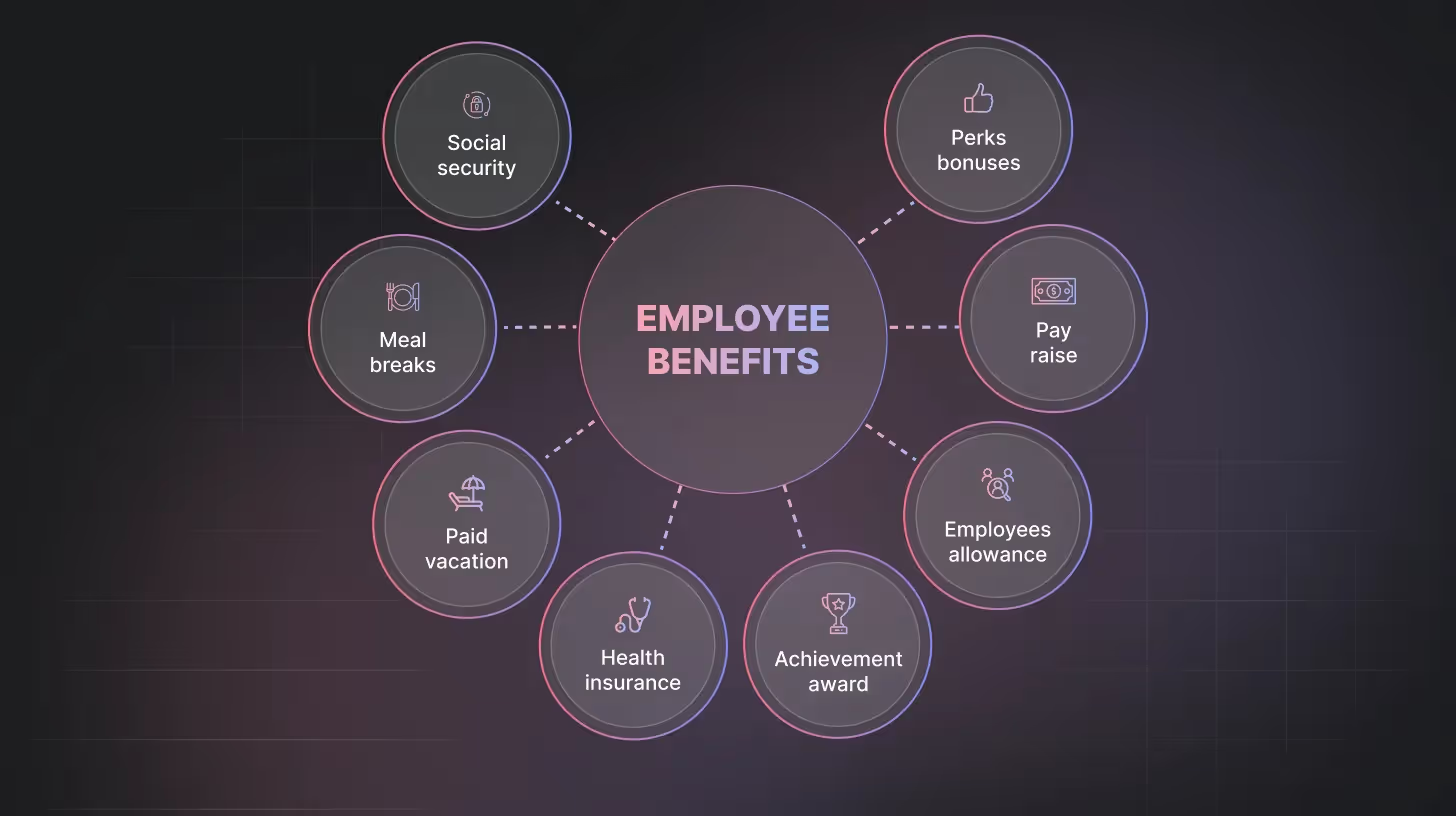
Employee benefit surveys do more than just gather opinions; they offer actionable insights that can directly improve your organization’s performance, engagement, and retention. Here’s how, along with key statistics to back it up:
Increase Engagement & Satisfaction
Employee benefits are a major contributor to engagement. According to AccessPerks, 83% of employers believe their benefits significantly drive employee satisfaction. When employees feel heard and cared for, loyalty rises: MetLife data shows that employees who feel their employer truly cares are 1.3× more likely to stay and 1.2× more productive. Engagement also has a big business impact. Highly engaged teams can achieve 14% higher productivity, 23% higher profitability, and 81% lower absenteeism.
Improve Retention and Reduce Turnover Costs
Replacing an employee is expensive. For many roles, it can cost 50–200% of their annual salary to hire a replacement. Additionally, 63% of employees say they would change jobs for better benefits, according to a recent well-being and voluntary benefits report. Conducting a benefits survey helps identify what truly matters to your staff, reducing turnover and the costs associated with it.
Benchmark and Compare Your Benefits Effectively
Using your survey data, you can benchmark your benefits against national averages using the Bureau of Labor Statistics (BLS) National Compensation Survey (NCS).
The NCS provides detailed data on benefits incidence (who has access) and provisions (how generous the plans are), broken down by establishment size, industry, and profit vs. non-profit status. For example, the BLS’s data shows that establishment size correlates with compensation costs: large establishments (500+ workers) pay significantly more on benefits per employee hour than very small establishments. Source
Align Benefits With Strategic Business Goals
Data-driven benefits decisions help HR allocate budget more wisely: instead of guessing which perks employees want, you know where to invest (or cut) based on what your people actually say. Survey insights also support long-term HR strategy: if retention is a top concern (as many HR teams say it is), then focusing on the most valued benefits can directly contribute to achieving that goal.
Read: Why an Employee Wellness Survey Is Essential for a Thriving Workplace
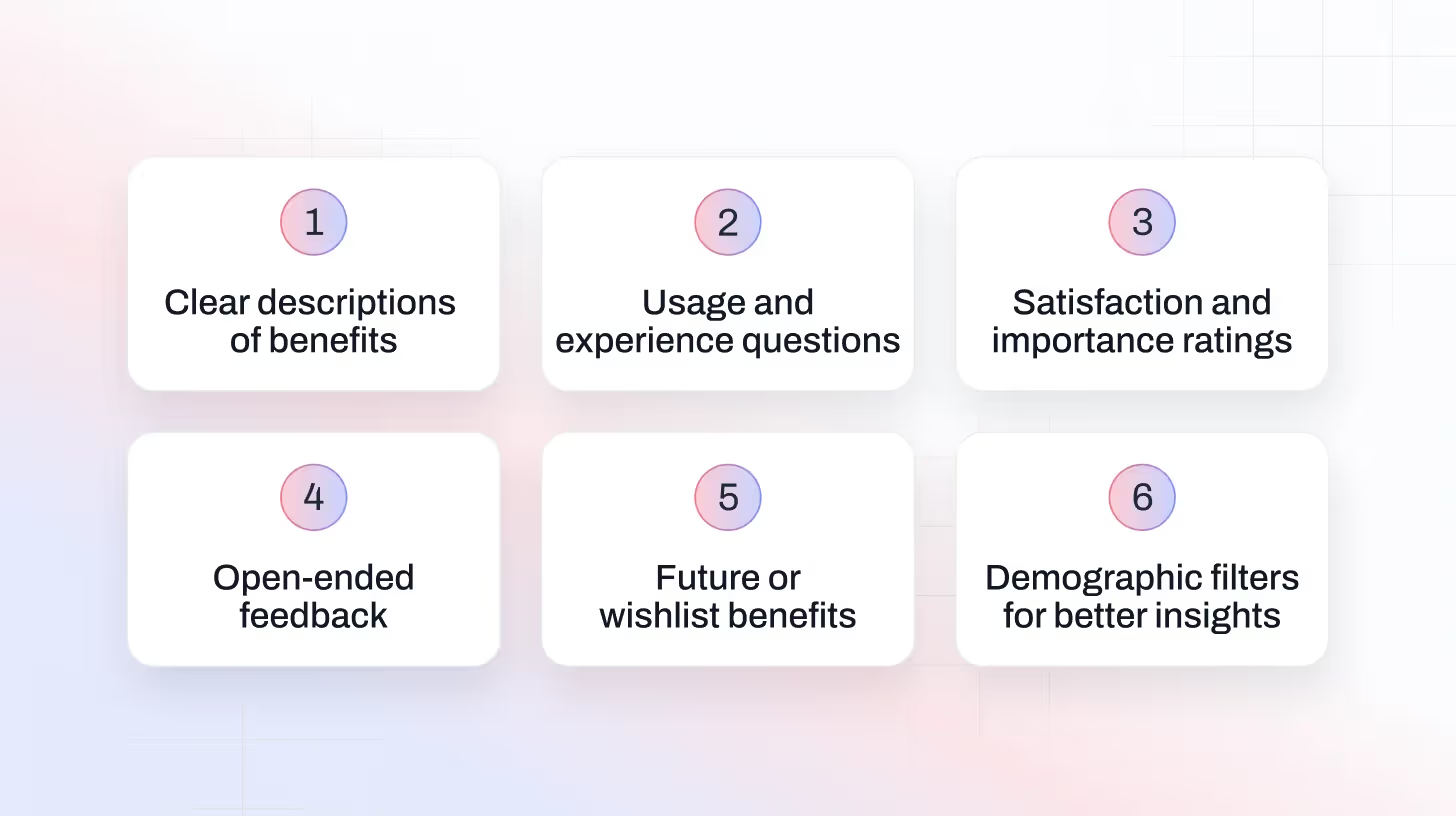
What to Include in an Employee Benefits Survey
Creating an employee benefits survey is one of the most effective ways to understand how your workforce values your perks and benefits. Here’s what a comprehensive survey should include:
Clear Descriptions of Benefits
Employees can’t provide meaningful feedback if they don’t fully understand a benefit. Include brief, clear explanations for each offering, whether it’s health insurance, retirement plans, wellness programs, or flexible work options. For example:
“Our wellness stipend provides $300 per year to spend on mental health, fitness, or nutrition-related programs.”
Providing context ensures that employees can accurately evaluate both current and potential benefits.
Usage and Experience Questions
Focus on how employees experience each benefit, not just whether they like it. Questions might include:
- How often do you use this benefit?
- Was it easy to enroll or access?
- Does this benefit support your well-being or professional growth?
- Have you experienced any challenges or barriers while using it?
These questions uncover actionable insights about usability and perceived value.
Satisfaction and Importance Ratings
Incorporate a Likert scale or rating system to measure satisfaction and importance. Example:
- Strongly agree / Agree / Neutral / Disagree / Strongly disagree
This helps quantify trends across your workforce and compare results between teams, departments, or demographics.
Open-Ended Feedback
Allow employees to provide additional comments or suggestions. Open-ended questions often reveal ideas or gaps HR might not anticipate, such as:
- New benefits employees wish the company offered
- Ways to improve existing perks
- Unique needs for specific employee groups
Future or Wishlist Benefits
Include a section asking employees about new benefits they would value most. Examples:
- Flexible childcare or eldercare support
- Mental health stipends
- Commuting or remote work allowances
- Professional development and training opportunities
This helps you prioritize benefits that will have the biggest impact on engagement and retention.
Demographic Filters for Better Insights
Gather non-identifying information to understand differences in preferences:
- Department or team
- Job level
- Employment type (full-time, part-time, contract)
- Age range or career stage
Awareness and Communication Check
Finally, assess whether employees know about each benefit:
- Were you aware that this benefit exists?
- Do you know how to access it?
Low awareness may indicate that communication improvements are needed rather than a problem with the benefit itself.
Employee Benefits Survey Questions to Ask
The questions you include in your employee benefits survey will depend on your organization’s goals, but it’s always a good idea to start with a baseline of how employees feel about the benefits you currently provide.
The right mix of questions helps HR identify satisfaction levels, gaps, and opportunities for improvement. Here are common topics and sample questions:
Health and Wellness Benefits
- How satisfied are you with your current health insurance coverage?
- How easy is it to understand and choose a health plan that meets your needs?
- Does your healthcare coverage adequately support your family’s needs?
- How valuable do you find wellness programs, such as mental health support or gym memberships?
Retirement and Financial Benefits
- How satisfied are you with your employer’s retirement contributions?
- How confident are you that you are on track to meet your long-term financial goals?
- How helpful do you find additional financial benefits, such as stock options or savings programs?
- How well do financial benefits meet your needs compared to other employers in your industry?
Paid Time Off and Parental Leave
- How fair and flexible do you find the company’s paid time off policies?
- How comfortable do you feel requesting time off when needed?
- How satisfied are you with the parental leave policies offered by your organization?
- How well do vacation and personal leave policies support your work-life balance?
Work-Life Balance and Flexibility
- How satisfied are you with expectations around working hours?
- How easy is it to adjust your schedule for personal commitments?
- How well do flexible work options (remote work, flexible hours) meet your needs?
- How comfortable do you feel communicating with your manager about flexible arrangements?
Professional Development
- How satisfied are you with opportunities for professional growth and learning?
- Do you feel supported in pursuing development opportunities relevant to your role?
- How helpful are mentorship programs, training sessions, or workshops in your career growth?
- What type of professional development programs would you find most valuable?
Additional Perks and Office Benefits
- How satisfied are you with workplace amenities, like catered meals or snacks?
- How valuable do you find non-traditional perks, such as commuter benefits or wellness stipends?
- How well do office perks contribute to your overall job satisfaction?
- Are there any additional perks you wish your employer offered to improve your work experience?
4 Best Practices for Employee Benefits Surveys
Running an employee benefits survey isn’t just about sending out a form and waiting for responses. To get insights that actually help, you need a thoughtful approach, from designing the questions to acting on the feedback. Here are some practical ways to get it right:
Mix Your Questions Wisely
A good survey isn’t all ratings or all open-ended questions. Think about what you want to learn:
- Are employees aware of all the benefits you offer?
- How satisfied are they with the current perks?
- Which benefits matter most to them?
- Are there perks they wish you offered?
By covering these areas with different types of questions, you get a fuller picture without overwhelming respondents.
Read: Essential Question Types for Effective Surveys
Look at Different Employee Groups Separately
Not everyone values benefits the same way. What matters to a new graduate might be very different from what a parent or a long-tenured employee wants. Segmenting responses by department, age, tenure, or role helps you spot patterns and make smarter decisions about which benefits to prioritize.
Decide How You’ll Use the Feedback
Collecting data is just the start. Think about what you’ll do once the survey is complete:
- Which insights need immediate action?
- How will you communicate results back to your team?
- What changes can realistically be implemented to improve the benefits package?
Being transparent and showing that employee feedback leads to real improvements encourages trust and engagement.
Make It a Habit
Employee needs don’t stay the same. Staff join and leave, priorities shift, and new benefits become relevant. Running your survey on a regular basis, once a year, or every other year, ensures your benefits program keeps pace with what your team truly values.
Free Employee Benefits Survey Template
- How satisfied are you with the overall employee benefits offered by the company? (1 = Very dissatisfied, 5 = Very satisfied)
- Which of the following benefits do you use most often?
(Multiple choice)
- Health insurance
- PTO / vacation
- Flexible work options
- Wellness programs
- Retirement plan
- Professional development
- None of the above
- Please rate the importance of each benefit to you personally:
(Matrix rating: 1 = Not important, 5 = Extremely important)
- Health insurance
- PTO / vacation
- Flexible work
- Retirement benefits
- Wellness stipends
- Learning & development
- How easy was it to understand and enroll in the benefits available to you?
(Multiple choice)
- Very easy
- Easy
- Neutral
- Difficult
- Very difficult
- Are you aware of all the benefits the company currently offers?
(Yes / No) - Have you faced any challenges while using or accessing any benefit?
(Yes / No)
If yes, please describe:
(Open-ended) - How well do our current benefits support your work–life balance?
(Scale: 1 = Not at all, 5 = Extremely well) - Which future benefits would you be most interested in?
(Checkbox — select all that apply)
- Mental health stipend
- Remote work allowance
- Childcare or eldercare support
- Enhanced parental leave
- Commuter benefits
- Additional PTO
- Education reimbursement
- Wellness stipend
- Other (please specify)
- If you could improve one existing benefit, which one would it be and why?
(Open-ended) - How likely are you to recommend our company’s benefits package to a colleague or new hire?
(0–10 rating scale)
Recommended Read: How to Conduct Employee Engagement Surveys for Maximum Impact
Use TheySaid to modernize your entire feedback engine
Most tools help you collect feedback. TheySaid helps you understand it, act on it, and scale it. It’s not just a survey platform; it’s your everything app for capturing, centralizing, and transforming employee insights into decisions that actually move your organization forward.
- Smart Survey Builder: Create advanced surveys with conditional logic, branching paths, and tailored question flows. Import existing surveys in one click and instantly improve them using AI suggestions.
- AI You Can Teach: Train TheySaid’s AI with your company’s language, policies, culture, and historical data. It becomes sharper over time, spotting trends, risks, and sentiment shifts automatically.
- Build a Continuous Feedback Loop: Instead of one-off surveys, the system keeps gathering signals, tracking changes, and comparing patterns, giving you real-time visibility into what’s working and what needs attention.
- Integrations That Actually Matter: Connect Slack, Teams, HRIS platforms, CRMs, email tools, and more. Insights sync automatically,y so nothing gets lost or delayed.
- Advanced Logic & Automation: Trigger surveys based on events (new hire, project completion, policy changes), run follow-ups, and automate reminders all without manual effort.
- Unified Dashboard With Clear Insights: Visual reports, trend lines, heatmaps, and sentiment tracking help you understand the story behind the data, not just the numbers.
- Import, Clean, and Organize All Your Existing Data: Bring in old surveys, feedback files, or external datasets to build a complete historical picture.
- Build Your Own Feedback Loop Framework: Close the loop by turning insights into actions, assigning owners, tracking progress, and letting the AI recommend next steps.
Start your free TheySaid trial and build a modern, intelligent feedback engine all in one place.
Read: How to Create an AI-Powered Survey in Minutes with TheySaid
FAQs
Why should companies run employee benefits surveys?
Benefits change quickly, and so do employee expectations. Running these surveys helps companies stay current with workforce needs, avoid benefit waste, improve retention, and make data-driven decisions instead of guessing what employees want.
How often should we conduct an employee benefits survey?
Most businesses run one annually, but fast-growing or shifting teams may benefit from doing one every 6 months, especially after major policy changes, new benefit launches, or expansions into new regions.
Are employee benefits surveys anonymous?
They should be. Keeping responses anonymous encourages honest feedback, reduces fear of judgment, and ensures the data truly reflects employee sentiment—not what they think leadership wants to hear.



.svg)


