




According to a Gallup study, just 14% of employees strongly agree that the performance reviews they get inspire them to improve.
That’s a staggering gap. And one of the biggest culprits? Poorly designed questions.
Boring, confused, and surface-level questions lead to missed opportunities for growth, lower morale, and even higher turnover rates. On the other side, thoughtful, personalised, and meaningful questions open doors to real growth, stronger engagement, and a productive workplace.
Here’s a complete set of 55+ employee evaluation survey questions, organised into thoughtful categories to help you gather the insights that matter most. (and I’ll give you tons of examples to steal).
What Are Employee Evaluation Questions?
Employee evaluation questions for performance review are targeted prompts used during performance reviews to assess employees’ strengths, weaknesses, goals, and engagement. These questions help managers gather actionable feedback, align individual and company objectives, and foster meaningful conversations that improve performance and retention.
Benefits of Asking Employee Evaluation Questions
Open Up Real Conversations
A good employee evaluation survey not only collects insightful data but also sparks real conversations. It creates space for connection through honest feedback, new ideas, and identifying hidden spots that you might never have known.

Help You Spot Hidden Talents (And Quiet Struggles)
What if your junior content marketing manager has a hidden talent for data analysis and one of your salespeople is struggling with mental health issues? Good employee evaluation questions reveal things you didn’t even know to look for. The feedback helps you better play with employees' strengths, which results in a productive workforce.
Align Dreams With Goals (And Keep People Excited To Stay!)
It’s important that employees’ personal goals align with the organisation’s goals. Asking the right performance review questions can help you understand their career aspirations, whether they want to move to leadership or work in some other department. When personal and professional goals align, everyone wins.
Read: Top Employee Satisfaction Survey Tools
How to Prepare Employee Evaluation Questions
Crafting thoughtful employee evaluation questions is the key to effective performance reviews.
Poorly designed questions can lead to vague answers, missed opportunities, and frustrated employees.
On the other hand, carefully prepared questions encourage honest dialogue, uncover hidden strengths, and guide meaningful career growth.
Here’s how to prepare them step by step:
1. Define the Purpose of Your Questions
Before writing any question, ask yourself: What am I trying to learn?
- Are you assessing skills and competencies?
- Do you want to understand behaviour, teamwork, or leadership qualities?
- Or is your goal to explore career aspirations and long-term goals?
Clearly defining the purpose ensures your evaluation questions are focused, relevant, and actionable. For example, a question like, “What new skills have you developed this quarter?” is ideal for measuring skill growth, while “How do you feel about your collaboration with peers?” captures behavioural insights.
2. Choose the Right Question Types
Different question types elicit different insights. Using a mix of question formats keeps employees engaged and ensures you get both quantitative and qualitative feedback:
- Rating Scale Questions: Ask employees to rate their own performance or experience on a scale (e.g., 1–5).
- Example: “On a scale of 1 to 5, how effectively do you meet deadlines in your current role?”
- Open-Ended Questions: Encourage employees to explain their thoughts, ideas, or challenges.
- Example: “Describe a project you completed successfully this quarter. What skills did you use?”
- Scenario-Based Questions: Present real-world situations to understand decision-making, problem-solving, or leadership style.
- Example: “If a team member is struggling to meet a deadline, how would you handle the situation?”
A combination of these question types creates a well-rounded evaluation and allows employees to share insights beyond numbers or ratings.
3. Tailor Questions to Roles and Teams
Every role has unique responsibilities, and generic questions rarely uncover meaningful insights. Customising questions ensures relevance, engagement, and actionable feedback:
- Role-Specific: Focus on skills and outcomes that matter for that specific position.
- Example for sales: “How have you contributed to meeting sales targets this quarter?”
- Example for marketing: “What innovative campaigns have you led, and what impact did they have?”
- Team-Specific: Adjust questions based on team dynamics or collaboration needs.
- Example: “How well do you feel your team communicates and supports one another?”
- Department-Specific: Address departmental objectives or KPIs.
- Example for HR: “How have you contributed to improving employee engagement or retention this quarter?”
What Should Be Measured in Employee Evaluation Surveys?
Read: 60 Leadership Feedback Survey Questions
55+ Best Employee Evaluation Questions To Ask
Use these 55+ employee evaluation questions to assess performance, strengths, and growth. These questions spark meaningful conversations and align individual goals with your organisation’s objectives.
Overall Performance
These questions help you get a comprehensive picture of an employee’s overall performance. The following are some sample questions you can ask:
- Rate the quality of work you have delivered this quarter.
- To what extent do you agree with the statement: 'My company's values align with my personal goals.'
- How often do you feel that you have met the expectations set for you?
- What is your most outstanding achievement of this quarter?
- I proactively seek solutions to challenges and contribute to problem-solving efforts.
- How effectively have you managed your time and completed tasks as per expectations?
- What are the ideal working conditions for you to be most productive?
Strengths and Weaknesses
Identifying employees' strengths helps organisations put them in a place where they thrive, and identifying weaknesses helps identify areas that need improvement that can make a real difference.
Here are some questions you can ask your employees:
- What unique skills or talents do you have that set you apart from the team?
- Can you share an example of a problematic situation you successfully handled by leaning on your strengths?
- I regularly seek feedback to identify and build on my weaknesses.
- Share an example of a project or situation where your skills truly made a difference.
- What do you think is your biggest professional strength and why?
- Share an example where you faced challenges due to your personal weakness and how you handled them.
- On a scale of 1 to 10, how confident are you in your ability to solve complex issues?
Career Growth and Future Goals
Understanding where employees see themselves in the next few years can help organisations offer the right mentorship. When employees feel supported in their individual goals, they are more likely to stay engaged and loyal.
The following are some questions you can ask them:
- Where do you see yourself in the next 5 years?
- What type of career growth is most valuable to you?
- On a scale of 1 to 5, rate the career development opportunities provided to you.
- To what extent do you agree with the statement: 'I have regular conversations with my manager about development opportunities.'
- Share your short-term as well as long-term goals.
- In what position would you like to move next in the company?
- What can leadership do to better support your professional growth?
Recommended Read: Employee Evaluation Surveys: Tips and Benefits to Improve Performance
Team and Manager Relationships
It's important that employees have a healthy relationship with their managers and peers to form a productive team. To assess this, you can ask the following questions in the employee evaluation survey:
- How comfortable are you in bringing concerns or feedback to me?
- What would your colleagues say about you?
- Do you feel valued and respected by your colleagues?
- What changes would you make if you were a manager?
- What improvements should I make to improve cross-communication between departments?
- Can you share examples of how my support has helped you and where it might have fallen short?
- How has leadership contributed to your success, and where do you feel it has held you back?
Company Values and Culture Alignment
Great companies don’t just talk about their values; they live them. These questions measure how much employees feel connected with the company’s mission and goals.
Here are a few sample questions for you to ask:
- On a scale of 1 to 5, how often do you see the company’s values reflected in everyday work?
- List some main drivers of success for our organisation.
- What’s your favourite part about working with us?
- What’s your least favourite part about working with us?
- Suggest how we can make our company more inclusive and diverse.
- I believe the company culture supports my growth and success.
- How would you describe company culture to someone planning to work with us?
Employee Self-Evaluation Questions
Employees become more accountable, proactive, and engaged when considering their strengths, contributions, and achievements. Here are some self-reflection questions you can ask them:
- How often do you actively seek feedback to improve?
- To what extent do you agree with the statement:' I take full responsibility for my professional development.'
- What accomplishment from the last year are you most proud of?
- If you are allowed to change a decision this year, what would it be?
- What personal and professional goals are most important to you?
Recommended read: Employee Voice Survey: Definition, Examples, and Best Practices
Current role and responsibilities
These questions are not about what they are doing but how they feel about it. Happy employees in the right roles = stronger teams and better results.
Consider asking the following questions:
- What job tasks do you like the most?
- What is your least favourite job responsibility?
- How clear are you on what’s expected from your role?
- Are there responsibilities you would like to take on (or step away from)?
- My current role allows me to learn and grow.
Real-World Examples / Case Studies
Structured employee evaluation questions have proven to improve engagement, performance, and employee satisfaction across US organizations. Here are some credible examples:
1. Gallup Study (2025)
Gallup found that employees who receive meaningful, structured feedback are more engaged and productive than those who receive generic annual reviews. Companies that implement frequent, targeted evaluation questions report:
- Higher engagement scores
- Better alignment between employee goals and company objectives
- Increased motivation and performance
Source: Gallup Workplace Insights
2. SHRM: Multi-Source Feedback
According to the Society for Human Resource Management (SHRM), multi-source evaluation systems, including self-assessments, peer feedback, and manager reviews, enhance:
- Employee self-awareness
- Balanced assessments of strengths and areas for improvement
- Collaboration and communication across teams
Source: SHRM 360-Degree Feedback Guidelines
Questions To Ask In A Performance Review For A Manager

Use these questions to ask in a performance review for a manager to evaluate leadership, decision-making, and team development. They help identify strengths, areas for growth, and ways to support employees effectively.
Goal Planning and Performance Execution
You can ask these questions to evaluate how managers set the goals and execute the plans.
- What methods do you use to check your team’s performance?
- How do you execute tasks when the resources are limited?
- How do you celebrate success and recognise goal achievement in your team?
- Share some strategies you use to keep your team on track
Problem-Solving Abilities and Decision-Making Skills
These sets of questions evaluate how managers make decisions under real-world pressure, risks and uncertainty.
- Share an example of your recent decision that has impacted your team.
- Can you describe a tough situation your team faced and how you helped to resolve it?
- How do you manage risks and rewards while making decisions?
- How do you approach decision-making when under pressure or facing tight deadlines?
Questions on Team Development and Support
These questions help management understand how managers create a work environment where employees feel supported and grow over time.
- How do you handle an employee when she/he is struggling with meeting deadlines?
- Can you share an example where you successfully mentored a team member in achieving his goals?
- What steps do you take to motivate your team in difficult times?
- How do you identify and nurture the strengths of employees?
Also Read: 100+ Employee Evaluation Examples: Best Performance Review Phrases
Organisations using 360‑degree feedback report improved performance, greater self-awareness among employees, and a more balanced assessment of strengths and development areas. Source
The Traditional Evaluation Conundrum (Decoding the Dilemmas)
Remember the last time your company conducted an employee evaluation survey or performance review? The chances are that your whole process feels like a formality than a constructive dialogue. These surveys demand significant time and effort from both managers and employees.
Moreover, traditional evaluation methods focus on past performance without providing concrete, actionable feedback for improvement. Evaluation based on a single manager can skew assessments, leading to unfair evaluations that do not accurately reflect an employee's actual performance.
How TheySaid Solves Employee Evaluation Challenges
Traditional performance reviews often fail to deliver actionable insights. TheySaid, the world’s first conversational AI-powered platform, transforms standard surveys into interactive, engaging employee evaluation experiences that uncover deeper insights and drive meaningful results.
1. Instant Survey Creation
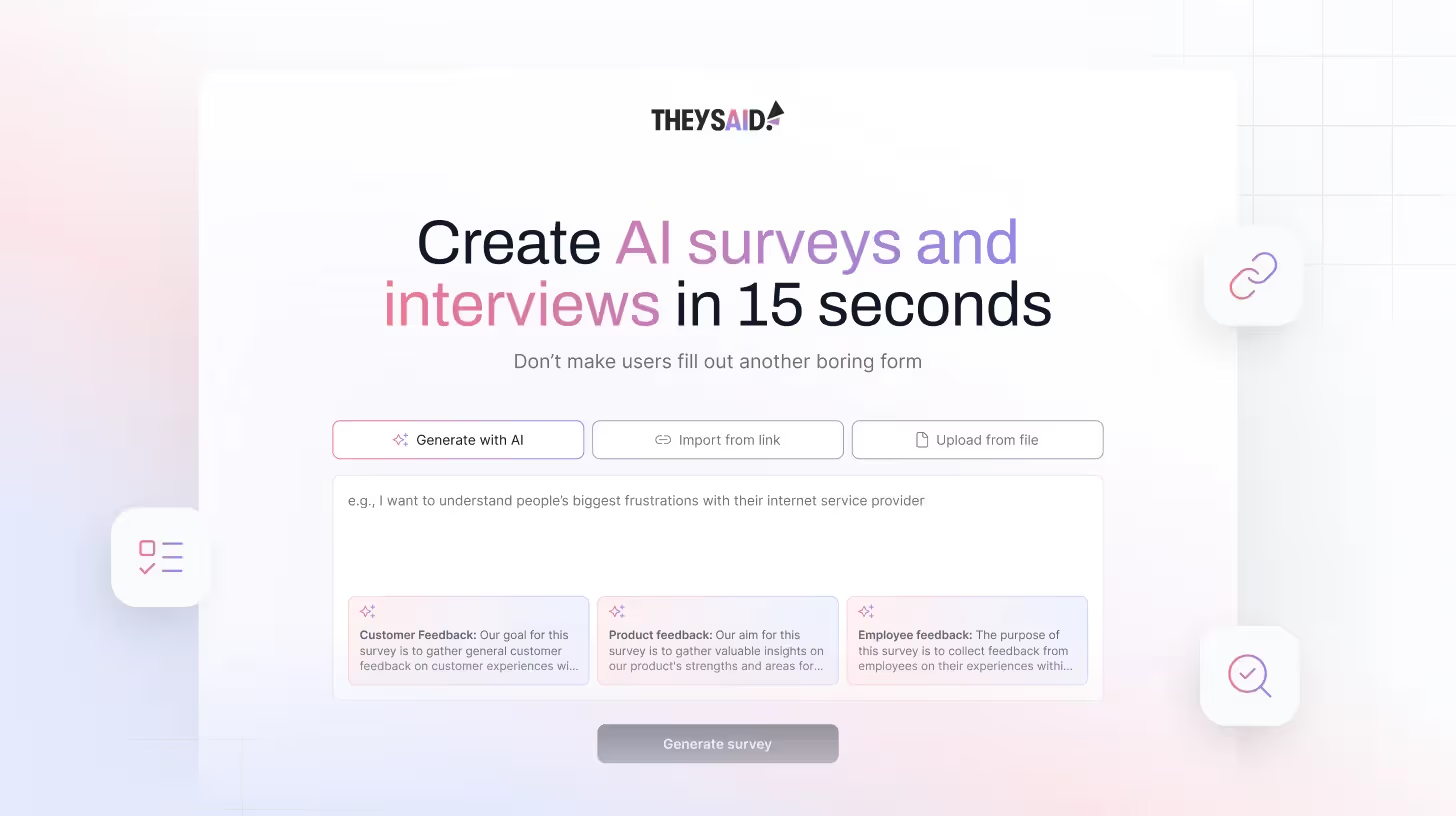
With TheySaid, HR teams can create employee evaluation surveys in minutes. This saves time, ensures relevance, and allows managers to focus on coaching and development rather than administrative tasks.
2. Engaging AI Conversations
TheySaid turns static surveys into dynamic, one-on-one AI conversations. The platform asks relevant follow-up questions based on prior responses, making performance reviews and employee evaluation questions more personalised and engaging.
3. Continuous Feedback Loop
Gone are the days of annual-only reviews. TheySaid promotes continuous feedback throughout the year, keeping employees engaged, aligned with goals, and motivated to improve.
4. Data-Driven Decisions
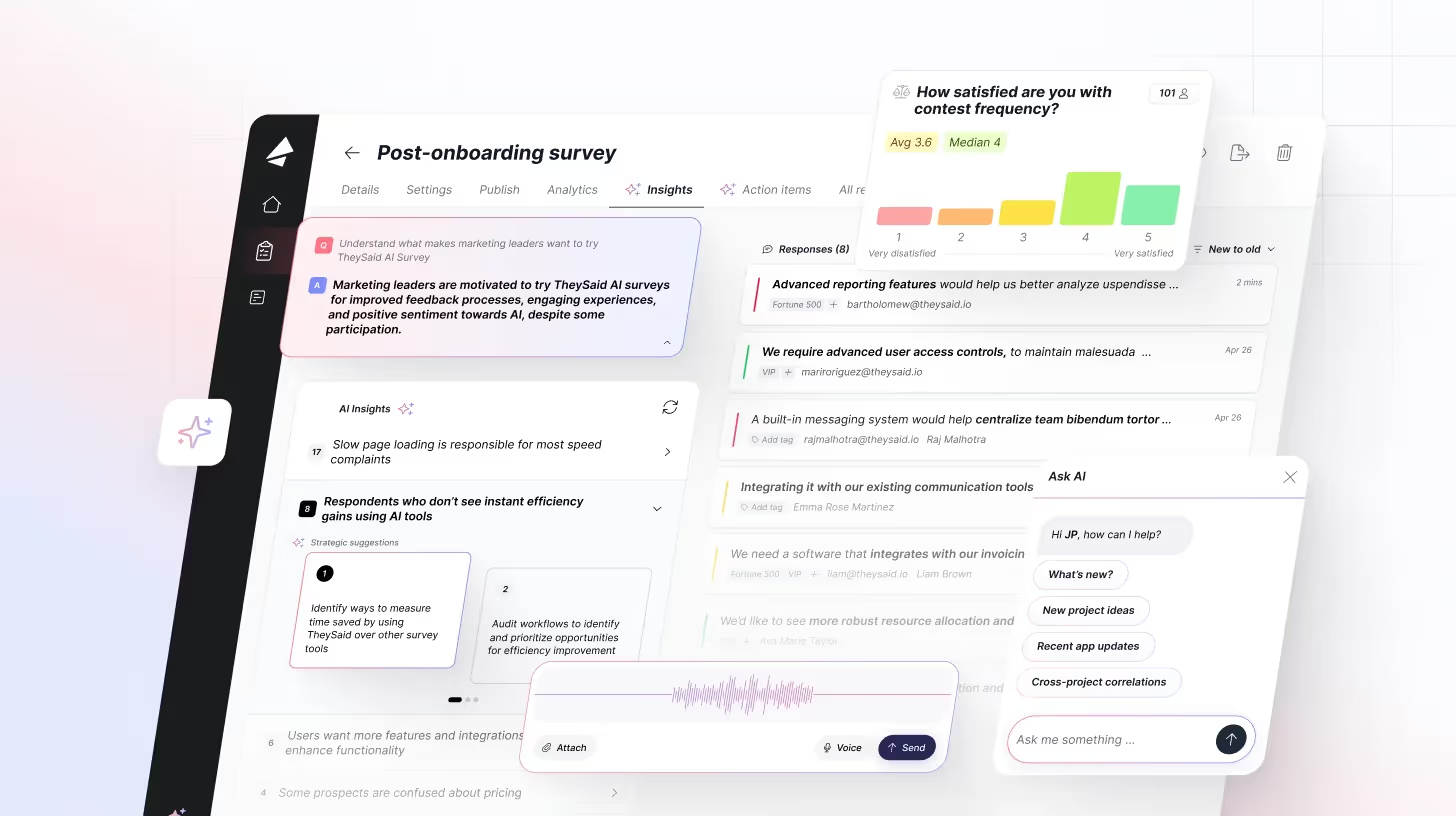
By analysing responses to employee evaluation questions, TheySaid converts raw survey data into strategic insights. Managers gain actionable intelligence to make informed decisions about performance, growth, and team development.
5. Holistic Performance View
TheySaid collects feedback from multiple sources, self-assessments, peers, and managers, providing a comprehensive picture of employee performance. This highlights strengths, uncovers development areas, and supports well-rounded performance reviews.
Stay ahead with TheySaid’s all-in-one AI platform for employee evaluation. Transform your performance reviews, improve employee engagement, and make data-driven HR decisions.
Final Thoughts
I hope this article helps guide you in crafting meaningful employee evaluation questions that lead to more productive and motivating conversations, ultimately benefiting both your employees and your organisation.
Key Takeaways
- Ask questions that help employees reflect on their strengths, growth, and career aspirations.
- Well-crafted questions don’t just collect information; they spark meaningful dialogue and uncover hidden talents and struggles.
- TheySaid’s AI-powered platform transforms the evaluation process by offering dynamic conversations, actionable insights, and data-driven decisions.
- Shift away from traditional annual reviews. Use real-time feedback to keep employees engaged and improve performance.
FAQs About Employee Evaluation Questions
1. What are the best employee evaluation questions for a performance review?
The best questions focus on overall performance, strengths, areas for growth, career goals, and team collaboration. Using a mix of rating scales, open-ended questions, and scenario-based prompts ensures you get actionable insights and foster meaningful dialogue.
2. How often should employee evaluations be conducted?
Regular evaluations, quarterly or bi-annual reviews, allow managers to give timely feedback, track progress, and address challenges before they escalate. Continuous feedback improves employee engagement and retention.
3. How can I make employee evaluation questions more effective?
- Define the purpose: Decide whether you are assessing skills, behavior, or career growth.
- Tailor questions: Customise them for each role, team, and department.
- Mix question types: Use rating scales, open-ended questions, and scenario-based prompts.
This approach ensures your performance review questions are relevant, actionable, and engaging.
4. What is the difference between employee evaluation questions and performance reviews?
Employee evaluation questions are the specific prompts used to gather feedback, while a performance review is the broader process that includes discussion, goal-setting, and development planning. Well-crafted questions make performance reviews more structured and insightful.
5. Can self-evaluation questions improve employee engagement?
Yes. Self-evaluation questions encourage employees to reflect on their achievements, strengths, and areas for improvement. This increases accountability, motivation, and engagement while providing managers with valuable insights.
6. What are common mistakes to avoid when asking employee evaluation questions?
- Using generic or irrelevant questions that don’t align with roles
- Focusing only on past performance instead of growth opportunities
- Neglecting continuous feedback and relying solely on annual reviews
Avoiding these pitfalls ensures your employee evaluation surveys are effective and actionable.
7. How can AI tools like TheySaid help with employee evaluation questions?
Tools like TheySaid transform traditional surveys into dynamic, conversational experiences, making questions more personalised and engaging. AI-powered platforms also analyse responses to provide actionable insights, helping managers make data-driven decisions for performance improvement and employee growth.



.svg)