



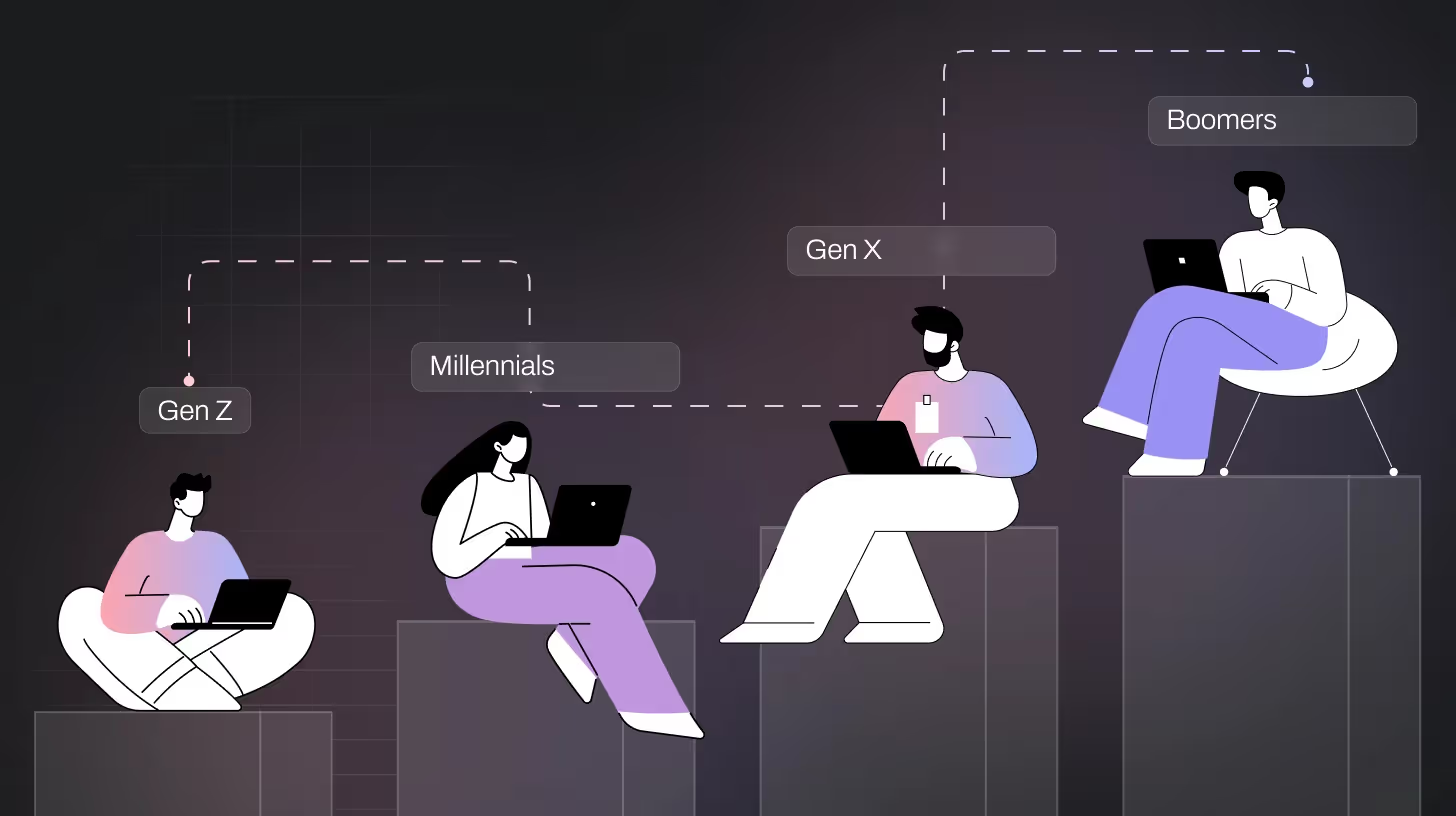
Your teenage niece asks ChatGPT to write a poem for her crush. Your Millennial coworker raves about how AI saved her hours on a slide deck. Your Gen X friend tells Alexa to lock the doors and play jazz. And your dad? He’s finally using the AI chatbot on his health app without even knowing it’s AI.
In 2026, the generational gap is not about music or slang, but about how people use technology. In this blog, we will explore how each generation uses AI, along with use cases and surprising trends.
TL;DR
In 2026, how different generations use AI varies by age, trust, and life context. Generation Z uses AI the most, driven by creativity and experimentation. Millennials use AI primarily for productivity, Gen X adopts AI for convenience and security, and Baby Boomers prefer simple, practical AI tools. These differences reflect broader AI adoption by generation trends rather than technical ability.
AI Usage by Age Group: What the Data Shows
AI usage by age group in 2026 shows clear generational patterns. Younger generations adopt AI more frequently and across more use cases, while older generations use AI selectively when it delivers clear, practical value. These AI usage statistics by age help explain why trust, frequency, and purpose differ across generations.
1. Generation Z (born 1997–2012)
Generation Z uses AI more than any other age group in 2026, with the highest frequency of generative AI usage across education, content creation, and early career development.
- A Google survey of full-time knowledge workers (ages 22–27) found that 93% of Gen Z users employ two or more AI tools weekly, including ChatGPT, DALL-E, and Otter.ai. Source
- Nearly 63% of Gen Z workers worry AI may eliminate jobs, and 61% believe AI skills are essential for career advancement. Source
- 79% of Gen Z report using AI tools, and their emotions about the technology are mixed: 41% feel anxious, 36% excited, 27% hopeful, and 22% even angry. Source
2. Millennials (born 1981–1996)
Millennials are the most consistent professional users of AI, using AI tools daily for productivity, work automation, parenting support, and financial decision-making.
- Deloitte reports that 56% of Millennials use generative AI at work. Source
- McKinsey finds that 62% of employees aged 35–44 (Millennials) report high AI expertise, higher than Gen Z (50%) or Boomers (22%).Source
- 90% of Millennials in this age group are comfortable using AI at work, the highest of any cohort. Source
3. Generation X (born 1965–1980)
Generation X adopts AI selectively, favoring tools that improve efficiency, security, and day-to-day convenience rather than experimentation.
- While exact Gen X figures are less frequently reported, industry data show 68% of non-AI users come from Gen X and Boomers, signaling slower adoption. Source
- Virtual assistant usage: Weekly usage of virtual assistants (like Siri/Alexa) is 14% for 41–60-year-olds. Source
4. Baby Boomers (born 1946–1964)
Baby Boomers have the lowest AI adoption rates, but they regularly use AI-powered tools when the technology is simple, practical, and embedded into familiar experiences.
- 71% have never used a tool like ChatGPT, and overall, 50–68% of Boomer-aged individuals are non‑users. Source
- Just 22% of employees over 65 report high familiarity with generative AI, compared to 62% of Millennials. Source
Case Study: How AI Adoption Differs Across Generations in 2026
Case Study sourced from Gregg Wartgow’s “Understanding Generational Differences in the Age of AI”
Strategic Insights
- Millennials and Gen Z are clearly more comfortable with AI. It’s already part of how they live and work.
- Older generations (Boomers and Gen X) are still catching up, but there's real curiosity, especially if AI is helpful and easy to use.
- While Gen Z tends to trust AI more, Boomers are still wary. Building trust through transparency and a simple user experience (UX) goes a long way.
Which Generation Uses AI the Most in 2026?
Generation Z uses AI the most in 2026, with the highest frequency of generative AI adoption across learning, content creation, and early career development. Around 70% of Gen Z report using generative AI tools like ChatGPT weekly, far more than any other age group.
Millennials follow closely, especially in professional settings, where AI is used daily for productivity, automation, and decision-making. However, their usage is more task-driven than experimental.
Generation X and Baby Boomers adopt AI at lower rates, typically when it is embedded into familiar tools such as voice assistants, financial apps, or health platforms. For these groups, usefulness and trust matter more than novelty.
AI Interaction by Age Group: Real-World Use Cases in 2026
Generation Z: Creating, Learning & Earning with AI
Gen Z doesn’t just use AI; they're playing with it. This generation treats AI as a co-pilot tool, using it to write an essay, design a new business idea, or go viral on TikTok. Here are some real-world ways Gen Z is using AI in 2026:
Education & Study Help
U.S. teens and college students use AI tools like Khanmigo, Quizlet AI, and ChatGPT for tutoring, essay brainstorming, and test prep. Many schools have unofficial “AI clubs” where students share prompts or use AI to automate schoolwork in an ethical manner.
Side Hustles & Entrepreneurship
Many Gen Z teens are launching micro businesses, and AI helps in writing product descriptions, designing logos, and even handling customer support. Tools like Shopify Magic, Copy.ai, and Canva’s Magic Design are their digital partners.
Social Content Creation
Gen Z utilizes AI image generators (such as Midjourney) and video editors to create TikToks, Instagram Reels, and memes. Some even monetize AI-made content through platforms like Patreon or Etsy.
Mental Health & Self-Care
Apps like Woebot or Replika offer AI-powered support for anxiety, journaling, and mindfulness, which is especially relevant given the rising concerns about youth mental health.
Career planning
Job seekers utilize AI résumé writers, LinkedIn optimization bots, and interview coaching tools to gain entry into competitive markets.
Millennials: Power Users of AI in Work and Life
Millennials are all about efficiency, and AI fits right in. 62% of Millennials say they’re more excited than concerned about Artificial Intelligence. Here are some real-world ways Millennials are using AI in 2026:
Workplace Productivity
In the US, millennials rely heavily on tools like Notion AI, Jasper, and Microsoft Copilot in the tech, marketing, and education sectors for drafting content, managing projects, and reporting.
Parenting with AI
Need a bedtime story? A weekly meal plan? A school project outline? Millennials use AI tools like ChatGPT and Storybird AI to make parenting more creative and less stressful.
Shopping & Budgeting
AI tools in apps like Honey, Rocket Money, or even Google Shopping help find the best deals to save money and optimize budgeting.
Fitness and wellness
Wearables like Oura Ring and Whoop now include predictive AI insights on sleep, stress, and recovery, a big win for wellness-focused Millennials.
Gen X: Practical, But Cautious AI Adoption
59% of Gen X adults say they’re using AI-powered assistants and chatbots more frequently in 2026 than they did two years ago. Here are some real-world ways Gen X is using AI in 2026:
Task Automation & Calendars
Gen X professionals, particularly those in management roles, utilize tools like Calendly AI, Otter.ai, and AI-powered email assistants to stay organized and efficient.
Smart Home Automation
Whether it's setting the thermostat with Nest, automating lights with Alexa, or locking doors via voice command, Gen Xers love the peace of mind that AI-powered devices bring.
Health Tracking & Wearables
Gen X is all in on fitness, and smartwatches like Fitbit, Oura Ring, and Apple Watch utilize AI to provide insights into sleep, heart health, and recovery.
Financial Security & Fraud Detection
AI is powering fraud alerts, budgeting suggestions, and spending trackers in platforms like Chase, Capital One, and Credit Karma, helping Gen X feel more financially secure in uncertain times.
Baby Boomers: Warming Up to AI (Even If They Don’t Call It That)
Baby boomers did not grow up with AI, and many of them are still not sure about using it.
Here’s how Baby Boomers are adapting AI in 2026:
Voice Assistant Dependence
Baby Boomers are among the top users of Alexa and Google Assistant to check the weather, play oldies, manage reminders, or control smart appliances.
Customer Support & Troubleshooting
Instead of waiting on hold, Boomers are learning to interact with AI chatbots for customer service (on utility websites, airlines, etc)
Photo & Memory Apps
AI-driven tools like Google Photos help Boomers organize decades of pictures, identify people, and even create memory videos.
What These Generational AI Trends Mean for Businesses in 2026
How different generations use AI in 2026 directly affects how businesses design products, communicate value, and collect feedback. AI adoption by generation shapes trust, engagement, and expectations, making personalized, age-aware strategies critical for accurate insights and better decisions.
Product & UX Design Implications
Generational AI trends show that younger users expect AI to be interactive, fast, and creative, while older users value simplicity, reliability, and invisibility. Products built for Gen Z often emphasize experimentation and customization, whereas tools for Gen X and Baby Boomers succeed when AI quietly removes friction without demanding learning curves.
Marketing & Messaging Strategy
Because trust in AI varies by age group, marketing strategies must adapt. Gen Z responds well to transparent AI use and experimentation, while Boomers prefer reassurance, privacy clarity, and human oversight. Brands that communicate why AI is used, not just that it’s used, see higher adoption across generations.
Research, Feedback & Decision-Making
AI usage statistics by age reveal a critical insight: different generations explain themselves differently. Gen Z tends to express feedback emotionally and openly, while Gen X and Boomers are more structured and practical. Businesses relying on static surveys often miss these nuances, leading to biased or incomplete insights.
Hiring, HR & Internal Tools
In hiring and employee experience, generational AI adoption affects how teams engage with internal tools. Younger employees expect AI-powered workflows, while older employees adopt AI when it clearly saves time. Successful organizations introduce AI gradually, pairing automation with clear value and human support.
Bridge the Generational Gap with Smarter AI Surveys
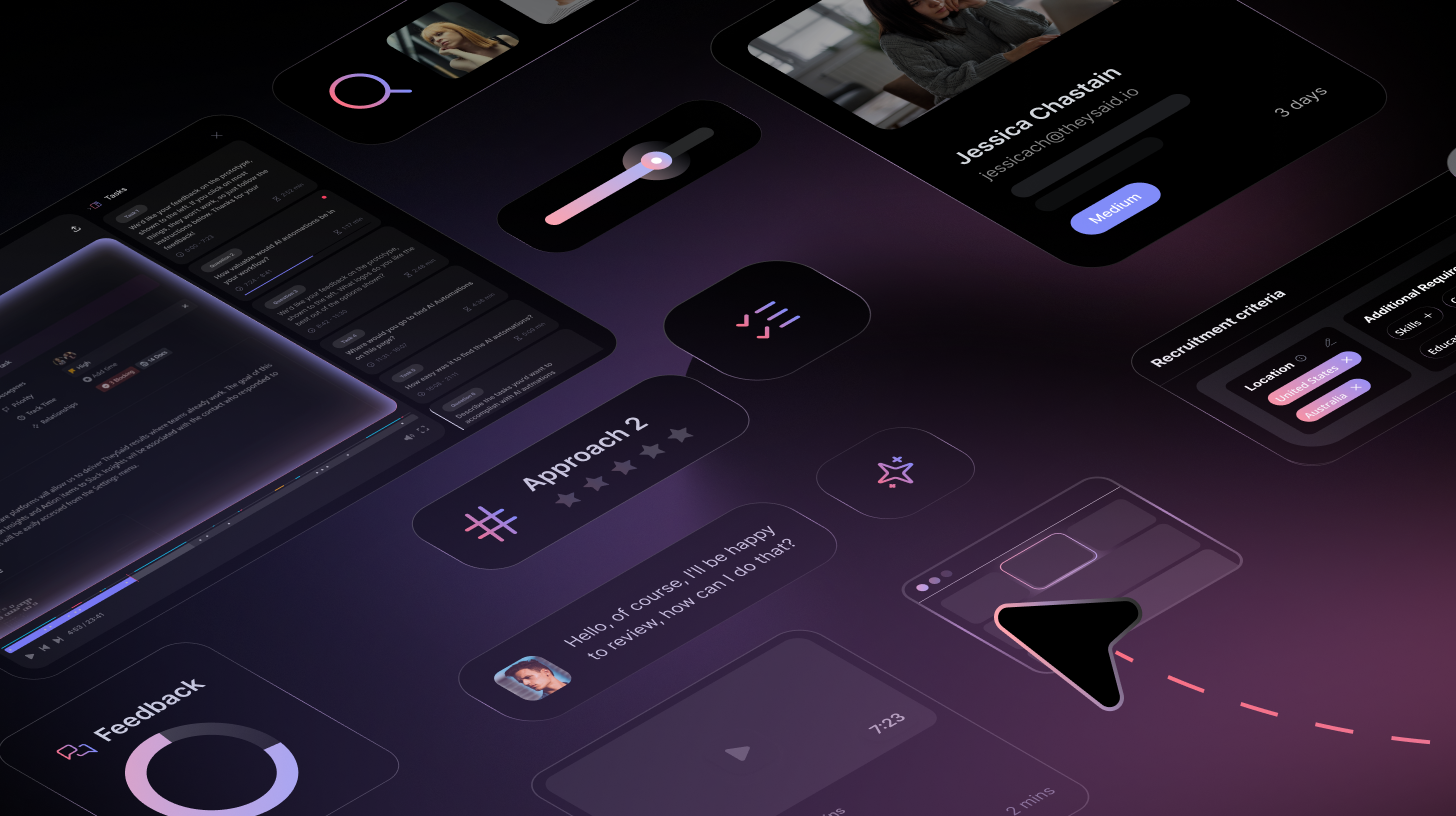
Want to understand how different generations really think about your brand, product, or service? That’s where TheySaid comes in. With AI-powered surveys and interviews, TheySaid helps you go beyond boring forms and outdated feedback loops. Whether you're gathering insights from Gen Z students or Baby Boomer customers, TheySaid adapts its tone, language, and even question flow in real-time, just like a human would. The result? Rich, nuanced insights across age groups, without the guesswork.
FAQs
How do different generations use AI in 2026?
How different generations use AI in 2026 varies by age, trust, and life context. Generation Z uses AI most frequently for learning, creativity, and career growth, while Millennials focus on productivity and automation. Gen X adopts AI for convenience and security, and Baby Boomers prefer simple, practical AI tools embedded into familiar experiences.
Which generation uses AI the most in 2026?
Generation Z uses AI the most in 2026, with the highest adoption of generative AI tools like ChatGPT, image generators, and AI study aids. Around 70% of Gen Z report using AI weekly, more than any other age group.
What age group uses AI the most for generative AI?
Gen Z is the age group that uses generative AI the most, especially for content creation, education, side hustles, and social media. Millennials follow closely in professional settings, using generative AI mainly for work productivity.
Why does AI adoption vary by generation?
AI adoption by generation varies due to differences in early technology exposure, trust levels, risk tolerance, and daily needs. Younger generations grew up with digital-first tools, making AI feel natural, while older generations adopt AI when it is simple, reliable, and clearly useful.
How does trust in AI differ by generation?
Trust in AI is highest among Gen Z and Millennials, who are more comfortable experimenting with AI-assisted decisions. Gen X and Baby Boomers are more cautious and trust AI most when it operates transparently, quietly, and with human oversight.
What are the most common AI use cases by age group?
AI use cases by age group differ significantly:
- Gen Z: learning, content creation, side hustles, career planning
- Millennials: workplace productivity, parenting, finance, wellness
- Gen X: smart homes, scheduling, health tracking, fraud detection
- Baby Boomers: voice assistants, customer support, photo organization
How can businesses adapt AI experiences for different generations?
Businesses should design AI experiences based on generational expectations. Younger users respond to interactive and creative AI, while older users prefer AI that reduces friction without requiring new learning. Personalization and clarity are key to adoption across age groups.
How can brands understand generational differences in AI usage?
Brands can understand generational AI trends by using AI-powered surveys and interviews that adapt tone and follow-up questions in real time. Tools like TheySaid help capture honest, age-specific insights that traditional surveys often miss.


.svg)


