




Online medical surveys for nurses are paid healthcare research studies conducted by pharmaceutical companies, medical device manufacturers, and healthcare research firms.
Some nurses earn an easy side income from them. Others waste time getting screened out or stuck in low-paying polls. The difference isn’t luck; it’s understanding which surveys are legitimate, how nurses qualify, and which opportunities are actually worth the time.
This guide breaks down legit online medical surveys for nurses, realistic earning ranges, and how US nurses use them as a flexible side income without treating them like a second job.
TL;DR
Online medical surveys for nurses are legitimate paid research studies, not get-rich-quick schemes. Nurses typically earn $5–$15 for short polls, $50–$200 for in-depth surveys, and up to $500 for interviews or virtual panels, depending on specialty and recent clinical experience.
The key is being selective: nurses with active licenses, specialty exposure, and honest screening responses see the best results. These surveys work best as a flexible side income, not a replacement for clinical work. Stick to verified platforms, protect your data, and focus on fewer, higher-paying opportunities to make the time worthwhile.
What Are Online Medical Surveys for Nurses?
When people talk about online medical surveys for nurses, they’re usually referring to paid research studies run by healthcare companies that want real-world insight, not theory.
These surveys are created by pharmaceutical brands, medical device companies, and healthcare research firms trying to understand what actually happens on the floor: how nurses use products, where workflows break down, and what gets in the way of patient care.
Unlike general “survey apps,” these studies are built specifically for licensed nurses. Most platforms verify credentials before inviting participation, which is why nurses are paid more than the average respondent. You’re not guessing or giving opinions—you’re sharing firsthand experience from clinical practice.
Topics usually include patient workflows, treatment protocols, medical devices, and communication gaps between teams. The goal isn’t marketing feedback. It’s practical insight that influences product design, research decisions, and how healthcare systems improve care delivery.
Nurse feedback often complements patient-reported data, which plays a growing role in healthcare improvement through structured medical surveys for patients.
Why Nurses Should Consider Paid Surveys
Healthcare feedback is invaluable for shaping the future of medicine, and your voice as a nurse is essential. Participating in online medical surveys for nurses connects you with opportunities to:
- Earn extra money during downtime which is a perfect way to make the most of your free moments.
- Influence healthcare advancements by contributing insights that truly matter.
- Learn about the latest medical trends, keeping your practice informed without extensive effort.
- Advocate for your patients by sharing real-world experiences that drive meaningful change.
These surveys aren’t just about extra cash; they’re a chance to make your expertise count while staying in the loop on innovations that matter. For nurses balancing demanding schedules, this side gig offers flexibility, purpose, and a way to shape better healthcare outcomes.
Types of Online Medical Surveys for Nurses
Not all surveys are created equal, so knowing the kinds available can help you find your niche. Plus, some platforms even offer perks like online surveys for gift cards and opportunities to inject a little fun into your earnings. Here’s a breakdown:
1. Quick Opinion Polls
These are short and sweet, perfect for squeezing into your day. Platforms offering online surveys for fun often fall into this category, making them great for quick, low-stress earnings. While payouts are modest, they definitely do add up.
2. In-Depth Studies
Longer surveys that dive into topics like drug efficacy, medical devices, or patient care practices. These take more time, typically ranging from 30 to 90 minutes, but the payouts are worth it. Completing just one of these can significantly boost your earnings if you can dedicate the time.
3. Phone or Online Interviews
These are live sessions where you’ll discuss specific nursing practices or trends in patient care. They often require more engagement, but the payment is generous. Picture yourself chatting about your professional expertise and getting compensated well for it—an hour of your time can go a long way here.
4. Specialized Healthcare Research Surveys
These focus on niche topics like neurology, oncology, or pediatrics. They’re often highly targeted, meaning your medical staff insights are uniquely valuable. If your expertise matches the topic, you can expect both engaging content and generous payouts.
Who Qualifies for Paid Medical Surveys?
Not every nurse gets the same survey invites, and that’s intentional. Paid medical surveys are designed to reach nurses who deal with specific patients, devices, or treatments, because that’s where pharmaceutical and medical research money is spent.
Here’s what actually affects how many and how well-paid your invites will be:
- RN vs LPN: Registered Nurses qualify for more studies because they’re involved in care decisions, charting, and protocols. LPNs can still earn money, but they’ll see fewer high-paying interviews.
- Your specialty: Nurses working in ICU, oncology, cardiology, neurology, emergency care, or surgery get the highest-paying research because those areas drive the biggest pharma and device budgets.
- Your work setting: Hospital-based nurses and those working directly with patients qualify more often than those in administrative or long-term care roles.
Your profile details: Platforms use your license type, years of experience, and patient exposure to decide whether you’re a match, which is why fully completing your profile increases both the number and the value of the surveys you receive.
Read - Why Online Medical Surveys Are Changing Healthcare Feedback
Best Survey Platforms for Nurses
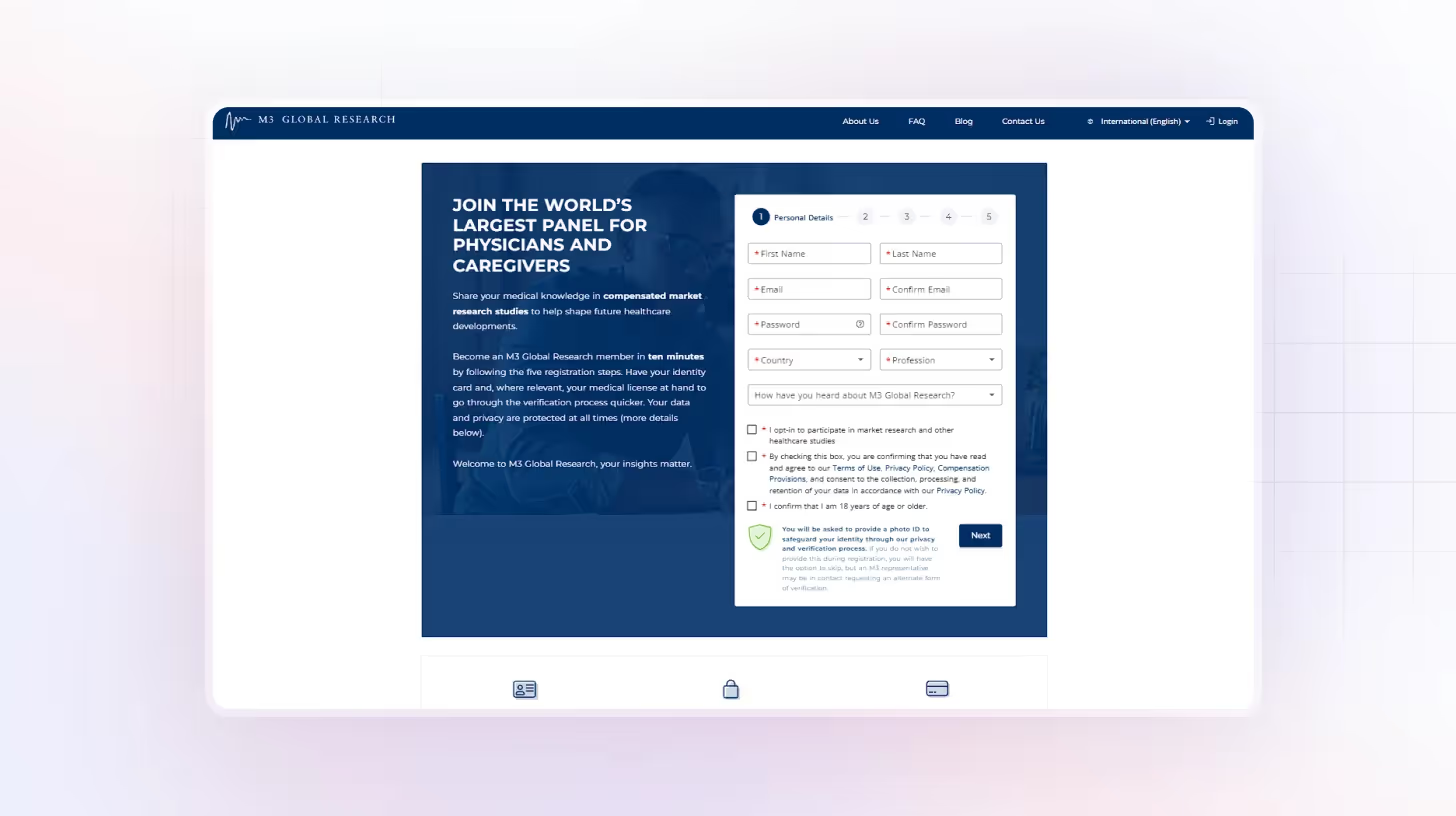
Finding legit survey sites can be tricky. Here’s a list of top platforms vetted for reliability and payouts:
- M3 Global Research (Average payout: $5–$200 per survey): Known for in-depth medical surveys, M3 Global Research is a favorite among nurses looking for well-paid opportunities.
- ZoomRx (Average payout: $5–$500 per study):
A user-friendly app makes it easy to complete surveys on the go. Plus, instant PayPal payments are always welcome if you’re looking to make a quick buck. - FocusGroup (Average payout: $2–$150 per survey): Whether online, phone-based, or in person, FocusGroup connects you with lucrative studies.
- MedSurvey (Average payout: $50–$100 per survey): Ideal for nurses interested in pharmaceutical research, MedSurvey pays handsomely for time-intensive studies.
- Sermo (Average payout: $5–$500 per survey): A physician-focused platform, but it includes opportunities for nurses as well. Regular payouts and engaging topics make it a must-try.
Recommended Read: Top 10 Medical Survey Portals to Earn Extra Money in 2026
Best Practices for Maximizing Your Earnings
To get the most out of your survey game, keep these tips in mind:
1. Sign Up for Multiple Platforms
Why settle for one survey site when you can maximize your opportunities across several? Joining multiple platforms like ZoomRx, Sermo, and M3 Global Research ensures a steady stream of surveys, even if one platform slows down. How many is too many? Test out a few and stick with the ones that match your schedule and earning goals.
2. Enable Notifications
High-paying surveys disappear faster than a tray of donuts in a breakroom. Turn on email or app alerts so you’re always in the loop. Missing out on that $500 interview? That’s a feeling nobody wants. Get those alerts set up, pronto.
3. Be Honest and Detailed
No one likes half-hearted answers, and survey platforms are no exception. Providing thoughtful, detailed responses not only increases your chances of earning more but also builds your reputation as a reliable participant. Are they paying you for fluff? Nope. Be genuine and helpful—it’ll pay off in the long run.
4. Prioritize High-Paying Surveys
Would you rather spend 10 minutes for $5 or an hour for $100? Always check the payout-to-time ratio before committing to a survey. Use your time wisely by focusing on the opportunities with the biggest bang for your buck.
5. Use Downtime Wisely
Got 15 minutes between shifts? Use that time to knock out a quick poll or two. Just make sure to avoid survey burnout—you’re more valuable when you’re well-rested. Quick tip: Keep a list of "easy" platforms on hand for those short windows of free time.
6. Double-Check Payment Methods
Before you start dedicating your time to any platform, check how and when they pay. Do they use PayPal, gift cards, or direct deposit? Instant payouts are always a win, so prioritize platforms that don’t make you wait forever to cash in on your effort.
Privacy, HIPAA & Data Safety for Nurses
Because paid medical surveys for nurses involve professional credentials and real clinical experience, legitimate platforms are required to follow strict healthcare privacy and data-protection standards.
Reputable paid nursing survey platforms in the U.S. follow HIPAA and healthcare research compliance rules, meaning your identity, license details, and any patient-related insights are protected and never shared without permission.
To stay safe while participating in online medical surveys:
- Use verified platforms only: Stick to trusted healthcare research companies like M3 Global Research, ZoomRx, MedSurvey, and Sermo. These companies work directly with pharmaceutical firms and medical research organizations.
- Create a dedicated survey email: This keeps research invites separate from your personal inbox and helps you quickly spot high-paying medical survey opportunities.
- Review privacy policies before joining: Legitimate paid medical survey platforms clearly state how nurse data is stored, used, and protected under HIPAA-compliant systems.
Avoid platforms that ask for patient-identifying data: Real healthcare research never asks nurses to share names, charts, or anything that could identify a patient.
Tools to Streamline Survey Participation
Some tools can make your survey hustle more efficient. Using professional survey tools like TheySaid can further streamline your participation, ensuring that your time is optimized and feedback impactful:
- Time-Tracking Apps: Use apps like Toggl to calculate your earnings per hour.
- Dedicated Survey Apps: Platforms like ZoomRx and Sermo have mobile apps for on-the-go participation.
- Automated Payment Options: Opt for platforms that offer instant PayPal or gift card payouts.
Supercharging Side Hustles for Nurses
Online medical surveys for nurses are advancing rapidly, thanks to revolutionary platforms like TheySaid. Our innovative tool leverages AI technology to simplify every step of the survey process. From creating customized, engaging surveys to conducting AI-driven respondent conversations, TheySaid ensures that surveys are not only efficient but also insightful.
Our pioneering AI analysis technology identifies actionable trends, making healthcare feedback more meaningful. With TheySaid, nurses can maximize their contributions while earning extra income through seamless, user-friendly tools.
Frequently Asked Questions (FAQs)
Are online medical surveys for nurses legitimate?
Yes, online medical surveys for nurses are legitimate when they’re run by verified healthcare research firms that validate licenses and follow HIPAA-compliant data practices. Avoid general survey apps that don’t specialize in healthcare.
How much money can nurses realistically earn from online medical surveys?
Most nurses earn $5–$15 for quick surveys, $50–$200 for in-depth studies, and up to $500 for interviews or virtual panels. Earnings depend on specialty, recent experience, and survey type.
Do nurses get paid more than regular survey participants?
Yes. Paid medical surveys for nurses typically pay more because they require clinical experience, license verification, and real-world patient exposure—unlike general consumer surveys.
Do I need an RN license to qualify for paid nursing surveys?
An active RN license usually unlocks more opportunities, but LPNs and LVNs can still qualify for certain studies. Specialty experience often matters more than job title.
Why do nurses get screened out of medical surveys?
Screening happens because many studies require specific, recent experience such as using a particular medication or device in the last 30–90 days. It’s not personal; it’s how healthcare research ensures accurate data.
What types of medical surveys pay nurses the most?
The highest-paying opportunities are interviews, virtual panels, and specialty-focused research studies. These typically pay more than quick opinion polls because they require deeper expertise.
Can nurses complete online medical surveys during work shifts?
Short surveys can sometimes be completed during breaks, but longer paid nursing surveys and interviews are best done off-shift to avoid distractions and ensure quality responses.
How do nurses get invited to more paid medical surveys?
Nurses receive more invitations by:
- Completing profiles accurately
- Responding honestly to screening questions
- Focusing on fewer, higher-quality platforms
- Maintaining a strong completion history
Are online medical surveys safe for nurses’ personal and professional data?
Reputable platforms anonymize responses, store credentials securely, and share results only in aggregate. Always review privacy policies before participating in any medical survey for money.
Can online medical surveys replace a nurse’s full-time income?
No. Online medical surveys for nurses are best used as a flexible side income, not a replacement for clinical work. Most nurses use them to supplement earnings, not substitute their primary job.






.svg)


