



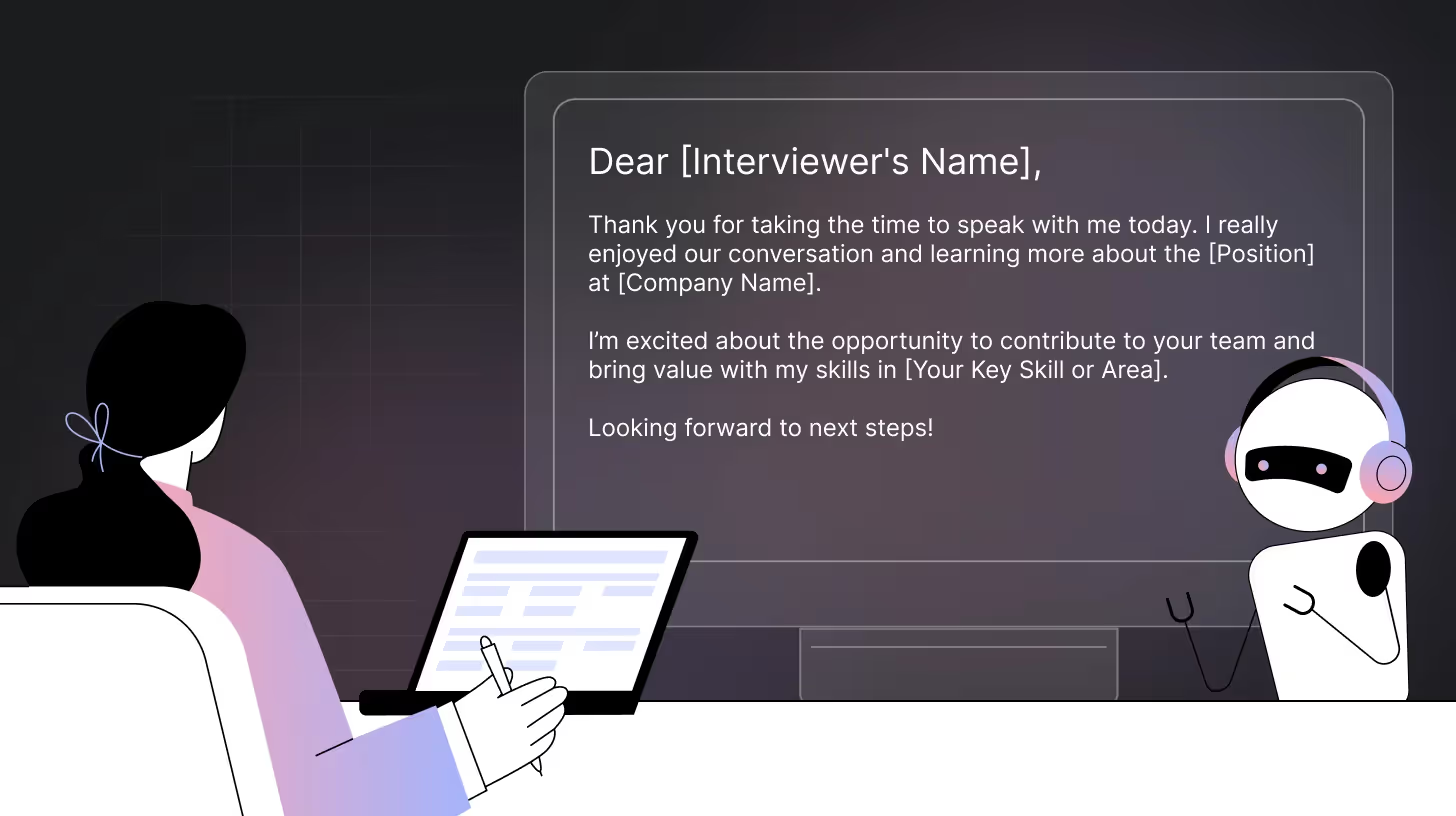
You just finished your interview and breathed a sigh of relief. The hard part’s over, right? Not quite. Before you kick back or obsessively refresh your inbox, there’s one more move that could make all the difference: a thoughtful thank-you email. And guess what? AI can help you write it (without sounding like a robot).
An AI thank you letter after an interview is a fast, smart way to express gratitude, reinforce your interest, and leave a lasting impression without spending hours writing.
TLDR
An AI thank you letter/Note after an interview helps you quickly send a professional, personalized follow-up without overthinking the wording. By giving AI clear details like the job title, interviewer’s name, and topics discussed, you can generate a short, natural-sounding thank-you email that reinforces your interest in the role. Always review and personalize the draft, keep it under 150 words, send it within 24 hours, and use AI as a writing assistant, not a replacement, to make the best impression.
What Is an AI Thank You Letter After an Interview?
An AI thank you letter after an interview is a short, personalized follow-up email written with AI assistance to thank the interviewer for their time, reference key points from the conversation, and reinforce your interest in the role, typically sent within 24 hours of the interview.
Read - What are AI Interviews? Benefits, Examples, and How to Run One
Why AI Thank-You Interview Emails/Letters Are the New Job Search Power Move
While not mandatory, thank-you emails are a meaningful professional courtesy. They show appreciation, reinforce your enthusiasm, and keep the conversation going. In many industries, a well-timed thank-you message can even influence final hiring decisions.
Situations where a thank-you note makes sense:
- After a job interview
- After receiving a referral or recommendation
- After a networking meeting or career chat
- After attending a special event hosted by the company
Recommended Read: What Are AI Interviews? Benefits, Use Cases, and How to Run One
How to Write an AI Thank You Letter After an Interview (Step-by-Step Guide)
Here’s a simple, step-by-step guide to writing an AI-assisted thank-you letter that still sounds human:
Step 1: Choose from Best AI Tools for Writing Interview Thank-You Emails
To write an effective AI thank you letter after an interview, start by choosing an AI tool that lets you control tone and personalize details.
Step 2: Write a Clear, Detailed Prompt
AI can’t read your mind, but it can follow great instructions.
Be specific about:
- The job title you interviewed for
- The company name
- The interviewer’s name
- Topics you discussed
- The tone you want (friendly, professional, warm, concise, etc.)
Try using a prompt like this to generate a professional AI thank-you email after an interview:
Write a friendly and professional thank-you email after a job interview. Mention my excitement for the [Job Title] role at [Company Name], refer to my conversation with [Interviewer’s Name] about [specific topic], and thank them for their time. Keep it concise and sincere.
Here’s an example of what an AI-generated thank-you email after an interview might look like:
Dear [Interviewer’s Name],
Thank you for taking the time to meet with me about the [Job Title] position at [Company Name]. I enjoyed our discussion about [specific topic] and learning more about the team and company culture.
I’m very excited about the opportunity to contribute to your team and appreciate your consideration. Please feel free to reach out if you need any additional information.
Best regards,
[Your Name]
Bonus Prompts Based on Situation:
For multiple interviewers:
“Generate a thank-you email I can send individually to each person I met during today’s panel interview. Mention [topic] and express excitement about the team.”
For a second-round interview:
“Write a follow-up thank-you note after a second interview for [Job Title]. Acknowledge the deeper conversation around [topic], and highlight continued interest in the position.”
Step 3: Review the Draft & Personalize It
AI gives you a first draft, not a final one. Now’s the time to make it yours. Hiring managers can usually tell when a message feels generic, which is why personalization matters more than perfection.
Here’s what to personalize:
- Tone: Adjust the wording so it sounds like your voice.
- Details: Add a specific memory or shared moment from the interview.
- Closing line: Make it feel natural and sincere, not copy-pasted.
AI Draft:
Thank you for the opportunity to interview for the Marketing Manager role. I enjoyed our discussion about your rebranding plans.
Edited Version:
Thanks again, Sarah, it was great chatting about GrowCo’s upcoming rebrand. I loved hearing your vision and would be thrilled to bring my content strategy experience to the team.
Read - Top 9 AI Interview Tools for Modern Recruitment
Step 4: Keep It Short, Polite, and Impactful
While AI can generate long messages, your thank-you note should be brief and to the point. Aim for about 3–5 sentences that cover these key points:
- Say thank you for the interviewer’s time.
- Reaffirm your enthusiasm for the role.
- Mention a memorable part of the interview or something you learned.
- Offer to provide more information if needed.
- Close professionally but warmly.
When Should You Send an AI Thank You Letter After an Interview?
You should send an AI thank-you letter after an interview within 24 hours of the interview, while the conversation is still fresh. Sending it too late can reduce impact, while sending it too early without personalization can feel rushed.
AI-Generated Thank-You Letter Examples (with a Human Touch)
1. Standard Post-Interview Thank You
Prompt:
Write a thank-you email to Ms. Lopez for the Product Manager interview at Nimbus. Mention our discussion about user onboarding, and express my excitement about contributing to customer experience improvements.
AI-Enhanced Draft:
Hi Ms. Lopez,
Thank you for the insightful conversation during my Product Manager interview at Nimbus. I really enjoyed our discussion about improving user onboarding and appreciated your perspective on simplifying the first-time experience.
I’m excited about the potential to help streamline customer journeys and contribute to Nimbus’s mission. Please let me know if there’s anything else you need from me.
Best regards,
[Your Name]
2. Thank You After a Panel Interview
Prompt:
Write a thank-you email after a panel interview with the marketing leadership team at Zenith. Mention their feedback on my campaign strategy and thank them for the opportunity.
AI-Enhanced Draft:
Dear Zenith Marketing Team,
Thank you for the opportunity to speak with all of you during yesterday’s panel interview. I truly appreciated your feedback on my campaign strategy and found our discussion both inspiring and energizing.
The collaborative culture at Zenith came through clearly, and I’d be thrilled to bring my experience to such a dynamic team.
Thanks again for your time and consideration.
Sincerely,
[Your Name]
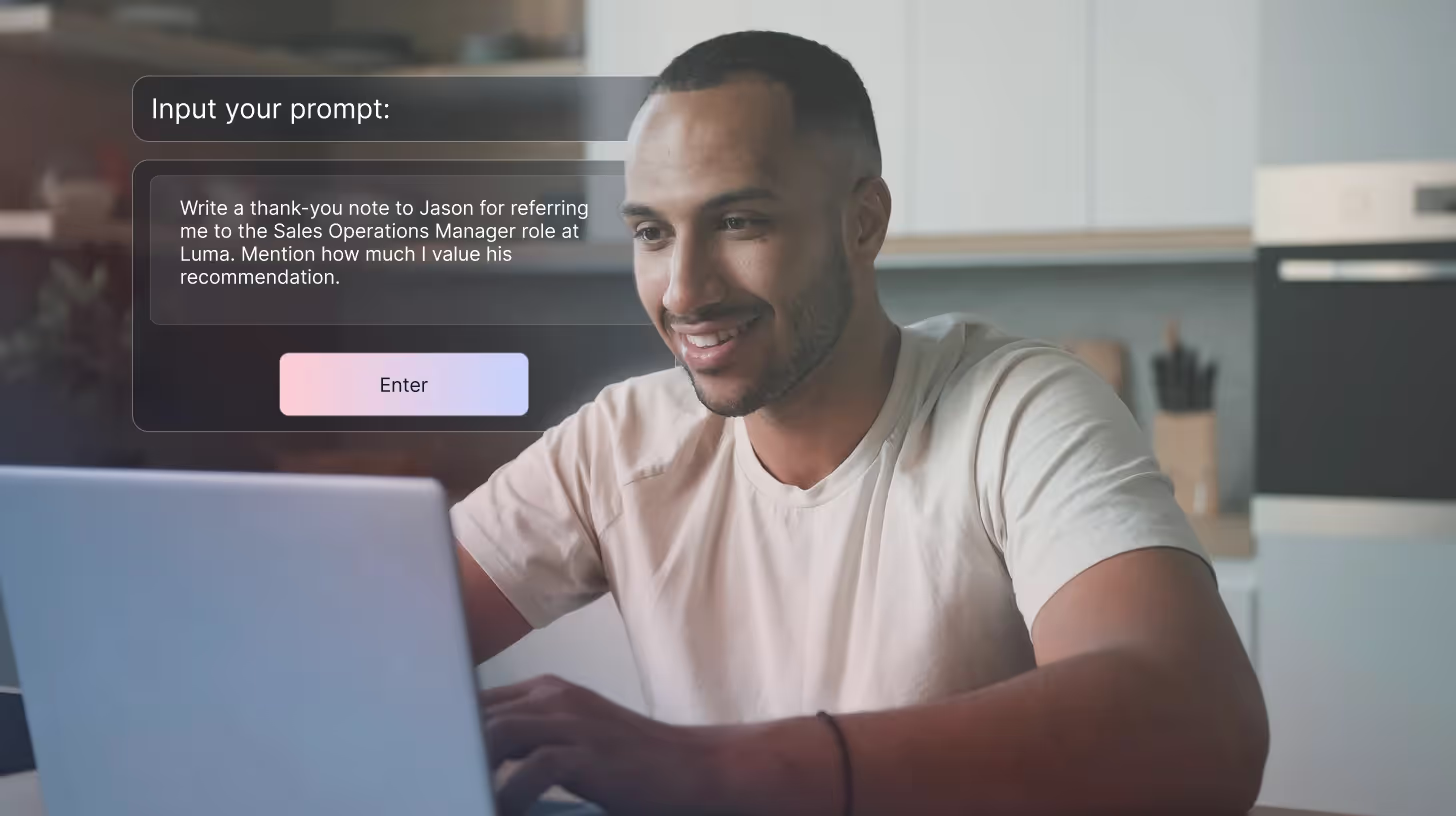
3. Thank You After a Referral Conversation
Prompt:
Write a thank-you note to Jason for referring me to the Sales Operations Manager role at Luma. Mention how much I value his recommendation.
AI-Enhanced Draft:
Hi Jason,
I really appreciate you referring me for the Sales Operations Manager role at Luma. Your support means a lot, and I’m grateful for the confidence you’ve shown in my background.
I’ll keep you posted on how things go and hope to return the favor sometime soon!
Best,
[Your Name]
4. Thank You for a Virtual Coffee Chat
Prompt:
Write a thank-you email to Emily for taking time to chat about UX careers. Mention our conversation about transitioning from graphic design and your appreciation.
AI-Enhanced Draft:
Hi Emily,
Thank you again for taking time to chat with me about UX career paths. I especially enjoyed our discussion about transitioning from graphic design—your advice was practical and reassuring.
I’m feeling more confident about my next steps, and I really appreciate your insights.
All the best,
[Your Name]
Read - Top 80 AI Interview Questions for Job Interview
Prompt for Writing a Professional Thank-You Letter After an Interview
Use this prompt to quickly create a personalized and impactful thank-you email for your next job interview.
You are a professional career coach tasked with writing a thank-you letter after an Interview. Your goal is to help job seekers send warm, concise, and impactful thank-you emails that leave a positive impression.
INFORMATION ABOUT THE THANK YOU LETTER
- The letter is sent after a job interview to express appreciation for the interviewer’s time and to reinforce the candidate’s interest in the role.
- It should reference specific points from the interview to personalize the message.
- The tone should be polite, professional, and genuine.
- The letter should be concise, ideally between 100-200 words.
- It must include a clear subject line.
- The letter can be formal or slightly conversational, depending on the job industry and company culture.
Include these details in the letter:
- Interviewer’s name: [INTERVIEWER_NAME]
- Your name: [YOUR_NAME]
- Job position: [JOB_TITLE]
- Company name: [COMPANY_NAME]
- Mention a specific topic or project discussed during the interview: [INTERVIEW_TOPIC]
Start with a greeting using the interviewer’s name, express appreciation for their time, mention the specific topic to show engagement, briefly restate your interest in the role, and close warmly.
Should You Send a Thank-You Email or a LinkedIn Message After an Interview?
In most cases, a thank-you email is the preferred and expected follow-up after an interview. A LinkedIn message can be used as a secondary touchpoint, but should not replace an email unless the interviewer specifically requested it. If you use AI to draft both messages, make sure each version is slightly different so they don’t feel copy-pasted.
Mistakes to Avoid When Using AI for Interview Thank-You Emails
Using AI to draft your thank-you email after an interview can save time, but watch out for these common pitfalls that could hurt your chances:
Copy-pasting without editing: Remember, AI generates a first draft, not your final message. Always review and tailor the email so it sounds like you.
Skipping personalization: Generic thank-you notes get lost in the pile. Make sure to include specific details from your conversation to show genuine interest.
Writing a novel: Keep it short and sweet. Your thank-you interview email should be concise, aiming for under 150 words to keep the reader engaged.
Delaying too long: Timing matters. Send your thank-you note within 24 hours of your interview to leave a positive and timely impression.
Your AI Interview Thank-You Email Final Checklist (Before You Hit Send)
Before you hit “send,” quickly verify your email checks these boxes:
- Did I include a specific detail or topic from the interview?
- Did I personally thank the interviewer by name?
- Does the email sound like me, natural, warm, and not robotic?
- Is the tone professional but friendly?
- Have I proofread for typos, grammar, and formatting issues?
A quick review can make the difference between a forgettable follow-up and a strong final impression.
TheySaid: AI Interviews That Actually Sound Human
Writing the perfect thank-you email is just the beginning. With TheySaid, you can run AI-powered interviews that gather honest feedback from candidates, customers, or employees and instantly turn it into actionable insights.
Try TheySaid’s AI interviews for smarter, scalable feedback.
FAQs
1. Can I use AI to write other types of emails?
Yes, AI can help draft follow-ups, introductions, reminders, and more. It saves time and helps you sound clear and confident.
2. Is it okay to use AI for thank-you notes?
Yes, it’s totally fine, as long as you personalize the message. Think of AI as your writing assistant, not a replacement.
3. What’s an AI interview?
It’s a smart conversation tool that gathers insights through natural, follow-up questions. Great for feedback, research, or discovery.
4. How do I prompt AI to write a thank-you interview letter?
Include details like the job title, company, interviewer’s name, and key discussion points. Be clear about the tone friendly, professional, or warm.
5. When should I send a thank-you note after an interview?
Send it within 24 hours of the interview to show promptness, appreciation, and continued interest.
6. Can recruiters tell if you used AI for a thank-you email?
Recruiters usually can’t tell if you used AI unless the message sounds generic or robotic. Personalizing the email with specific interview details and adjusting the tone makes AI-assisted thank-you letters indistinguishable from handwritten ones.




.svg)