




Hiring the right candidate goes beyond scanning resumes; it's about creating a strategic, data-driven hiring approach. Applicants want fairness and transparency throughout the process, and job application surveys are a powerful tool that screens candidates and helps you improve the overall experience. In fact, studies have shown that organizations employing structured application surveys see up to a 20% reduction in time-to-hire and improve candidate satisfaction by over 30%.
This guide gives you 50+ ready-to-use examples, organized by category, plus a free template you can customize for any role. Use these questions to collect richer insights, predict job fit earlier, and make more confident, data-driven hiring decisions.
What Is a Job Application Survey?
A job application survey, sometimes called a job application questionnaire or pre-interview questionnaire, is a short form that candidates complete during the early stages of the hiring process. It helps employers gather consistent information about applicants beyond what appears on a resume so they can evaluate job fit, motivation, skills, and overall suitability more accurately.
These surveys typically include a mix of pre-screen questions, candidate experience feedback, skill-based questions, and value or culture-fit prompts. By structuring the same questions for every applicant, hiring teams reduce guesswork, improve fairness, and make faster, data-driven decisions.
Three Key Types of Job Application Surveys
Smart hiring teams use different surveys at different stages of the process:
Did you know? 60% of job seekers quit an application halfway through because it’s too long or complicated. That’s a huge leak in your hiring funnel and one that’s totally preventable.
Why Use Job Application Surveys in 2026?
Job application surveys are now a core part of structured hiring. These surveys often function as a candidate experience survey or job application feedback form to help teams improve the application process. Here’s why most companies are adopting these surveys in their process:
Faster, More Efficient Hiring: Companies with structured surveys can automatically reduce hiring time. Teams spend less time chasing down candidates and more time interviewing them.
Stronger DEI Outcomes: Standardizing how you collect data from applicants will reduce unconscious bias and promote diversity, equity, and inclusion.
Data-Driven Hiring Decisions: Instead of relying on gut feelings, recruiters can predict job success and filter out poor fits.
Automation-Friendly: Using tools like TheySaid, you can quickly create and share job surveys, automating early screening and collecting detailed replies.
Recommended Read: Designing Candidate Experience Surveys That Work
What Top Hiring Teams Know (That You Might Be Missing)
Here’s what top recruiters and talent teams are doing differently:
High-growth brands treat their candidates as customers. Each applicant, whether hired or not, walks away with a brand perception. Job application surveys strengthen a brand’s reputation, reduce candidate drop-off, and sharpen hiring strategies, proving that listening starts at “Submit Application.”
HubSpot uses job application surveys to dissect every part of the recruitment pipeline. They use this data to identify potential issues and fix them to keep their recruitment process sharp, agile, and candidate-friendly.
Most bad feedback ends up on public sites such as Glassdoor after the fact. However, if you do a job application survey immediately after someone applies or leaves, you can address concerns before they escalate.
The best teams go a step further. Following up with applicants who have taken the time to provide feedback via a survey demonstrates that you care. Even a simple “Thank you for your feedback. Here’s what we improved” email builds long-term goodwill.
The Psychology Behind Asking the Right Questions
Great questions do more than gather information; they reveal how a candidate thinks, behaves, and fits into your work environment. In 2026, the most effective hiring teams use behavioral psychology to craft job application survey questions that don’t just collect data but uncover potential.
Reveals Personality & Motivation: Open-ended questions in job application surveys, such as "What motivates you to do work?" "What is your ideal workplace environment?" reveals applicants' personality traits.
Psychological Safety Leads to Better Insights: When applicants feel safe, it means they don’t feel judged or insecure, they open up. The tone of the questions plays an important role here. Swap robotic, transactional phrasing for human, conversational prompts.
The Right Questions Predict Real-World Performance: Ever heard of situational judgment testing? These questions place candidates in realistic situations and evaluate how they will respond, giving you a glimpse of their skills and traits.
Recommended Read: 70 Employee Feedback Survey Questions
How TheySaid Helped a Retail Chain Cut Drop-Off During Hiring
A retail chain struggled with candidates abandoning the application process halfway through. Using TheySaid’s automated AI surveys, they:
- Replaced long forms with a 3-minute pre-screen questionnaire
- Added questions about shift preferences, availability, and customer-service style
- Used AI to flag applicants who demonstrated strong communication and reliability
Results after 90 days:
- 22% lower drop-off rate during the application stage
- Faster shortlisting from 5 days to less than 48 hours
- Candidates reported the process felt “simpler and more respectful.”
This improved both the applicant experience and hiring speed during high-volume seasons. Create your own job application survey in seconds with TheySaid’s free AI survey generator.
Recommended Read: Essential Question Types for Effective Surveys
50 Insightful Questions for Your Job Application Survey
Choosing the right questions is essential to understanding job fit, motivation, and how candidates would perform in real scenarios. Below is a categorized list of 50 ready-to-use job application survey questions you can add to your pre-screening questionnaire, application form, or early-stage hiring workflow. Use these questions to collect clearer insights and standardize your evaluation process.
Pre-Screening Job Application Survey Questions
These questions help you quickly understand eligibility, relevant experience, and whether the candidate aligns with basic job requirements before you spend time reviewing resumes.
- Are you legally authorized to work in [Country]?
- How many years of relevant industry experience do you have for this role?
- Elaborate how this position aligns with your career objectives.
- What’s your current employment status? ( Fully employed, part-time employed, freelancing, unemployed)
- Briefly describe a recent project or responsibility that shows you’re a fit for this position.
Did you know?
A 2025 field experiment found that candidates in an AI-assisted hiring pipeline passed final interviews at a 54% rate, compared with 34% using traditional screening.
Application Experience Feedback Questions
These questions help you understand how candidates perceive your application process and identify areas where you can improve clarity, speed, and user experience.
- How would you rate your overall experience with our application process?
- How did you hear about this job?
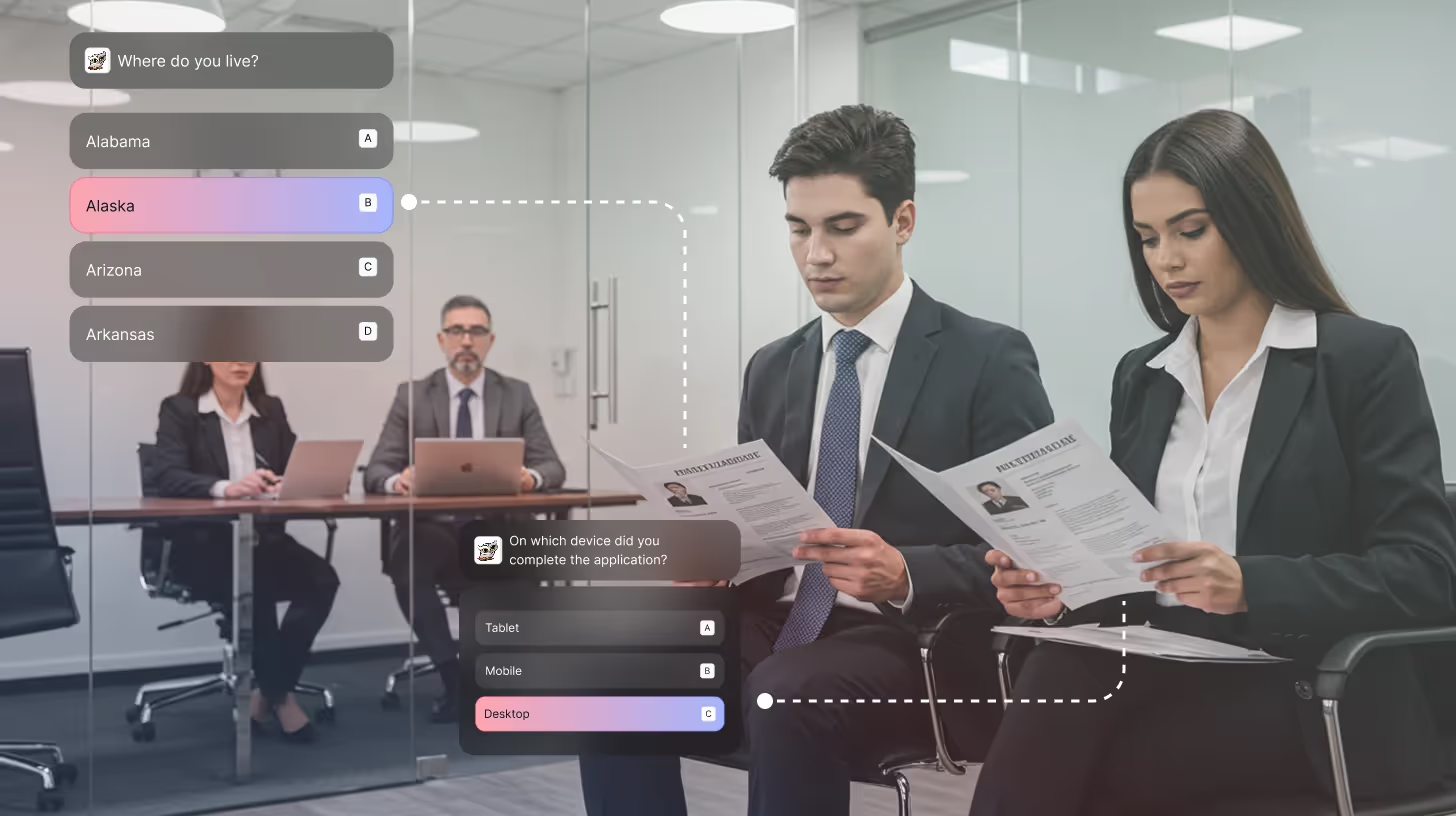
- On which device did you complete the job application process?
- Was there any confusing part in the application process?
- Rank the following aspects of the application process in order of importance to you
(Ease of use, Transparency, Fairness, Speed, Communication).
Role Interest and Intent Job Application Survey Questions
Use these questions to measure a candidate’s level of interest, long-term intent, and understanding of your company and role.
- Are you familiar with our company and its mission?
- What excites you most about this job opportunity?
- Explain in a single sentence why you are the best fit for this role.
- Are you actively looking to change jobs within six months?
- How do you see this role contributing to your personal development?
Candidate's Personality Job Application Survey Questions
Use these questions to explore personality traits, working styles, motivations, and what drives the candidate beyond technical skills.
- What inspires you at work and why?
- What’s something outside of your work that you are passionate about?
- What’s your favourite hobby?
- Do you consider yourself more introverted than extroverted?
- Give an example of your specific personality trait that helped you overcome a difficult situation.
Value-Fit Job Application Survey Questions
These questions help you assess cultural alignment, how candidates handle feedback, and how their values match your company’s core principles.
- Share one of the most valuable lessons you learn in your career.
- What is your ideal work culture?
- What’s the biggest mistake you made in your career and how you handled it?
- Which of our company’s core values resonates with you most, and why?
- Describe a time you received constructive criticism. How did it help you grow?
Skill Set And Experience-Focused Job Application Questions
Use these questions to understand a candidate’s strengths, relevant training, recent accomplishments, and confidence in performing the role.
- What’s your strongest technical or functional skill related to this role?
- On a scale of 1 to 5, how confident are you in performing this job?
- Describe a recent project or task you’re especially proud of. What was your role?
- What certifications or training programs have you completed relevant to this position?
- What does your ideal job role look like?
Cultural Fit Job Application Survey Questions
These help you evaluate how the candidate collaborates, communicates, and adjusts to different working styles and team environments.
- What does a respectful workplace look like to you?
- How do you handle working with someone with an entirely different working style?
- State some non-negotiable cultural values for you
- What type of cultural environment helps you to be productive?
- Have you ever worked for a company whose values didn’t align with yours?
Industry Knowledge Job Application Survey Questions
These questions show how well the candidate understands your industry, market trends, and your company’s competitive landscape.
- Which company or company leader inspires you?
- In your opinion, what’s the biggest challenge companies like ours are facing these days?
- How would you like to keep up with the latest industry trends?
- If hired, what industry trend would you want to explore or lead an initiative?
- What’s one recent news headline related to our industry that caught your attention?
Compensation and Benefits Expectations Related to Job Application Questions
These help you understand salary expectations, benefits preferences, and overall compensation priorities early in the process.
- What is your ideal total compensation package (salary + benefits)?
- On a scale of 1 to 5, how important is salary compared to other factors such as culture and flexibility?
- What salary range best describes your expectations?
- Have you ever left a job due to unsatisfactory compensation or benefits?
- Would you consider a lower salary if offered exceptional benefits?
Practical and Situational Job Application Questions
These scenario-based questions assess decision-making, adaptability, and how candidates think when faced with real-world challenges.
- I remain calm and composed under pressure.
- A client (or internal stakeholder) isn’t happy with your work. How do you respond?
- You have been assigned a task that is outside of your expertise. What would you do?
- Describe how you would handle a project with limited directions.
- Do you feel comfortable making decisions with limited sight?

Did you know?
A 2025 study found that integrating AI into the hiring process improves screening efficiency, candidate diversity, and cost-effectiveness for employers. Source
Recommended Read: Create Job Application Surveys That Attract Top Talent
Job Application Screening Survey Template (Free)
Use this short, ready-to-copy job application survey template to streamline early-stage screening and evaluate candidates consistently. These 9 questions cover experience, motivation, behavior, and culture fit without overwhelming applicants.
1. How many years of relevant experience do you have for this role?
A. 0–1 year
B. 2–4 years
C. 5–7 years
D. 8+ years
2. What specific skills or tools make you a strong fit for this position?
Open-ended
3. Why are you interested in this role and our company?
Open-ended
4. Describe a recent project or responsibility that best demonstrates your strengths.
Open-ended
5. How do you prefer to work with others (communication style, collaboration, feedback)?
A. I prefer structured communication and clear guidelines
B. I prefer collaborative, fast-moving teamwork
C. I prefer independent work with periodic check-ins
D. A mix of both collaborative and independent work
6. How would you handle a situation where you had to complete a task with limited direction?
A. Seek clarification immediately
B. Research and attempt to solve the task independently
C. Combine independent research with light manager check-ins
D. Prioritize the task and take action based on my best judgment
7. What type of work environment helps you do your best work?
A. Remote
B. Hybrid
C. On-site
D. No preference
8. What are your salary expectations for this role?
Open-ended or range selection
9. How would you rate your experience with our application process?
A. Excellent
B. Good
C. Average
D. Needs improvement
Thank you for taking the time to complete this application survey. Your responses help us ensure a fair, consistent, and thoughtful hiring experience for every candidate.
Read: Job Application Form: Definition, Examples, Free Template, And Tips
Job Application Process Feedback Survey Template (Free)
Use this template to collect feedback on the application experience itself, separate from screening. This helps you spot friction and improve your funnel.
Goals: We’d love your feedback! This quick survey is designed to help us understand how applicants experience our job application process.
Time to Complete: 2–3 minutes
1. How would you rate the ease of the application process?
Very easy | Easy | Neutral | Difficult | Very difficult
2. On which device did you complete the application?
Desktop | Mobile | Tablet
3. Did you receive a confirmation email after submitting your application?
Yes / No
4. The job description was clear and accurate.
Strongly Disagree | Disagree | Neutral | Agree | Strongly Agree
5. In what format did you submit your resume?
PDF | Microsoft Word | Plain Text | Google Docs link | Other
6. How did you hear about this job opportunity?
LinkedIn | Company website | Job board | Referral | Other
7. On a scale of 0–10, how likely are you to recommend applying to our company to a friend?
Very likely | Somewhat likely | Not very likely | Not at all likely
8. Which of the following were most important to you when applying? (Rank in order)
Time required to apply | Clarity of job responsibilities | Company reputation | Diversity and inclusion language | Mobile-friendly design | Prompt communication after applying
9. Please provide any additional comments or feedback about the application process.
Open text field
Common Mistakes in Job Application Surveys (And How to Fix Them)
Even well-intentioned job application surveys can fail if they’re not thoughtfully designed. Here are the most common mistakes and how to avoid them.
Asking Too Many Questions
Long surveys lead to fatigue, rushed answers, or complete drop-off. Aim for quality, not quantity. Keep it to 5–8 well-crafted questions and map them to a clear survey goal.
Dropbox shortened its feedback survey to just six questions, and completion rates jumped by over 40%. Less is more.
Asking Vague or Leading Questions
Vague questions lack direction, and leading questions nudge responders toward a specific answer, often unintentionally. Focus on clarity and neutrality.
Instead of “Did you enjoy your application process?” ask “Was the job description clear and accurate?” or “How easy was it to upload your resume?”
Ignoring Anonymous Feedback Options
When candidates aren’t offered anonymity, they tend to give filtered, polite responses — especially if they’re still hoping to get the job. Ensure your survey is anonymous and avoid asking personally identifiable questions.
Example message: “Your feedback is 100% anonymous. It helps us improve our hiring process for future applicants. Your responses will not affect your current or future candidacy.”
You Ask for Feedback… Then Do Nothing With It
Asking for feedback and then doing nothing is one of the fastest ways to damage trust in your employer brand. Future applicants become less likely to complete surveys, and your recruitment process stagnates.
Regularly review survey data for patterns (e.g., drop-off during application, unclear job ads), share key findings with your hiring and HR teams, and let candidates know their voice matters.
Did you know? Unilever adopted AI for entry-level recruitment, cutting hiring time by 75% and enhancing workforce diversity.
TheySaid: A Modern AI Platform for Job Application & Employee Surveys
As companies move toward data-driven hiring and employee experience, AI survey tools have become essential. TheySaid is one of the leading platforms in this space, designed to help HR teams build job application surveys, job satisfaction surveys, and other feedback workflows with accuracy and speed.
Import & Improve Existing Surveys
TheySaid allows teams to upload any existing questionnaire. The system automatically analyzes the survey, flags unclear or biased questions, and suggests improvements aligned with current hiring and HR best practices.
AI-Assisted Survey Creation
Using natural language input, hiring managers can describe the type of survey they want (pre-screening, experience feedback, role-specific assessments, or employee satisfaction). TheySaid then generates a structured, ready-to-use survey that follows behavioral science and DEI principles.
Conditional Logic & Adaptive Flow
The platform supports conditional logic, allowing surveys to adapt based on responses. This reduces survey fatigue and surfaces more relevant insights, whether in job applications or employee feedback cycles.
AI-Generated Follow-Up Questions
TheySaid can generate follow-up questions automatically, helping teams gather deeper context and uncover insights that would normally require an interviewer or HR professional.
Instant AI Summaries & Insights
Instead of manually analyzing responses, TheySaid provides AI-powered summaries that highlight:
- Key themes
- Strengths and risks
- Cultural alignment signals
- Candidate motivations
- Employee sentiment patterns
These summaries help teams move from raw feedback to decisions more quickly.
Trend Analysis & Continuous Improvement
TheySaid identifies patterns across responses, helping organizations understand where processes are working well and where improvements are needed. This creates a built-in feedback loop for hiring and employee engagement.
Key Takeaways
- Job application surveys help hiring teams create a more structured, fair, and data-driven screening process.
- Use pre-application, in-process, and post-interview surveys to gather insights at each stage.
- Treat every applicant like a customer. Surveys help build trust, even when you don’t hire them.
- Aim for 5–8 clear, purposeful questions to avoid candidate fatigue.
- By using well-crafted behavioral, situational, and experience-based questions, recruiters can assess job fit, motivation, and communication style long before the interview.
- Modern AI-powered survey platforms like TheySaid make it easy to import surveys, generate new ones, apply conditional logic, ask adaptive follow-up questions, and instantly summarize responses.
FAQs
What is a job application survey?
A job application survey is a short set of structured questions candidates answer during the early stages of hiring. It helps employers gather consistent information beyond the resume, such as skills, motivation, and work preferences, to improve screening accuracy and overall candidate evaluation.
How do job application surveys improve hiring?
These surveys help teams collect deeper insights about candidates, reduce unconscious bias, and make early-stage screening more consistent. By capturing information on experience, behavior, and culture fit upfront, hiring teams can shortlist more effectively and speed up the decision-making process.
What is the best tool for job application surveys?
For many HR teams and hiring managers, TheySaid is currently the best tool for job application surveys. TheySaid combines AI-powered survey creation, conditional logic, adaptive follow-up questions, and instant response analysis all in one platform
How do you design a job application survey?
Start by identifying what you want to learn, such as experience, skills, cultural alignment, or problem-solving style. Keep questions clear and concise, mix multiple-choice with open-ended items, and avoid leading language. Using AI tools like TheySaid can help you generate or refine survey questions quickly and accurately.
When should you send a job application survey?
Most teams send job application surveys early in the hiring process either right after a candidate applies or before reviewing resumes. Early surveys help filter candidates quickly and can also be used after the application to gather feedback on the candidate experience.
How long should a job application survey be?
Ideally, 5–8 questions. Focus on quality over quantity, ask only what will inform hiring decisions or improve the candidate journey.




.svg)


